


When a company goes bankrupt, the name on the building may disappear. The building itself doesn’t. Neither do the production lines, technical knowledge, customer approvals or intellectual property that may still be useful to someone with the means to put them to work.
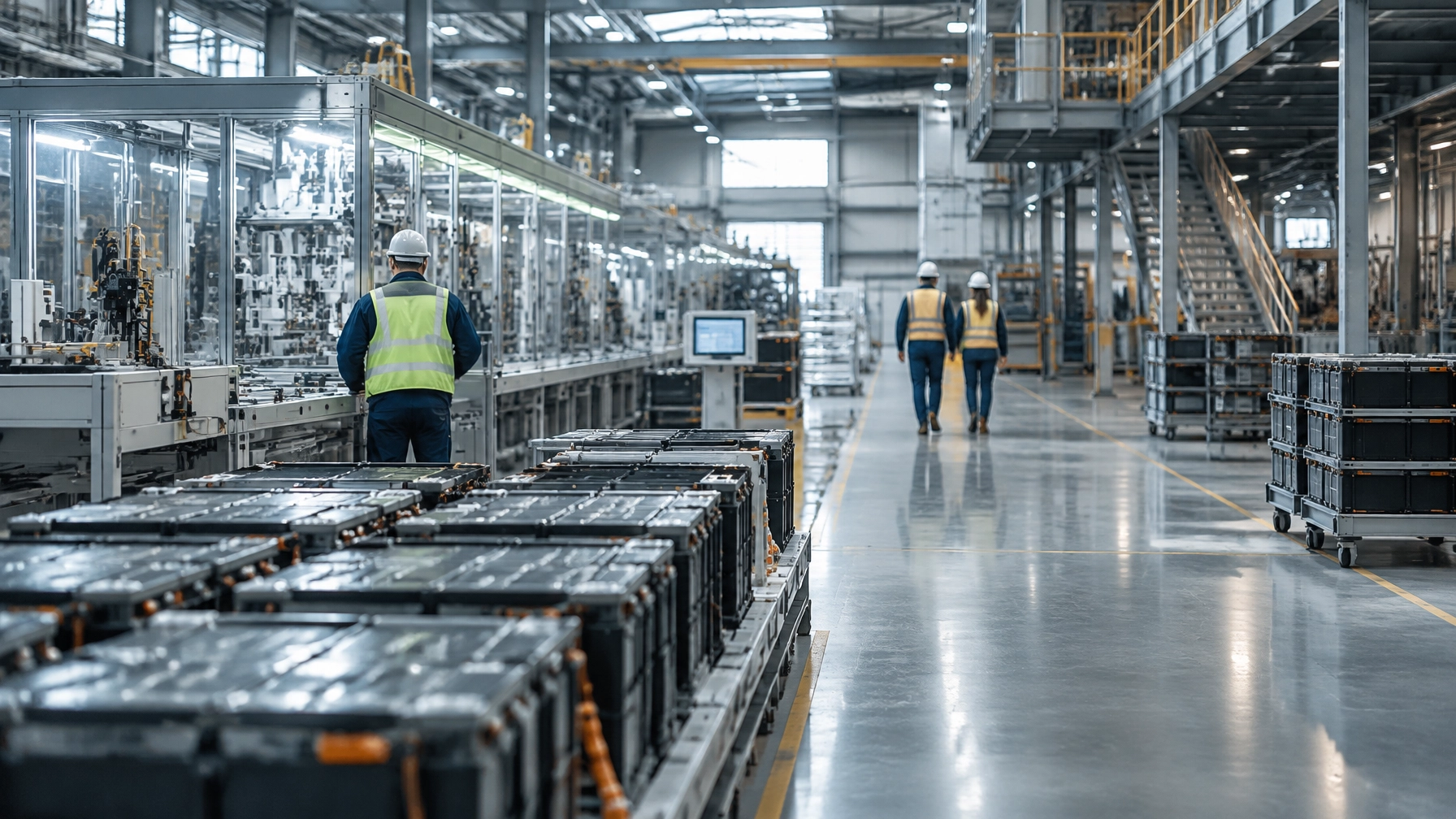
That distinction is at the heart of Lyten’s acquisition of Northvolt assets. The San Jose battery startup has raised 200 million dollars in financing, with investors including Prime Movers Lab, the Luxembourg Future Fund, Stellantis and FedEx. The broader deal includes Northvolt’s energy storage intellectual property, as well as the previously announced acquisition of its assembly plant in Gdansk, Poland. Worth keeping straight: that 200 million dollars is the size of the financing round, not the price of the assets, while the plant itself cost Northvolt about 200 million dollars to build.
Northvolt filed for bankruptcy in March 2025, burdened by 5.8 billion dollars in debt. Rising costs, supply-chain disruption and shifting demand contributed to its collapse. Lyten’s plan is to restart production at the Gdansk plant and, over time, convert it to making Lyten’s own lithium-sulfur cells. The company says that chemistry could be cheaper to produce and offer an alternative to lithium-iron-phosphate cells, which dominate energy storage and are heavily associated with Chinese supply.
The deal is more than a story about new funding or a factory changing hands. It is a reminder of what can remain valuable when a business fails, and what entrepreneurs can do to make sure the best parts of their own companies can stand on their own.
A company can fail while its assets remain useful
Bankruptcy is a verdict on a company’s ability to meet its obligations, not necessarily a verdict on every piece of work it created. A plant can be productive. A product design can be sound. A team may have developed hard-won process knowledge. But if the business running those assets cannot finance operations, pay its bills or deliver reliably, that value can be trapped.
In a transfer, the assets may get another chance under a different owner, with different funding, customers and operating priorities. That is not the same as the failed company surviving. The buyer gets what it acquires; creditors and former stakeholders do not automatically recover what they were owed.
Lyten’s earlier purchase of a Northvolt-related asset makes the pattern especially striking. In 2024, it acquired a lithium-metal battery plant near San Francisco from Cuberg, a company Northvolt had owned since 2021. Two years running, Lyten has picked up pieces from the same wider corporate story.
That says something about how distressed assets find new homes. They do not always go to the party that was most excited when the original project launched. They can end up with a specialist that sees a specific asset as a fit with its own technology, plans and customers. Enthusiasm can help start a company. The ability to operate what it has built is what gives assets a future.

Why strategic investors may see more than a financial return
Stellantis and FedEx are among the investors in Lyten’s financing round. Their involvement invites a useful question: what might strategic investors want from a battery company beyond the possibility of a financial return?
For companies with major vehicle fleets, logistics networks or energy needs, dependable battery capacity can be strategically important. A stake in a supplier may offer a closer view of technology and production plans, and potentially a relationship with a company working to expand manufacturing. It is not the same as a purchase order, and it does not guarantee that capacity or supply will be available on particular terms. But strategic investment can reflect a practical interest in access, resilience or future collaboration, as well as expectations for a return.
It is a different kind of cheque from a venture fund’s. A strategic investor is often buying a view of the technology and a relationship with the company, and in some cases the hope of supply. Investors still take real risk. A startup may face manufacturing challenges, commercial delays or competition from established technologies. Yet for a backer with fleets to power and parcels to move, access can be part of the return.
Lyten says it is accelerating its acquisitions to expand beyond the United States, responding to demand for fixed energy storage in Europe and batteries for military drones. The company also makes lithium-sulfur batteries for automotive, aviation and aerospace uses, along with sensors. The Northvolt assets give it a different kind of opportunity: not only developing its own technology, but taking on facilities and energy storage intellectual property that already exist.
The uncomfortable part of the handover
There is a human and financial weight behind any industrial rescue story. Northvolt’s Gdansk plant was built on a promise: that substantial investment, technology and ambition could establish a major battery operation. It also involved other people’s capital and expectations. When the company failed, employees, suppliers, customers, creditors and communities all faced uncertainty.
The next owner may have a path to operate the building without taking on the original company’s entire debt burden. That can make a restart possible, but it does not make the failure painless or erase who carried the risk. A useful factory and a failed balance sheet can be true at the same time.
For Lyten, the challenge is to turn assets into reliable production and commercial relationships. A building is not a functioning business by itself. Equipment needs people, maintenance and materials. Intellectual property needs to be understood, protected and applied. Customers may need proof that a new owner can meet their standards.

What founders should learn about building transferable value
The takeaway for founders is not to plan for failure. It is to build assets that remain legible and useful even if the original company changes hands.
That starts with clean ownership. Make sure the company can show who created its intellectual property, who owns it, and whether any licenses or third-party rights limit its use. Keep technical documentation current, and make sure key processes do not live only in one employee’s memory.
Contracts matter, too. Customer agreements, supplier relationships and certifications may not transfer automatically. Some contracts contain change-of-control provisions or other terms that require consent before a buyer can step in. A company’s customer relationship may be one of its most valuable assets, but it is only transferable if the paperwork, and the customer, support that transition.
The broader lesson is simple: durable value is value that can work outside the company that first created it. Strong records and clearly documented ownership do not guarantee a buyer or rescue. They can, however, make it easier for someone else to understand what exists and what it would take to keep it working.
A practical checklist for buying assets out of a failure
Before signing, get specific about what is included, and what is not.
- Confirm what transfers. Identify the intellectual property, equipment, permits, certifications, records and other assets covered by the deal. Verify ownership and whether any permissions or approvals are needed to use them.
- Clarify what does not. Do not assume liabilities, workforce obligations or customer and supplier contracts move with the assets. Check each contract for assignment and change-of-control clauses, and get legal advice on the obligations that may still apply.
- Budget for re-qualification. Customers may require audits, testing, documentation or a fresh approval process before a new owner can supply them. Allow time and money for that work; a certificate or customer approval may not simply follow the machinery.
- Name the anchor customer before closing. Know who will buy the output, what they need, and whether they are prepared to work with the new owner. A facility without a credible route to demand can become an expensive project rather than a productive asset.

Northvolt’s collapse is a cautionary story about the distance between ambition and sustainable operations. Lyten’s acquisitions point to another truth: failure does not make every asset worthless. The factory, the know-how and the energy storage technology can move forward, but only if a new owner can connect them to people, customers and a workable plan.
For founders, that is a powerful standard to build toward. Create value that is well documented, responsibly owned and useful beyond the company’s original structure. The future of a business is never guaranteed. The future usefulness of its best work can be built to last.