

When CevicheStop’s Culver City restaurant closed, the dining room went dark. But the most valuable parts of the business could still travel: the recipes, the name customers remembered, and the reputation chef Walther Adrianzen had built one plate at a time.
That distinction is easy to miss when you’re running a restaurant. A lease, payroll, permits, equipment and a full room can feel like the business itself. They are part of the operation, certainly. But the heart of a food business may be what customers ask for by name, and what you can still deliver when the doors are shut.
Adrianzen’s next chapter didn’t begin with a master plan. It began with four recipes and a chance to try a different way of reaching customers.

A business built one step at a time
Born in Lima, Peru, Adrianzen moved to the United States with his family when he was 11. At 17, he was handing out flyers for a Peruvian restaurant in Montebello, California. Two months later, he was cooking professionally. He went on to spend 11 years in the kitchen of a Los Angeles restaurant, learning the work from the inside.
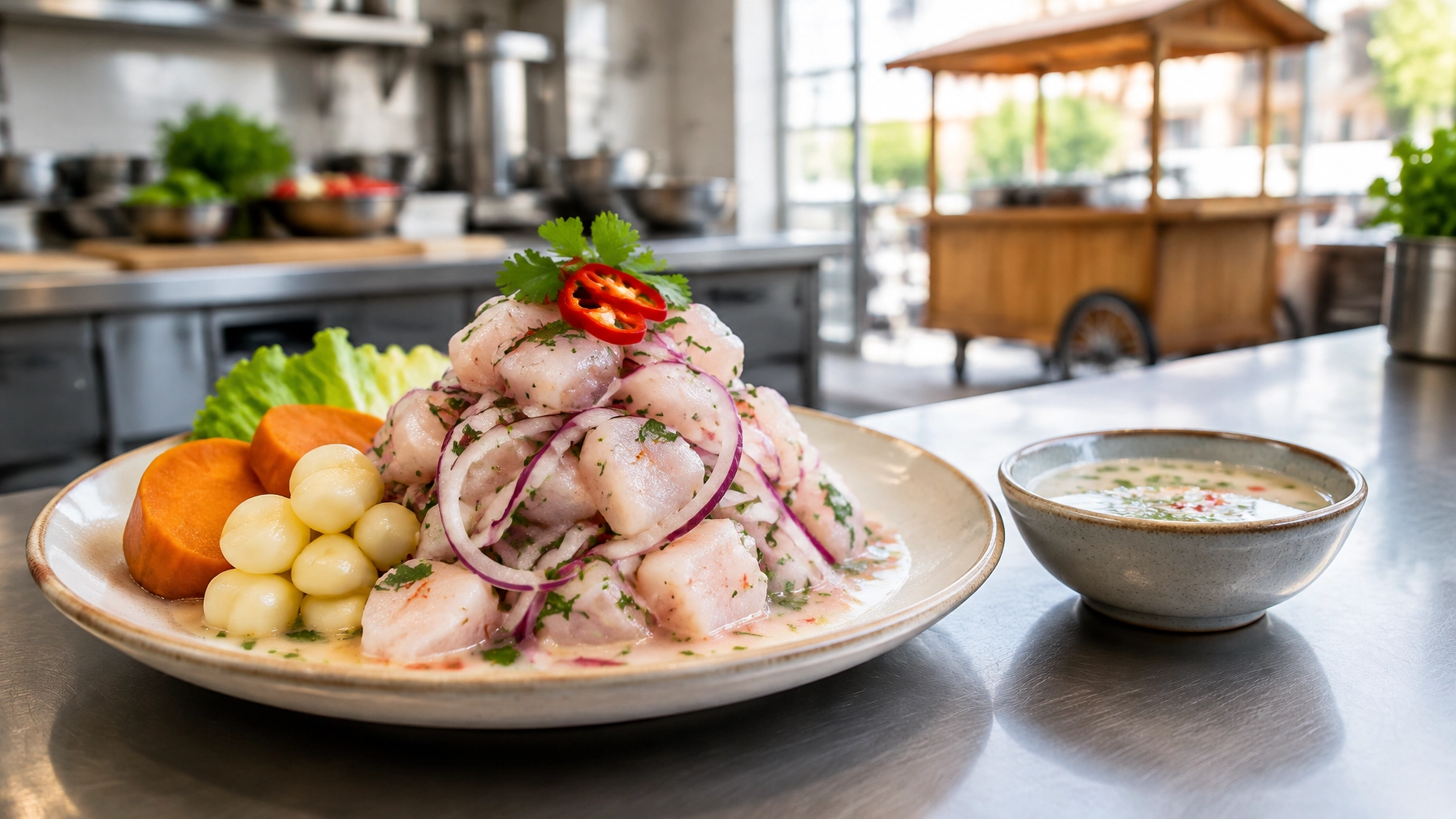
In 2015, at 28, he built a wooden street cart and started selling Peruvian seafood under the name CevicheStop. He promoted its opening on social media, and a long line formed on day one. Customers began asking him to cook in their backyards. The menu expanded to include dishes such as anticuchos and fried fish; the cart became a food truck.
The truck years were demanding in ways a customer might never see. There were commissary trips, cleaning, parking, permits and nights with only two or three hours of sleep. A flagship restaurant in Culver City came next. Public figures visited, including a Peruvian singer whose social media post brought a fresh wave of customers.
From the outside, the business could look as if it had reached its high point. Adrianzen has described a different reality: sales were not covering the bills, and worrying about making payroll made those years the hardest of his life.
That part matters. This is not a neat story about spotting an opportunity and immediately succeeding. It is a story about years of pushing through financial pressure, a lease problem that forced a location to close, and a later attempt in La Puente that never regained the old popularity. CevicheStop closed as a physical restaurant in 2025. The closures deserve to be understood as real, difficult events, not as proof that the food, the work or the years of building the name had failed.

What remains when the room is gone?
A restaurant’s premises hold a lot of visible value: the tables, the kitchen, the address, the steady rhythm of service. But if those things disappear, what might a customer still recognize?
For a food business, the answer may be a small set of assets that are less tied to a building:
- The recipes: the flavors people come back for, along with the skill and consistency behind them.
- The name: the words a customer remembers and uses when recommending a meal.
- The relationships: the trust built with customers, collaborators, suppliers and the wider community.
None of these automatically replaces the income of a restaurant. And a good recipe by itself does not pay the bills. But these are the parts of the business that may be able to move to a different channel: one that doesn’t require keeping the same dining room open.
For Adrianzen, that possibility appeared in 2023, when he was invited to represent Peru at a food event. Representatives of CookUnity, a platform that delivers ready-to-eat meals, offered him a place on the platform. He hesitated, then sent four recipes.
Four is a modest beginning compared with the roughly 60 recipes in his portfolio today. But it was enough to test a real question: Would customers order his food in this format?
Fixed costs don’t wait for the dining room to fill
A restaurant has costs that arrive whether the room is full or not. Rent, payroll commitments and other ongoing expenses can continue through slow stretches. Once those obligations are in place, a business may need substantial sales just to cover the basics.
Other costs can change more directly with the amount sold. When a new channel connects production to orders, some expenses can scale alongside that demand rather than requiring the same investment in a separate customer-facing location.
That difference doesn’t mean a platform partnership is risk-free. A business still needs to make good food consistently, handle production and understand the terms of the arrangement. And every partnership depends on someone else’s distribution system. But for Adrianzen, selling meals through an established delivery platform created a route to customers without carrying the same restaurant premises and its related operating burden.
The important shift was not simply “sell online.” It was a change in what had to be paid for before a customer could place an order. Instead of needing a dining room to serve as the main engine of the business, CevicheStop could put more attention on the part customers came for: the food.

Four recipes were a test, not a grand pivot
Today, Adrianzen’s portfolio is about 60 recipes. The business has grown from around 350 meals a day to about 3,000 orders across California, Utah, Nevada and Arizona. He also bottles and sells leche de tigre nationwide.
Those numbers describe where the business is now, not what he could safely assume at the start. His first step was four recipes. That small test gave him a way to see whether customers wanted the food through a new channel before building an entire strategy around it.
For other owners, that’s a useful model, not because every business should copy the same platform, but because the first experiment can be smaller than the eventual ambition. Offer a limited set. Pay attention to what sells, what customers say and what it takes to deliver well. Learn before you expand.
It can be tempting to wait for perfect certainty, especially after years of financial strain. But a focused test turns a broad question about whether the business can survive another way into something far more practical: do people want these few things, delivered this way, at a price that works?
The name CevicheStop and the food behind it could move beyond a single address. The lease could not. Neither could the payroll obligations attached to running that restaurant. Seeing the difference helped make room for a new version of the business.
Adrianzen shares ownership with his wife, Diana, and credits her and their three children with keeping him grounded. That support is part of the story too. Reinvention is rarely just a clever business move; it asks a lot of the people living through it.
Adrianzen’s story is a reminder that changing the way a business reaches people does not erase what came before. The years at the cart, the truck and the restaurant helped create the recipes, the name and the reputation that could travel onward. The next version of the business was built out of what the earlier one had already earned.
If your business is losing money in a building, try this short exercise: list the three things a customer would still recognize if the premises disappeared tomorrow. Then ask which of them you could sell through someone else’s distribution before your lease is up.