

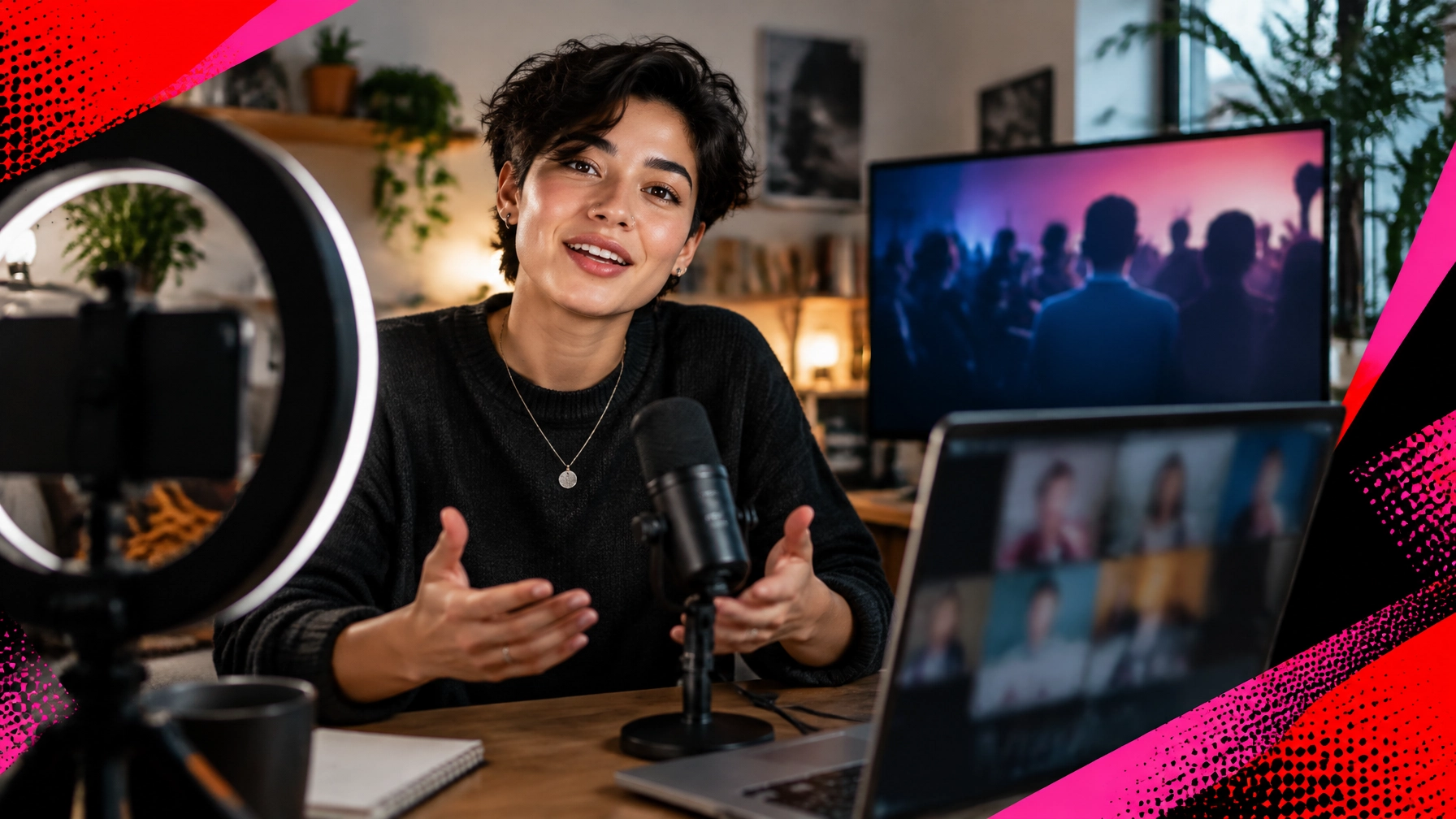
A creator can spend years building a following and still find that reaching those followers depends on what a social platform decides to show them. That’s the tension behind Backstage Pass, the live-first platform launched on October 27 by TagMango and ClickFunnels as part of an India-US push.
The idea is to use familiar public platforms such as YouTube and Instagram to bring people into a live session, then invite them to continue in a private Backstage Pass space. Creators can go live publicly for 15 minutes before moving the audience backstage. From there, they can offer paid access through subscriptions or one-time payments, sell through live-commerce Drops, and keep replays and chat history as Encores. AI tools can also turn livestreams into short clips.
The pitch is about reducing dependence on social media algorithms. But “owning your audience” is a useful phrase to unpack. It doesn’t mean social media stops mattering, or that every viewer will follow you into a new space. It means creating a more direct way to connect with the people who choose to come closer.
Renting reach versus building a relationship
Public platforms can be powerful discovery engines. They help new people encounter a creator’s music, expertise, humor, or perspective. But a follower count does not guarantee that each new post will reach every follower. Visibility can shift, and creators have limited control over distribution.
That makes social reach a little like renting a venue: it can bring a crowd through the door, but the creator doesn’t set every rule about who sees the invitation. A more direct audience relationship is closer to having a room of your own: one where the community can gather and hear from you without relying entirely on a feed.
That distinction matters most when a creator has something meaningful to offer beyond the next post: a live conversation, a class, a performance, a product demonstration, or a recurring community experience. The goal isn’t to abandon public channels. It’s to give interested viewers a next step that lives beyond the scroll.

Why live can build trust
A polished post shows the result. A live session lets people see how a creator thinks, responds, and connects in the moment. Viewers can ask questions, react, and feel part of a shared experience. That immediacy can make a creator’s relationship with an audience feel less like broadcasting and more like conversation.
Live is not automatically intimate, of course. A stream with no clear purpose can feel like another piece of content to get through. Trust grows when the creator shows up consistently, respects people’s time, and gives the audience a reason to participate.
That’s where Backstage Pass’s public-to-private format may appeal. The public 15-minute opening gives creators a chance to reach viewers where they already spend time. The move backstage then offers an option for people who want to stay for more. It’s a bridge, not a demand that the audience leave social media altogether.
For creators, that distinction is important. A healthy community move should feel like an invitation: “If this is useful or enjoyable, there’s a closer space for you.” It shouldn’t make casual followers feel that every valuable moment is now locked away.
One live session, more than one moment
A livestream can be valuable while it’s happening, and then disappear into the archive of everything a creator has ever posted. Backstage Pass’s Encores preserve the stream with its chat history, so the audience interaction remains part of the replay. Its AI tools can also repurpose livestreams into short clips.
That creates a practical content loop: a live gathering can serve the people who show up in real time, while clips can help introduce the creator’s ideas to people who weren’t there. The replay can keep the conversation accessible afterward.
The opportunity is not to turn every minute of a stream into a dozen posts. It’s to make a live session work harder without losing what made it worth watching. A strong highlight should still sound and feel like the creator, not like a generic snippet selected only because it is short.

Monetization needs a reason to exist
Backstage Pass includes Passes for subscription or one-time payments and Drops for live social commerce. Those tools can give creators ways to earn from experiences, access, or offers that fit naturally into a live session.
The most important question is not, “How many ways can I charge?” It is, “What would someone gladly pay for because it is genuinely valuable to them?” A subscription may make sense when there is a dependable rhythm of exclusive sessions or ongoing access. A one-time payment may fit a special event or limited experience. A Drop may work when a product or offer connects directly to what the audience is watching.
The format should follow the value, not the other way around. If the audience can’t tell what they’ll receive, or why it’s different from what they already get for free, adding a payment button is unlikely to solve the problem.
The monthly cost deserves a clear-eyed look
Backstage Pass creator plans are listed at $97 and $297 per month. That is a recurring business expense, so the decision deserves the same care as any other tool subscription.
Before adding another monthly cost, estimate what it needs to do for your work. Will it help you reach people more directly? Do you have a clear live format to test? Can you realistically invite an audience into a new space and keep showing up there? How many paid members or sales would make the cost worthwhile for you?
Also look at the full picture, not just the headline price: consider the time needed to host sessions, prepare offers, communicate with members, and turn live content into clips. A platform can make parts of that process easier, but it cannot create a community on your behalf. Make sure the work and the expected return both fit your capacity.

A quick checklist before moving your community
Use these questions to decide whether a paid community move is right for you:
- Do people already show up? Look for signs of real interest: repeat viewers, thoughtful questions, or people asking for more. A large follower count alone doesn’t answer this.
- Can you describe the offer simply? Be specific about what members will experience and how often you plan to deliver it.
- Does live suit your strengths? You don’t have to be a natural performer. But the format should let you share your knowledge, creativity, or personality comfortably.
- Can you explain the transition? Tell viewers why you’re inviting them backstage and what they can expect there, without making free followers feel pushed away.
- Have you run the numbers? Compare the plan cost with a realistic estimate of potential revenue, the effort involved, and your existing business expenses.
- Can you test the idea at a manageable scale? Start with a focused event or a clear recurring format, then pay attention to how people respond before expanding your commitment.
Backstage Pass arrives with a timely proposition: let public platforms help people discover you, then build a more direct relationship with those who want to stay. That approach is worth exploring, but it is not a shortcut around the work of earning attention and trust. Creators still need a clear reason for people to gather, an experience that respects their time, and a plan that makes financial sense.
Think of the platform less as a magic exit from algorithms and more as an additional room you can open. The strongest reason to invite people inside is not simply that you want a more dependable audience. It’s that you have something meaningful to share once they arrive.
This launch is part of a broader conversation about creator tools, audience relationships, and monetization, and it will be worth watching as more creators weigh the trade between reach and ownership.