For an independent artist, a song disappearing from streaming can feel like watching a piece of your livelihood vanish overnight. Listeners can’t find it, planned promotions lose their landing page, and income may be interrupted. All while you’re left trying to work out what happened.
That worry has become immediate for some DistroKid artists. On October 10, 2026, DistroKid confirmed that it had removed a very small number of recordings in response to a September lawsuit from a major label group alleging that the distributor enabled an “AI-slop pipeline.” The company says it disputes the allegations and regrets the disruption.
Artists affected by the removals say their work was original or properly licensed, and that they received no warning or clear path to appeal. One reported losing six songs, including a cover they say was licensed and a track made with a marketplace beat. Another said a song was flagged for a sample from a recording released two years after their own track. An album that had been available for three to four years was also reportedly taken down without an explanation.
These are artists’ accounts, not proof that every detail has been independently established. But the larger lesson is clear: when your music lives on services you don’t control, one distribution decision can disrupt your connection with listeners. You can’t prevent every takedown. You can make your catalog easier to prove, recover and keep sharing.
Treat your music files like essential business records
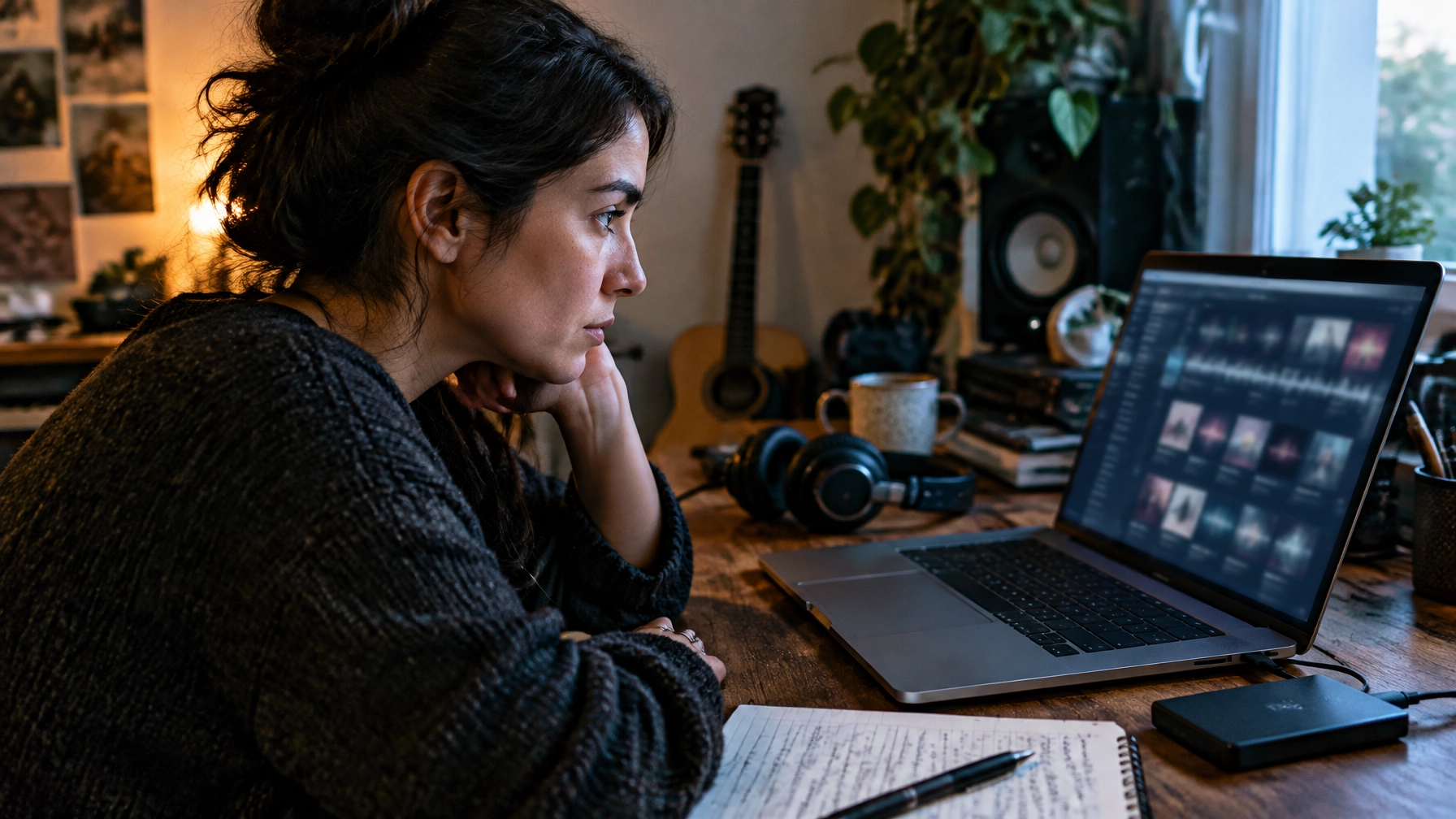
Keep a complete, organized release folder for every song. Store the final master and instrumental versions, project files when practical, cover art, lyrics, release date, artist and contributor credits, and the identifiers associated with the release. Save the exact files you delivered to your distributor, not just the latest version on your laptop.
Back the folder up in at least two separate places, such as an external drive and a reputable cloud storage account. Make sure one backup is not permanently connected to the computer you use every day. A lost laptop, corrupted drive or locked account should not mean losing your catalog history.
Be just as careful with the paper trail. Keep dated copies of distribution confirmations, royalty statements, release metadata and support conversations. If a track is challenged later, contemporaneous records can help you explain what you created, when you released it and what permissions you had.

Keep the license, not just the memory of getting one
A beat purchase, sample clearance or cover license is only useful if you can show what it covers. Save the agreement, receipt, licensing terms as they appeared when you bought the asset, and any direct messages or emails that clarify permitted uses. For marketplace beats, check whether the license allows distribution on streaming platforms, whether there are limits on streams or releases, and whether the seller warrants that they control the rights they are licensing.
Covers need their own careful records. Keep the license confirmation and note the song, version, territories, formats and dates it covers. Don’t assume that a license for one type of release automatically covers every use. If a song includes a sample, keep the written permission for the composition and recording where required. If you used a sample-free alternative or created the sound yourself, retain session files or other records that help show how it was made.
Keep documentation tied to the specific track. A folder named “permissions” is a start; a file named with the song title, license date and licensor is much easier to use under pressure.
Don’t make one platform the only home for your music
Distributing your work widely can help listeners find it, but distribution is not the same as ownership or control. Consider having more than one way to reach fans: a direct-to-fan store, physical releases, your own website, and social channels where you can share updates and previews. Each option has its own rules, fees and practical limits, so read the terms before building a plan around it.
Your goal is not necessarily to upload every release everywhere at once. It is to avoid a situation where one platform is the only place a fan can hear or buy your work. Keep lawful copies of your music and artwork ready, and know how you would continue communicating with listeners if a streamable version temporarily disappeared.

Build a fan connection you can carry with you
Streaming platforms can introduce people to your music, but an algorithmic audience is not the same as a direct relationship. Give fans a clear, respectful way to hear from you outside a single service. An email list is one option: invite people to sign up, explain what you’ll send and then share useful updates rather than overwhelming their inbox.
You can also use a website or direct-sales page as a dependable home base for release news, merch and listening options. Keep it simple enough to maintain. A fan who knows where to find you can follow your next move even if a playlist, profile or particular track becomes unavailable.
This isn’t an argument against streaming. It’s a reminder to treat it as one part of your music business, not the entire foundation. Your listeners are people, not numbers attached to a platform account, and the trust you build with them travels with you.
If a release disappears, respond with a record, not a rush
A takedown is stressful, but a calm, documented response is more useful than a string of angry messages or an immediate re-upload. Start by saving screenshots of the missing release, any platform notices, the distributor dashboard and recent support messages. Note when you discovered the removal and which services and tracks appear affected.
Then contact the distributor through its official support process. Be specific: include the release title, track name, artist name, relevant identifiers, delivery date and the evidence you have. Ask what policy or rights issue triggered the action, which recording or asset is in question, whether the removal applies to all services, and what steps are available for review. Keep the exchange in writing and save every reply.
If the concern involves a license or sample, send the relevant documentation in an organized way. Ask whether the review is about the master recording, the composition, artwork, metadata or another element. Avoid sending unrelated private material. If you believe a decision is mistaken and cannot resolve it through ordinary support, consider seeking advice from a qualified music attorney or rights professional before making legal claims or signing anything.
Don’t assume that uploading the same recording through another distributor will solve the problem. If a rights concern is still unresolved, a duplicate upload could create more confusion. First understand the stated reason, preserve your records and make a deliberate plan.

A wider conversation about streaming integrity
The DistroKid dispute is unfolding as the industry grapples with streaming fraud. On October 6, a man was sentenced to 18 months in prison for an AI-driven bot-streaming scheme that generated about $8 million through fraudulent plays. The U.S. Copyright Office has also opened a formal inquiry into streaming fraud and is seeking public comments through November 23, 2026.
Protecting legitimate artists from fake streams and rights abuse matters. So does making sure enforcement systems don’t leave genuine musicians unable to understand or challenge a decision. For independent artists, the practical response is to build a catalog that is well documented and a career that does not depend on a single point of access.
You can’t control every platform policy or dispute. You can keep your masters safe, understand the permissions behind your releases, maintain a paper trail and give fans more than one way to stay connected. That work may feel unglamorous beside writing and recording, but it helps protect the music you’ve worked so hard to put into the world.