A $35 billion commitment to AI infrastructure is a big number. But for business owners, the more useful question is what it says about the resources AI will need next, and how that may affect the cost and availability of the tools companies increasingly rely on.
There’s an important timeline detail behind today’s headline: Broadcom, Apollo and Blackstone announced the $35 billion capital solution on June 9, 2026. It is part of Broadcom’s AI XPV Platform, designed to support more than 20 gigawatts of compute capacity for leading AI labs through 2028. The initial transaction was structured to support Anthropic’s previously announced expansion of more than one gigawatt of computing infrastructure.
That distinction matters. This is not necessarily $35 billion being spent all at once, or a new facility opening today. It is a large, multi-year financing effort designed to help fund the infrastructure AI companies need to train and operate their systems.
The scale is striking. The business implications are more practical: compute capacity, electricity, cooling, and the equipment that connects them are becoming essential parts of the AI economy.

The AI race is becoming an infrastructure race
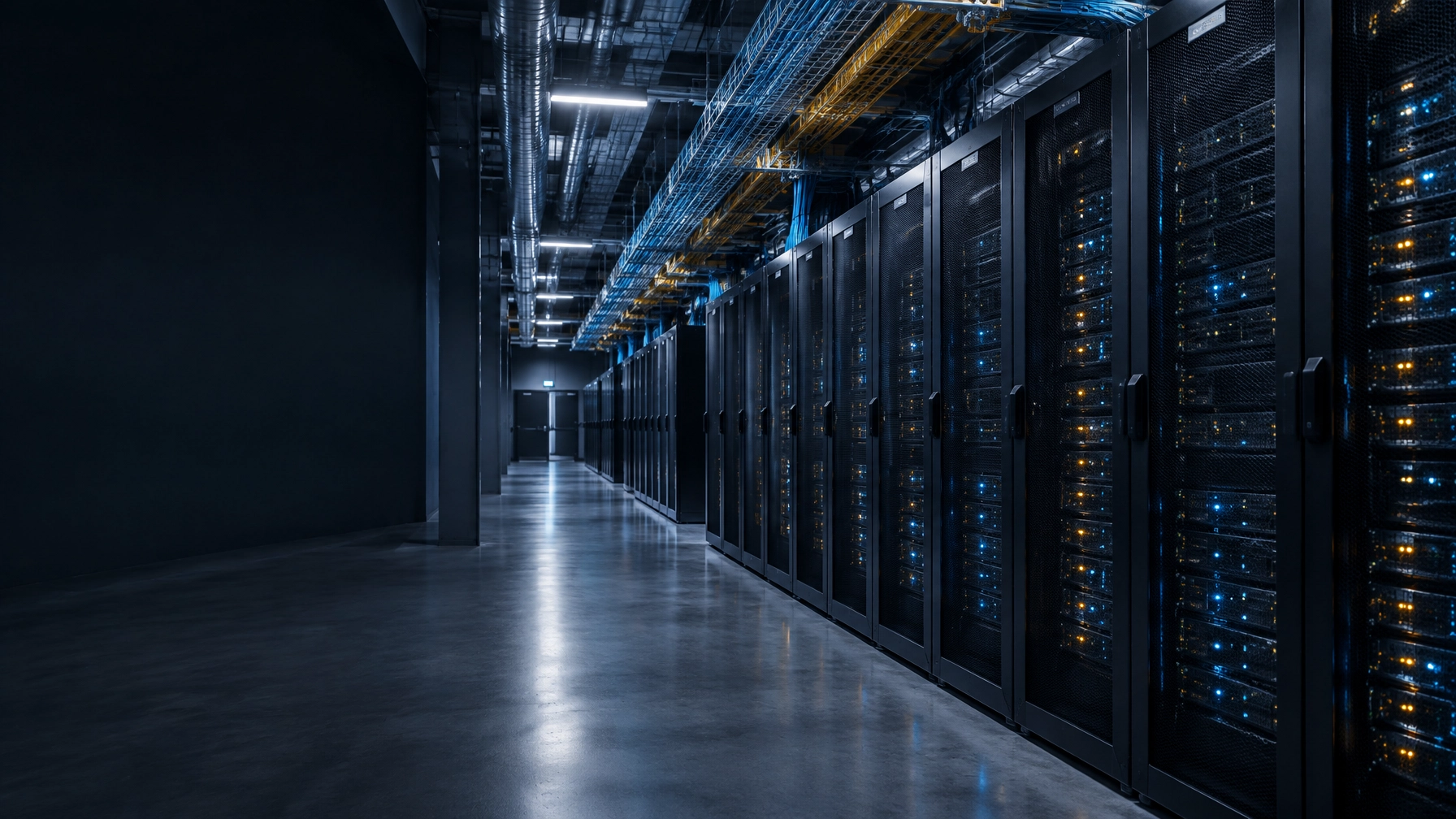
AI tools can feel weightless: type a prompt, receive a response, move on with the workday. Behind that interaction are specialized chips, servers, data centers, networks, and power systems. Building and running these facilities takes time, technical expertise, and enormous investment.
The Broadcom-Apollo-Blackstone arrangement points to a financing model built for that scale. Advanced silicon and networking equipment can be paired with long-term capital to support major deployments. In other words, AI infrastructure is no longer just a technology-company expense. It is also becoming an asset class that institutional investors are willing to finance.
That helps explain why the story resonates beyond the largest AI labs. Every company using cloud software or AI services is connected, in some way, to this buildout. If providers have to invest heavily to increase capacity, those costs and constraints can ripple through the services businesses buy.
It does not mean that every small company should expect an immediate price increase. Cloud and AI pricing depends on competition, efficiency, demand, and how providers choose to structure their plans. But it does mean that infrastructure investment is worth watching alongside new AI features.
Power and compute are the new bottlenecks
Chips often get the spotlight, but a powerful processor is useful only when it can be installed, connected, cooled, and supplied with dependable electricity.
That creates a chain of dependencies. Data centers need electrical capacity and grid connections. Dense computing equipment generates heat, making cooling systems critical. Facilities also need networking, backup power, and specialized construction and maintenance. A constraint at any point can slow the arrival of usable compute.
The separate Axiom announcement illustrates how investment is reaching beyond software and chips. On October 5, Flex announced a $2 billion convertible preferred investment in Axiom, its cloud and power infrastructure business, at an initial enterprise value of $37.5 billion. Axiom is expected to become an independent publicly traded company in the first quarter of 2027, subject to conditions.
That $37.5 billion figure is an enterprise value, not the size of the investment, and this is a separate transaction from Broadcom’s $35 billion capital solution. Still, the focus on power and infrastructure reinforces the same broader point: meeting AI demand involves much more than developing a better model.

A note on the Stripe and Google news
AI-related business announcements can sound similar while describing very different things. Stripe’s 2026 announcement with Google, for example, focused on enabling businesses to sell inside Google AI Mode and the Gemini app. That is meaningful commercial infrastructure: it could create new ways for customers to discover and buy products through AI.
It is not the same as financing data centers or building physical compute capacity. Keeping that distinction clear helps businesses understand where money is going: some investments support the infrastructure that runs AI, while others build the payment, sales, and software systems that let people use it.
Both layers could create opportunities. But they affect businesses differently. Compute investment can influence capacity and service economics over time. AI-enabled commerce may change how businesses reach customers and complete transactions.
What this could mean for small businesses
For a small business, the infrastructure buildout is not a reason to rush into a major AI purchase. It’s a reason to make deliberate choices and understand what you’re paying for.
Review recurring software costs. List your AI subscriptions, cloud services, and software plans, and note how pricing is calculated. Is the fee fixed, based on usage, or tied to the number of users? A little clarity now can help you spot rising costs or duplicated tools later.
Test before you scale. Pick one task where AI could save time, such as drafting first-pass product descriptions, summarizing customer feedback, or organizing internal notes. Measure whether the tool genuinely improves the work before expanding its role.
Keep an eye on usage. Some AI products charge based on how much you use them. Set limits, monitor bills, and give your team simple guidance on which tools are approved for sensitive information. More usage is not automatically more value.
Protect the core workflow. Avoid building a crucial business process around a single tool without a backup plan. Understand how you can export your data, move your work, and continue serving customers if pricing or availability changes.

New opportunities may sit around the data center
The largest contracts may go to global companies, but infrastructure projects depend on a wide network of expertise. That can create openings for businesses providing electrical services, cooling and building systems, equipment installation, maintenance, cybersecurity, fiber connectivity, energy management, compliance, and specialized logistics.
The opportunity is not limited to selling directly to a data center operator. Local suppliers, contractors, and professional service firms may find demand through the broader network of companies expanding facilities and supporting their operations. For entrepreneurs, it’s worth asking whether an existing skill or service could be adapted to this market, without assuming that every AI-related opportunity will become a lasting one.
Professionals can take a similar approach. Skills in power systems, thermal management, data-center operations, network engineering, and infrastructure security are increasingly relevant to the AI ecosystem. Learning how these systems work can help people identify where their current experience may transfer.
What to watch next
For businesses following the buildout, a few signals are more useful than headline dollar figures alone:
- Capacity and delivery timelines: Is planned compute actually coming online when expected?
- Power access: Can new facilities secure the electricity and grid connections they need?
- Cloud and AI pricing: Are providers changing plans, usage limits, or rates?
- Efficiency: Are new chips and cooling systems reducing the cost of each useful computation?
- The customer experience: Are AI tools helping businesses serve customers or earn revenue in measurable ways?
A large financing commitment is a bet on future demand, not a guarantee that every investment will deliver as planned. Infrastructure takes time to build, and businesses still need to judge whether a technology solves a real problem for them.
The practical takeaway
The $35 billion Broadcom, Apollo and Blackstone capital solution is a clear signal that the AI boom depends on real-world foundations: facilities, power, networking, cooling, and patient capital. The separate investment in Axiom highlights how infrastructure needs extend into power and data-center systems, while AI commerce partnerships represent another, distinct part of the changing business landscape.
For smaller companies and independent professionals, the best response is neither panic nor hype. Track your costs, test tools against real business needs, and look for practical ways your skills or services could support the expanding infrastructure economy. The biggest AI opportunities may not belong only to the companies building the models. They may also belong to the people who help make those systems reliable, useful, and accessible.