

Robots can connect to the internet. But they can’t learn how to handle a box, recover from a clumsy pick, or adjust to the quirks of a real warehouse by scrolling through web pages.
That gap is at the heart of Tutor Intelligence’s latest news. The Watertown, Massachusetts robotics company announced a $75 million Series B on November 2, led by Andreessen Horowitz, to expand robot-model training, manufacturing, and deployment. Founded in 2021 by Josh Gruenstein and Alon Kosowsky-Sachs, Tutor is betting that the best way to teach robots physical work is to put them into real workplaces, and learn from what happens next.
The headline insight is easy to miss: the world has oceans of text and images for AI to learn from, but no ready-made internet-scale library of robots doing useful work. For that, someone has to create the data. Tutor’s approach is to build that engine on the job.
Robots don’t learn the physical world by reading about it
A language model can study enormous collections of written material. A robot needs a different kind of experience. It must learn how objects feel, how they move, where a grasp goes wrong, and what to do when a task doesn’t unfold as expected.
Those lessons are hard to capture in a clean dataset before a robot reaches the factory floor. Physical work is variable: products shift, shelves differ, and a task that looks simple in a demonstration can become tricky in a new setting. A robot may need to recognize the problem and respond, not just repeat a memorized sequence.
Tutor’s answer is to deploy industrial robots in manufacturing and logistics before they are fully autonomous. When a robot encounters a task or needs help, a remote human operator, called a tutor, can guide it through the work. Those demonstrations, corrections, and task outcomes become useful training data for improving the company’s robot models.
That distinction matters. Tutor isn’t saying its robots have no internet connection. The point is that an internet connection does not supply the physical-world experience they need. The company has to gather that experience through real operations.
Put the robot to work; let the work teach it
The approach flips a familiar instinct in technology: don’t wait for the finished system before putting it to use.
Tutor’s robots work under human supervision, so customers can get value from deployments while the models are still improving. The human doesn’t sit outside the product as a sign that it failed. The tutor is part of the system: helping complete a job today and showing the robot how to do it better tomorrow.
It’s a practical loop. A robot meets a real task. A human helps it navigate the unfamiliar part. The system records what happened. The team uses that experience to improve future performance. As more robots enter the field, the company has more opportunities to learn from different jobs, objects, and environments.
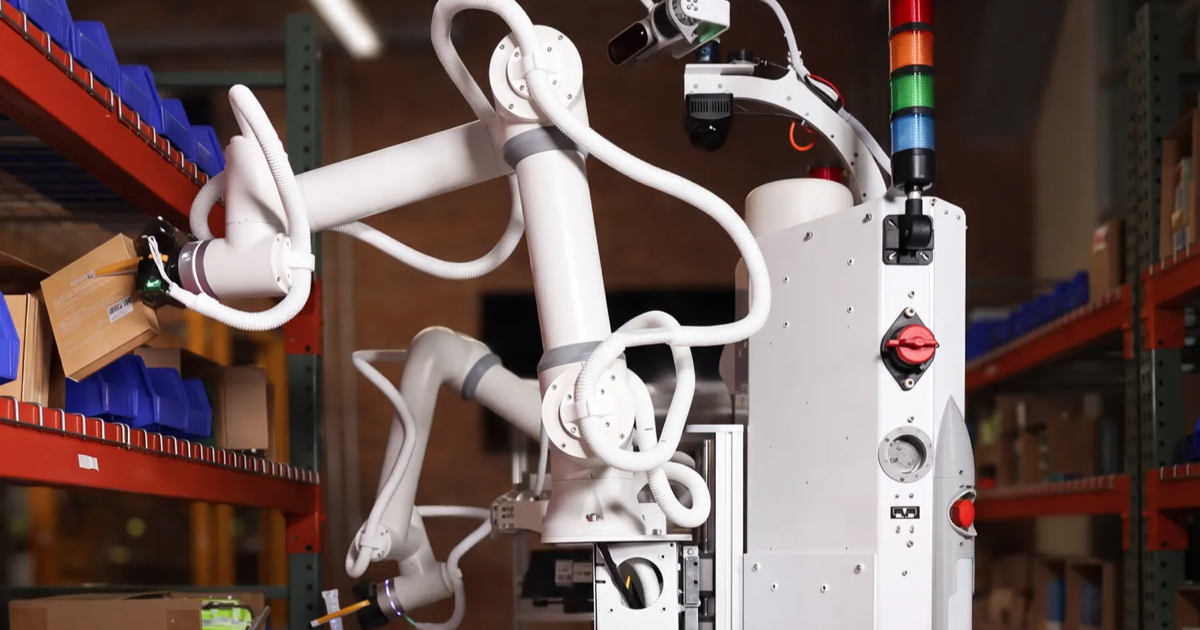
Tutor has described a 100-robot Data Factory built around its Sonny robot, designed for large-scale real-world teleoperation, evaluation, and model improvement. It is a tangible expression of the strategy: collect data not only in a lab, but through repeated interaction with physical tasks, including robot mistakes and human corrections.

The company’s robot lineup includes Cassie, designed for material-handling jobs such as palletizing and case picking, and Sonny, built for more dexterous work. The larger idea is that hardware, software, models, and data collection all belong to one connected product. A model’s performance depends on what it can sense and do; what it can sense and do depends on the robot; and the robot’s next improvement depends on what happens in the field.

The business model is part of the learning strategy
For customers, advanced robotics can be a daunting purchase. A company may have a real operational need but lack the budget, time, or engineering team to buy and integrate a traditional automation system.
Tutor has described a Robot-as-a-Service approach, with usage-based pricing rather than requiring customers to buy robots outright. The company handles deployment and ongoing support while its robots take on specific workflows. That can make it easier for a business to try automation without turning the decision into a major capital project.
It also means the company’s learning system is connected to customer work. When a robot performs a paid job, the deployment can offer value on two fronts: a service for the customer and real operational experience for Tutor. The business model is not just a way to sell the technology. It helps create the conditions for more robots to be used, and for more relevant learning to happen.

That’s the potential flywheel, and the challenge. It only works if customers receive reliable service, tasks are valuable enough to support deployment, and collected experiences translate into measurable improvements. Field data isn’t automatically a moat. It becomes one when it is high-quality, relevant, and used to make the product better.
What founders can take from Tutor’s bet
The lesson for entrepreneurs isn’t “add AI” or “raise a huge round.” It’s to look for a business where doing the work teaches you how to do it better.
A founder in a different industry can ask: What happens every time a customer uses our product? Does that interaction help us make the next customer’s experience better? Can we learn from failures, edge cases, or the moments when someone needs help? And can we do that while still delivering something useful today?
For a creator, that might mean using each client project to refine a repeatable process. For a software founder, it could mean turning support conversations into product improvements. For a small business, it might be recording where customers hesitate, then adapting the service around what they actually need, not what the business assumes they need.
The key is to build a responsible feedback loop. Be clear about what you collect, protect customer information, and make sure the learning benefits the people who trusted you with the work. A growing pile of data is not a strategy on its own. The advantage comes from making useful insights a natural byproduct of delivering value.
Tutor’s bet is that robots will become more capable not by waiting in the lab for a perfect training library, but by doing real jobs with help when they need it. The $75 million round will help the company scale that effort, but the underlying idea is more approachable than the funding number: start where the work is, keep a human close to the learning, and make every real-world attempt count.
The next generation of robotics may be built through a thousand small corrections as much as a few big breakthroughs. Tutor is putting that idea to work: one task, one lesson, and one smarter robot at a time.