

Saudi Aramco is known for producing energy. Now the world’s biggest energy company is putting substantial capital behind the infrastructure that turns energy into AI.
On November 1, Aramco and Saudi Arabia’s Public Investment Fund closed a transaction that gives Aramco a 49% stake in HUMAIN, the kingdom’s AI company. PIF retains a controlling 51% stake. Aramco is contributing approximately SAR 9.9 billion, or about $2.6 billion, in cash during 2026, alongside AI, computing and digital assets.
That distinction matters: the $2.6 billion is a cash contribution to HUMAIN as part of the deal, not simply a standalone purchase price for the stake.
For founders, the headline is not only the size of the investment. It is the combination behind it. An energy giant is joining forces with sovereign capital to build data centers, cloud infrastructure and AI models at national scale. The bet points to a fast-growing conviction: access to computing power, and the energy required to run it, is becoming a strategic business in its own right.
The story is bigger than one investment
Launched by PIF in May 2025, HUMAIN is designed to build what is often called a full-stack AI business. That means it is working across several layers of the AI ecosystem, rather than focusing only on a single model or application.
Those layers include data centers and high-performance computing, cloud infrastructure, AI models such as ALLaM, and applications built on top of those capabilities. HUMAIN has set a target of reaching 3 gigawatts of data center capacity by 2030.
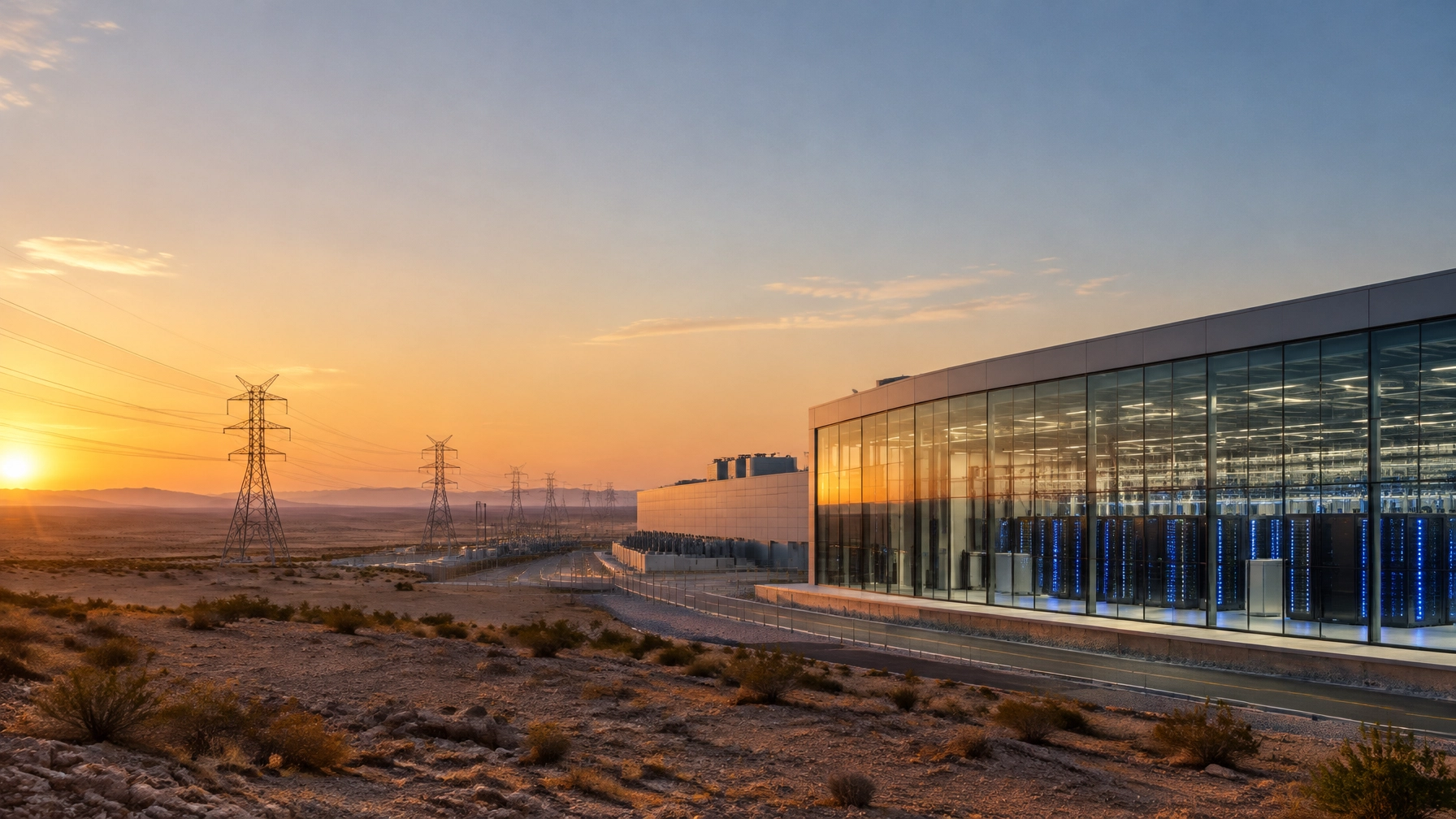
That is an ambitious goal. It also helps explain why energy, computing and AI are increasingly discussed together. Training and running AI systems requires powerful hardware, reliable data centers and enormous amounts of electricity. Building capacity is not just a matter of writing better software. It requires facilities, equipment, power access, operating expertise and long-term financing.

The partnership brings together two kinds of scale. Aramco contributes capital as well as AI, computing and digital assets. PIF remains the majority owner and a backer of HUMAIN’s broader development. Together, they are aiming to accelerate a company that can provide infrastructure and AI capabilities within Saudi Arabia and compete in a rapidly expanding global market.
What “full-stack AI” means for businesses
For a founder, “full-stack” can sound like a technical label. In practice, it describes how many parts of the AI value chain a company can influence.
A business that only uses an AI model is dependent on whoever provides that model and the computing behind it. A company that operates infrastructure, cloud services, models and applications has more control over how those pieces work together. That can matter for performance, cost, data handling and the ability to tailor services to local customers.
HUMAIN’s ambitions include ALLaM, an Arabic large language model, as well as the underlying infrastructure needed to support AI workloads. Local language models and locally available computing can be especially important when organizations need AI that reflects regional language, context, regulation and business needs.
This does not mean every startup should try to build a data center or train its own model. In fact, the scale of this investment is a reminder that infrastructure is a capital-intensive field. The more useful lesson is to understand where your business sits in the stack, and what dependencies could shape your costs or growth.
If your product relies on AI, ask practical questions: Which providers supply the models and compute you use? How sensitive is your business to changes in price or availability? Could a more specialized model, a regional provider or a different cloud arrangement improve your service? You may not need to own the infrastructure, but knowing how it affects your business can help you make better choices.
Follow the balance sheet, not just the announcement
Big companies make plenty of public statements about emerging technologies. Founders can learn more by watching where they commit real capital, assets and operating capacity.
Aramco’s involvement is a meaningful signal because it connects AI investment to an existing strength: energy. Data centers need reliable power. Energy businesses understand how to produce and manage it at scale. Bringing that experience into an AI venture suggests that the link between electricity and computing is not a side issue. It is part of the competitive landscape.

That’s a useful way to read major investments. Look beyond the headline number and ask what capabilities are being assembled. Is a company securing supply, distribution, specialized talent, manufacturing capacity or customer access? Are public funds and established industrial players backing the same layer of a market? The answers can reveal where decision-makers believe demand will persist.
For founders, this is not a cue to chase every heavily funded trend. It is a prompt to check your assumptions against how customers and large institutions are spending. If organizations are investing in compute, energy access and infrastructure, opportunities may emerge around the gaps those investments create: cooling, power management, data security, workflow tools, model evaluation, integration and services that make complex systems usable.
Why sovereign capital is moving into compute
AI infrastructure is expensive, long-term and tied to strategic questions. That combination makes it a natural focus for governments and sovereign investment funds.
A country that depends entirely on computing resources located elsewhere may have less control over cost, availability and where sensitive data is processed. Developing local capacity can help attract businesses, support domestic talent and give organizations more options for building AI services. It can also create demand for energy, engineering and technology partners.
Sovereign investment does not guarantee that every project will succeed. Large targets still have to be translated into buildable facilities, reliable power, skilled teams and customers willing to pay. But when a public investment fund backs AI infrastructure and an energy major contributes assets and capital, the signal is that the opportunity is being treated as a long-term strategic priority, not a short-lived product cycle.
That makes this deal worth watching even for businesses far from Saudi Arabia. Capital flows can shape where infrastructure gets built, which markets get served and how quickly new services become available. As the global supply of compute expands, founders may find new partners and customers. They may also face tougher competition from better-resourced companies.
A founder’s practical read on the deal
There are a few ways to turn this news into a useful planning exercise.
Map your infrastructure dependencies. List the AI models, cloud services, data providers and computing tools your product relies on. Identify which ones are essential and where a change in price or access would hurt most.
Look for problems created by scale. When major players invest in infrastructure, they create new needs around deployment, security, efficiency and adoption. Consider whether your customers need a focused solution that helps them make use of that capacity.
Watch where money and expertise meet. Capital is one signal; the assets and capabilities attached to it are another. In this transaction, the combination of energy resources, digital assets and computing plans is part of the story.
Stay close to customer demand. A large investment can make a sector feel inevitable, but it cannot tell you which product customers will actually buy. Talk to the people who would use your service. Find out where existing AI tools fall short, what constraints they face and what outcome they would pay to improve.

Aramco’s stake in HUMAIN is a major bet on AI capacity, but the message for founders is more nuanced than “AI is where the money is.” The sharper takeaway is that capital is moving toward the foundations that make AI possible: energy, computing, infrastructure and locally relevant services.
You do not need a multibillion-dollar balance sheet to act on that insight. You do need to notice where resources are flowing, understand how those investments affect your market, and look for the practical problems that appear as an industry scales. The next opportunity may not be another headline-grabbing model. It may be the tool, service or business that helps real customers put all that infrastructure to work.