


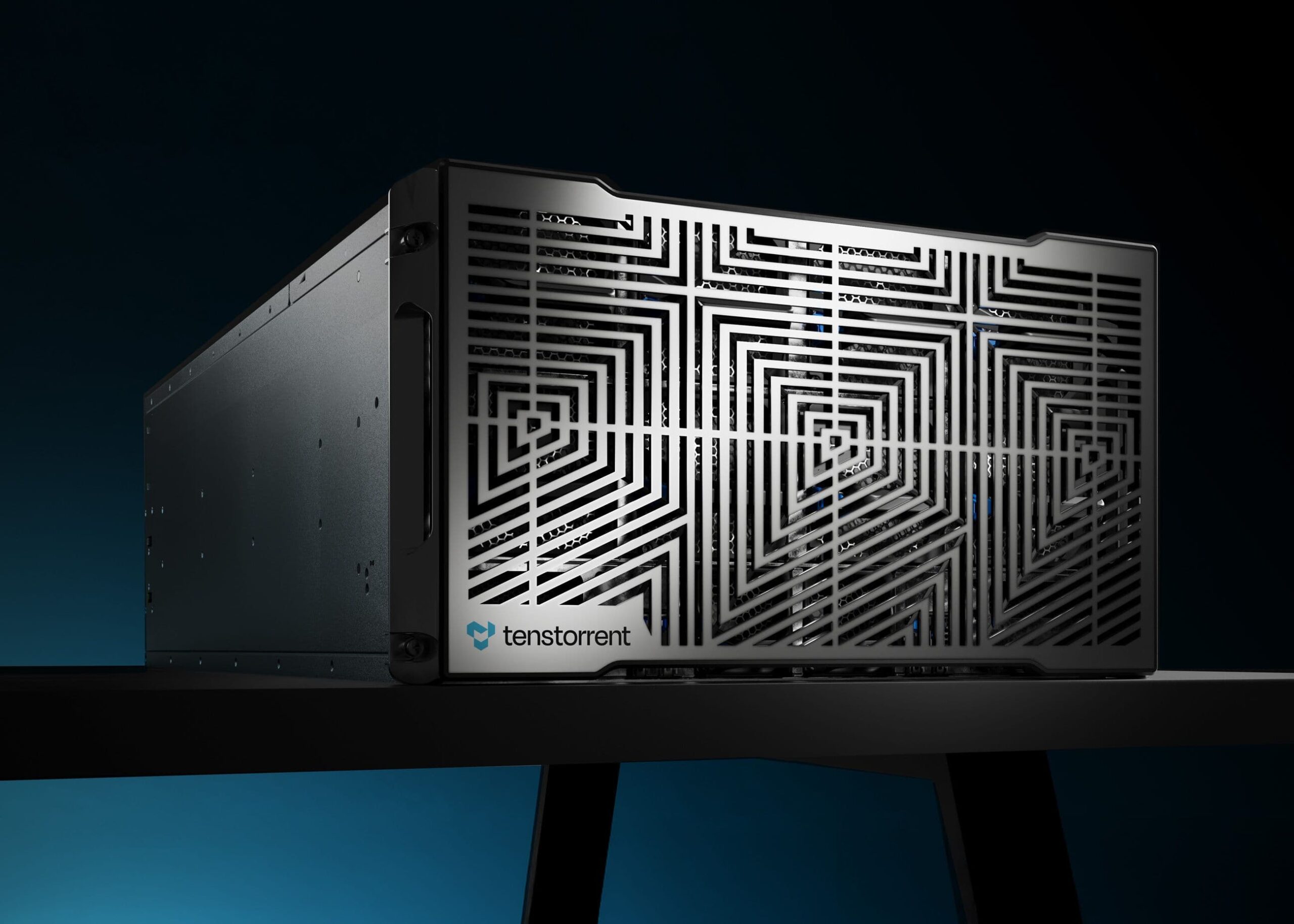
Tenstorrent has closed a $1.5 billion Series E at a $6.2 billion post-money valuation, more than doubling its value, with a strategy that doesn’t simply follow the biggest players in AI computing.
The round, announced October 19, was led by Trace Capital and Innovation X. Fidelity, T. Rowe Price, ARK Invest, Morgan Stanley and SanDisk were among the other participants. For CEO Jim Keller, the financing is a significant vote of confidence in Tenstorrent’s attempt to build an alternative to a market dominated by GPU-based computing.
That makes this more than a headline about a large fundraise. It’s a timely story for entrepreneurs considering what it takes to make a different bet in a crowded market, and then persuade customers and investors to take it seriously.

The opportunity in AI computing isn’t limited to building the most visible product. Sometimes it’s about making a different part of the stack more accessible.
A different lane in a race for AI compute
Tenstorrent builds AI processors and systems using RISC-V, an open instruction set architecture. The company also offers an open-source software stack, systems ranging from workstations to servers, and AI and CPU intellectual property that customers can license as they design their own silicon.
The distinction matters. An open architecture gives chip designers a different foundation from a single tightly controlled approach. It doesn’t mean every product is free, or that the engineering challenge disappears. It means companies can build on a shared standard and, in some cases, shape the silicon around their own needs.
Tenstorrent’s pitch is that customers shouldn’t have to choose between buying a complete system and starting from scratch. The company can sell compute at different levels, from individual cards and workstations to servers and larger systems, while also licensing the underlying IP.
That puts the company in a distinct position as businesses look for ways to run AI. Some want ready-to-deploy systems. Others want more control over where their models run, how the hardware is configured, or how the technology fits into their own products.
Experience is part of the pitch
Keller’s career gives investors a reason to look closely. He is known for chip architecture work associated with Apple’s A4 and A5, AMD’s Zen processors and Tesla’s Full Self-Driving chip.
In semiconductors, credibility isn’t just a nice-to-have. It can help a company recruit experienced people, earn meetings with potential customers and convince investors that a technically ambitious plan deserves attention. A founder’s track record can open doors, but it can’t do the whole job.
Tenstorrent still needs to deliver products, expand commercial relationships and turn its technology into a business that can scale. That’s why the company’s stated plans for the new capital are important: it says the money will support global commercial expansion, volume manufacturing, deploying Galaxy servers at scale, and advancing the AI and CPU IP it licenses to customers.

Scaling compute is about more than designing a chip. Manufacturing, delivery and customer adoption all have to come together.
The founder lessons inside the fundraise
1. Don’t confuse a crowded market with a closed one
When one business model becomes the default, it can feel safer to copy it. But popularity can also reveal unmet needs. Tenstorrent’s bet is that not every customer wants the same kind of AI compute or the same level of control.
For founders, the useful question isn’t, “How do I look different?” It’s, “Which customer is underserved by the current options, and what does that customer need that the market isn’t making easy?”
A contrarian position only matters if it solves a real problem. Being different is a starting point; customer value is the case you need to make.
2. Turn a big belief into a business model
“Open standards will win” is a thesis. Tenstorrent’s business model gives that thesis several ways to reach customers: systems they can use, software they can build with, and IP they can license for their own designs.
That’s a useful lesson beyond chips. A company can have a strong point of view but still need more than one practical path from idea to revenue. Ask what customers want to adopt now, what they may want to customize later, and whether your expertise can be packaged in more than one way.
Licensing is particularly worth considering when your valuable asset is knowledge or a design that other companies can use. It can let customers build their own products without requiring your company to manufacture and sell every finished product itself. The model isn’t right for every business, but it can open a distinct route to market.

Reusable technology can become a product in its own right when it helps customers build what they need.
3. Treat reputation as an asset, and keep earning it
Keller’s past work helps Tenstorrent tell its story. But a founder’s résumé is most powerful when the current company’s execution keeps reinforcing it.
Founders with experience in their field can use that history to explain why they understand a hard problem. If you’re earlier in your journey, you can build credibility in other ways: share what you’ve learned, show a working product, explain your decisions clearly, and deliver consistently on the promises you make.
Reputation can help you get the first conversation. Evidence helps you keep it.
4. Raise for the work ahead, not just the attention around you
Tenstorrent says this financing will help it manufacture at volume and expand commercially. Those are demanding goals. A big round can give a company room to pursue them, but it also puts the spotlight on what happens next.
For founders, the practical takeaway is to connect fundraising to specific business needs. What must become possible with this capital? Which milestone will show that the plan is working? How will the company know when to adjust? Clear answers help a team stay focused, and help investors understand what their capital is meant to unlock.
A hot market can make it tempting to raise because attention is high. A more durable approach is to make sure the company’s strategy, customer opportunity and execution plan are ready for the scale of the money being raised.
The real test comes after the announcement
A $6.2 billion valuation signals strong investor belief in Tenstorrent’s direction. It doesn’t settle the debate over which hardware and software approaches will lead AI computing, and it doesn’t remove the difficulty of manufacturing and selling advanced technology at scale.
That’s what makes this raise compelling for founders: it shows how an established operator, a distinct point of view and a business model built around different customer needs can help a company stand out, even in a market with a dominant narrative.
The lesson isn’t to oppose the crowd for the sake of it. It’s to understand what the crowd may be overlooking, build something customers can actually use, and earn the credibility to make your case.