

Why Release Strategy Matters
Putting out great music is only part of the job. The way you prepare, promote, and support a release can make the difference between a song that quietly slips by and one that builds real momentum. Independent artists often work with limited time, limited budgets, and a lot of pressure to keep moving, so it’s easy to rush the process.
If your releases haven’t been landing the way you hoped, that does not mean the music is the problem. In many cases, the issue is the strategy around it. Here are seven common mistakes independent musicians make with their release plans, along with practical ways to fix them.

1. Releasing Too Fast Without a Real Timeline
One of the most common mistakes artists make is uploading a song and choosing a release date too close to launch. When that happens, you lose valuable time for playlist pitching, content planning, pre-save promotion, and audience warm-up.
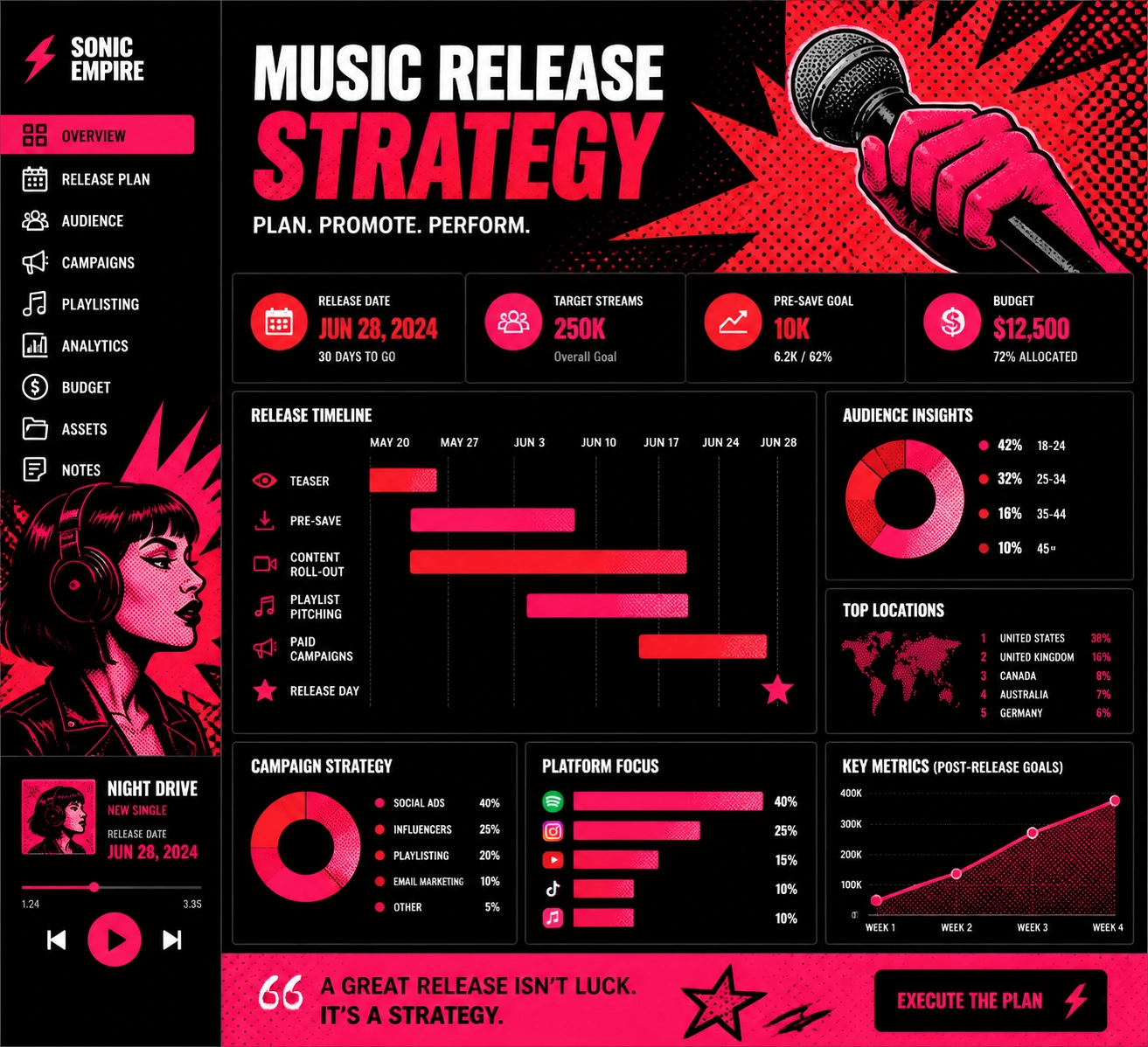
A better approach is to give your release room to breathe. Aim to deliver your music at least four to eight weeks before it goes live. That window gives you time to build anticipation, organize your visuals, prepare outreach, and create a rollout that feels intentional instead of rushed.
Actionable takeaway: Set your release date first, then build a weekly countdown plan around it that includes content creation, distributor delivery, teaser posts, and fan reminders.
2. Waiting Until Release Day to Start Promotion
If your audience first hears about your song on the day it drops, you are already behind. Promotion works best when people feel like they are part of the journey before the music arrives.
Start talking about the release early. Share snippets, behind-the-scenes moments, cover art reveals, short stories about the song, and simple calls to action that invite fans to pre-save or join your email list. The goal is not to overwhelm people. The goal is to create familiarity and anticipation.
Actionable takeaway: Begin promotion at least two to three weeks before release day with a simple content sequence: teaser, announcement, preview, reminder, launch.

3. Stopping the Push After the First 24 Hours
A lot of artists treat release day like the finish line, but it is really the start of the campaign. If all your energy goes into launch day and then disappears, the song has very little chance to keep growing.
The days and weeks after release are when you can continue driving attention through short-form video, performance clips, lyric highlights, fan reactions, and repeat reminders. Many listeners need multiple touches before they stream, share, or save a track.
Actionable takeaway: Plan at least 30 days of post-release content so the song keeps showing up in fresh ways after launch.
4. Depending on Just One Platform
It is risky to put your entire release strategy on one platform. If all your promotion lives on Instagram, TikTok, or Spotify alone, you limit your reach and make your campaign vulnerable to changes you cannot control.
Different people discover music in different places. Some respond to video. Some respond to email. Some need repeated exposure across multiple channels before they pay attention. A stronger release strategy spreads your message across the platforms where your audience already spends time.
Actionable takeaway: Choose three to five core channels for each release, such as Instagram, TikTok, YouTube Shorts, email, and streaming platform profile updates, then adapt the same message for each one.

5. Overlooking Metadata, Credits, and Cover Art Details
Even when the music is excellent, small technical mistakes can create major problems. Missing credits, incorrect splits, bad formatting, low-resolution artwork, or inaccurate metadata can delay releases and create confusion later.
These details may not feel exciting, but they matter. Clean metadata helps your music appear correctly across platforms, supports proper royalty tracking, and keeps your brand looking professional.
Actionable takeaway: Create a final release checklist that includes cover art size, song title formatting, featured artist names, writer splits, ISRC codes, and distributor settings before you submit anything.
6. Chasing Attention Instead of Building Real Fan Connection
Views, likes, and impressions can feel encouraging, but they do not always translate into long-term support. If your strategy only aims for quick exposure, you may miss the chance to build a direct relationship with the people who genuinely care about your music.
Your strongest asset is not a viral moment. It is an audience you can reach again and again. That is why email lists, text communities, exclusive offers, and direct fan engagement matter so much for independent artists.
Actionable takeaway: Give fans a reason to connect beyond streaming by offering early access, exclusive content, merch bundles, or behind-the-scenes updates in exchange for joining your direct list.
7. Spending Everything on the Music and Nothing on Promotion
It makes sense to invest heavily in recording, production, mixing, and visuals. But if there is no budget left to support the release, even great music can struggle to reach new listeners.
Promotion does not always require a massive spend, but it does require intention. A small budget can go a long way when used for targeted ads, content creation support, playlist research, or campaign assets that extend your reach.
Actionable takeaway: Build your release budget in two parts from the beginning: creation and promotion. Even a modest promotional budget can help your music travel farther.

Final Thoughts
A strong release strategy is not about doing everything perfectly. It is about giving your music a fair chance to connect. When you plan ahead, build anticipation, stay consistent after launch, diversify your channels, clean up the details, focus on real fan relationships, and make space for promotion in your budget, you give each release more power.
Independent musicians do not need to move like major labels to make meaningful impact. They need a clear plan, steady execution, and the willingness to treat every release like an opportunity to grow.
Quick Recap
- Give yourself at least four to eight weeks to prepare a release.
- Start promoting before launch day.
- Keep showing up after the song goes live.
- Use multiple channels, not just one.
- Double-check metadata, credits, and artwork.
- Focus on direct fan connection, not just vanity metrics.
- Save part of your budget for promotion.
© 2026 Digital Buzz Now. All rights reserved.