


Almost every founder story has a version of the moment an idea became a product. Less often, we hear what came before: the product was never supposed to be a business at all.
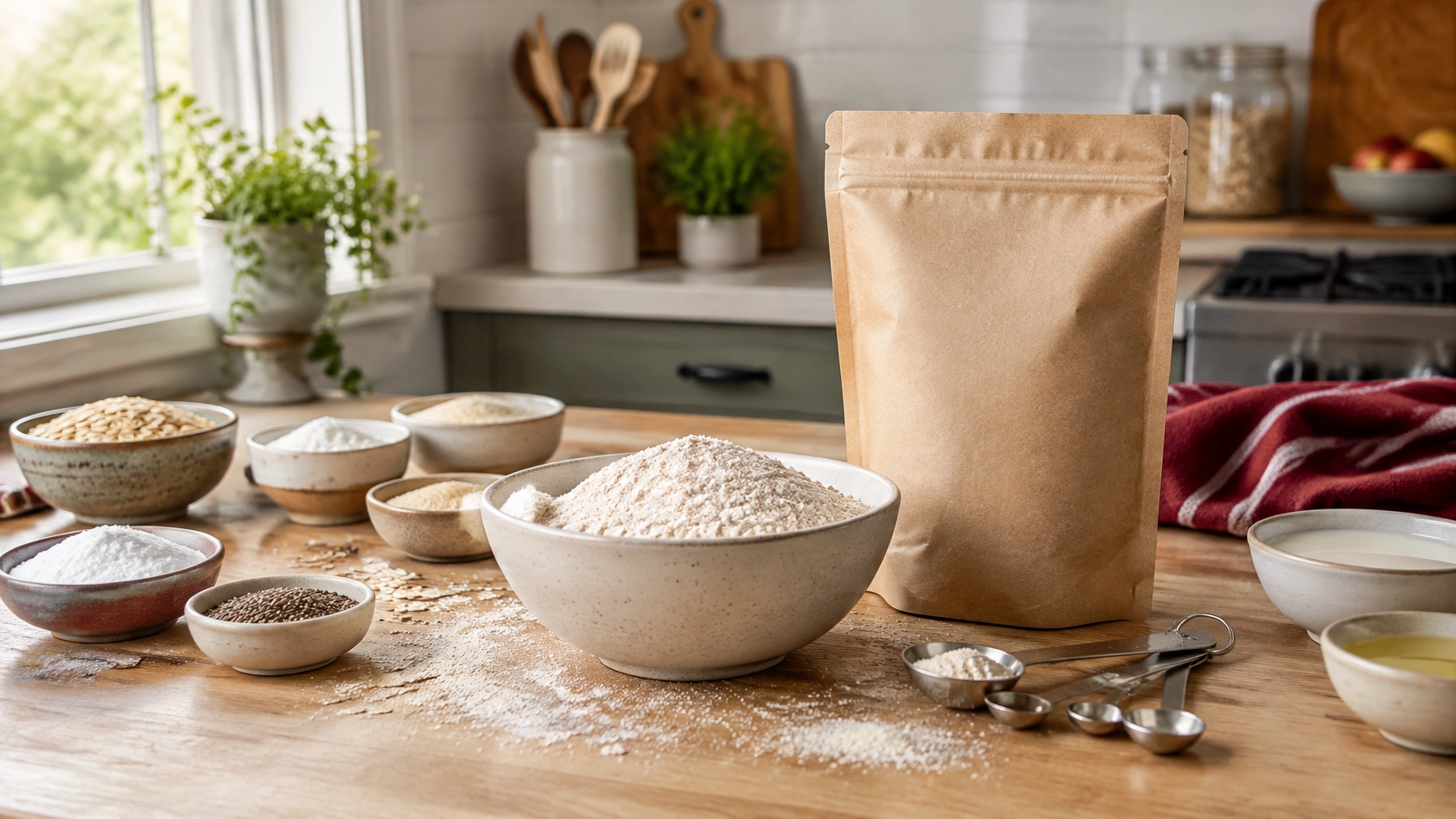
For Anthony Winston, the starting point was at home. After his young daughter had a severe reaction to dairy-based formula, the family learned she had many more food allergies. Winston, an electrical engineer by trade, began making baking mixes for his own children, leaving out the top 14 allergens. His daughter then suggested selling the recipes to help other families facing food allergies. That idea became Worry Free Food.
What happened next offers a useful lesson for entrepreneurs: sometimes the first meaningful product research does not happen in a boardroom or a focus group. It happens when you are trying to solve a problem that is already part of your everyday life.

The customer signal came from home
Worry Free Food began with a family need, not a plan to enter the food industry. Winston was making mixes for his children. His daughter’s suggestion to sell them changed the direction of the work.
That sequence matters. When you build something for your own use, you are close to the problem. You know what is frustrating, what is missing, and what a useful solution needs to do. That does not guarantee that other people will want the product. But when someone outside the original need asks to buy it, that is a signal worth taking seriously.
In this case, the request came from Winston’s daughter, who saw that other families might benefit from the recipes. The business grew from that possibility. It is a reminder that an early customer signal does not always arrive as a formal order or a polished market study. It can begin with a simple question: could this help someone else, too?
The mixes also address a specific challenge in the gluten-free aisle. Products made without gluten can still contain ingredients such as nuts and sesame, which may be a concern for people managing other food allergies. Worry Free Food’s mixes leave out the top 14 allergens. The value is not simply that a mix exists. It is that the product was conceived around the needs that prompted the family to make it in the first place.
That personal origin is not a shortcut around the work of building a business. It is a way to stay connected to the problem the business set out to solve. For founders, the transferable lesson is straightforward: build the thing you need, then pay close attention when somebody else asks for it. That request may be the first real customer signal.
The bottleneck was not only the recipe
The Winstons’ next step was not a new flavor or a bigger marketing campaign. In June 2026, they bought Valley Flaxflour and renamed it Free From Co-Packing. The facility gives them a place to package products for other brands without risking cross-contamination from the top 14 allergens.
This is the less glamorous side of food entrepreneurship, and it may be the more consequential one. A recipe can be carefully designed, but making and packaging food safely also depends on the environment and equipment used. When machines are shared, the risk of allergen cross-contamination becomes a central operational concern.
A dedicated facility changes the problem a founder is trying to solve. Instead of only selling a brand’s own mixes, the Winstons can offer other brands access to packaging in a facility intended to avoid that cross contamination risk. That could make the business a platform for more products, not only a single brand. But it is a bet on what the facility can enable, not a proven outcome.
The reporting does not say how large the business is, how many people it employs beyond production lead Wade Russell, or what the facility can produce. Those unknowns matter. They are a reason to describe the purchase as a strategic move with potential, rather than assume a result that has not been reported.
Russell has worked in food packaging for more than 15 years. He describes the job as bringing together the science of hygiene, food safety and machinery. If those pieces do not come together, he says, somebody could get hurt. His point makes the operational stakes plain. In this business, production is not simply a matter of getting a product into a package. The conditions around that work are part of the product’s promise.
For founders, the lesson is to name the constraint that actually caps growth. It may be tempting to focus on the challenge that is easiest to explain, such as getting more attention. But if the real limit is access to equipment that can be used without creating a cross-contamination risk, then promotion alone will not remove the bottleneck. The Winstons’ facility purchase is a practical attempt to address the constraint directly.

A small business still lives in a big world
Winston also learned that running a food business means paying attention to events far beyond the family’s kitchen or production floor. He used to buy potato starch from Poland. When the war in Ukraine disrupted shipping, he had to find new suppliers.
It is a concrete example of how a global disruption can reach a small company through one ingredient. A supply chain issue is not always a distant concern reserved for large manufacturers. If a key input comes from one source, a shipping interruption can become an immediate operating problem.
The lesson is not that every founder can predict what will happen. It is that the outside world can reach the business through ordinary purchasing decisions. Knowing where your inputs come from, and whether you have another option, can help you recognize where you are exposed before a disruption forces a decision.
Winston hopes the growing push for Canadian-made goods will help Worry Free Food create more options for people with food allergies. He also wants to work with schools and universities to make lunch programmes safer for students with allergies. Those ambitions connect the family’s original concern to a wider need, while remaining grounded in the kind of practical work the company is already doing.
The family moved from Southern California to Middleton, Nova Scotia, after years of personal experience with racism and the death of George Floyd led them to look for a safer place to raise their children. They had fallen in love with Nova Scotia during a first visit in 2021. Winston says people in the province have been warm and welcoming, and that this has carried over into the business community.
Their path is not a formula every entrepreneur can copy. It is a reminder that a company is shaped by more than its product. It is also shaped by the people it serves, the place where it operates and the conditions it has to navigate.
A practical checklist for founders
If you run something small, this story offers a few questions worth putting on paper:
- Name the constraint: Write down the one thing you keep working around instead of working through. Be specific about what is blocking the next step.
- Price the bottleneck: Ask whether buying the bottleneck is cheaper than a marketing push. More attention will not solve a production constraint if the process cannot handle additional demand.
- Find another source: List the inputs you buy from one place and identify a second source before you need it. Winston’s experience with potato starch shows how a shipping disruption can turn a purchasing decision into an urgent one.
- Notice the first buyer: Treat the first stranger who asks to buy your product as the start of the business rather than a favour. Listen closely to what prompted the request and what problem they hope the product will solve.
Worry Free Food began with a need inside the Winston family. Its next chapter is an effort to address a practical limit that affects the wider market for allergen-free products. Whether the facility becomes the platform the family hopes for remains to be seen. What is already clear is the sequence: solve a real problem, listen when someone else recognizes the value, and be honest about what is holding the work back.
For an entrepreneur, that sequence can be more useful than a tidy origin story. It keeps the work connected to the people it is meant to serve, and it puts the next decision where it belongs: on the problem that needs solving now.