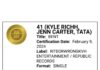
A chart streak ending can feel like a dramatic changing of the guard. This week, Taylor Swift’s “Patient Zero” debuted at No. 1 on the Billboard Hot 100, ending Ella Langley’s remarkable 24-week run at the top with “Choosin’ Texas.”
That is a major headline, but the bigger lesson is underneath it.
“Choosin’ Texas” did not disappear. It moved to No. 2 after spending nearly half a year as the country’s biggest song. Swift’s new single arrived with enormous attention, a coordinated campaign, a returning album, strong streaming activity, radio momentum and a fanbase ready to move together.
At the same time, The Life of a Showgirl: The Encore returned to No. 1 on the Billboard 200. Tinashe earned her first Billboard 200 top 10 with Popstar, debuting at No. 6. And a crowded October K-pop calendar is bringing more than 60 confirmed releases into an already competitive listening environment.
For independent artists, this is not a reason to feel discouraged. It is a useful masterclass in how momentum works now.
A spike can win a week. A run builds a career.
One of the clearest differences in today’s music economy is the gap between a debut spike and sustained performance.
A spike happens when attention arrives all at once. It may come from a viral clip, a major playlist placement, a high-profile collaboration, a television appearance, a compelling visual or a fan campaign. Spikes matter because they create discovery. They can introduce an artist to millions of listeners in a short period.
But a spike does not automatically create a lasting audience.
A run is different. A run means listeners keep returning after the first wave of curiosity has passed. The song continues appearing in playlists, videos, conversations, performances and recommendations. It develops a life beyond release week.
Ella Langley’s 24-week reign with “Choosin’ Texas” is powerful precisely because it represents sustained demand. Holding the top spot for one week is an achievement. Holding it for 24 consecutive weeks suggests that the song became part of people’s routines.
That is the standard emerging artists should study: not simply, “How do I go viral?” but, “What will make people come back next week?”
Why long No. 1 runs matter more than ever
Streaming has made the music marketplace faster, but it has also made longevity more meaningful.
Listeners can move instantly from a new release to an old favorite, from a trending clip to a deep catalog cut, or from one artist’s newest single to an entirely different genre. Every song competes with everything that has ever been released.
In that environment, a long chart run signals several things:
- The song reached listeners beyond the artist’s core fanbase.
- It continued to generate repeat plays.
- It remained relevant across multiple platforms.
- Its audience kept sharing, saving and discussing it.
- The campaign supported the song after the initial release moment.
- The song had enough emotional or cultural connection to survive a crowded market.
That final point is especially important. A strong release campaign may get people to press play once. A strong song-and-campaign combination gives them a reason to return.
For an independent artist, the goal should not be to imitate the size of a superstar’s marketing machine. The goal is to understand the structure behind the momentum and build a version that fits your resources.

Lesson one: Release timing is part of the creative strategy
Release timing is not just an administrative decision. It can shape how much attention a song receives.
October’s packed K-pop comeback calendar proves how quickly the competitive landscape can change. With major acts scheduling releases throughout the month, listeners, playlists, media conversations and social feeds will be moving constantly.
Independent artists do not always have the luxury of choosing a quiet week. But they can make smarter decisions about the timing surrounding a release.
Before selecting a date, consider:
-
What else is happening in your genre?
A crowded week may make discovery more difficult, but it can also create an opportunity if your sound or story offers a clear contrast. -
Do you have enough content prepared?
Releasing a song without follow-up assets often means wasting the first wave of attention. Plan videos, live clips, behind-the-scenes material, lyrics, visualizers and short-form posts before launch day. -
Can your audience participate?
Give listeners something specific to do: use the sound, share a lyric, request the song, add it to a playlist or attend a release event. -
Does the date connect to a real moment?
A tour announcement, collaboration, seasonal theme, personal milestone or cultural event can give a release additional context.
A release date should be the beginning of a campaign, not the end of your preparation.
Lesson two: Treat your catalog like a connected story
Taylor Swift’s “Patient Zero” did not arrive in isolation. It was part of a larger album cycle, and the album returned to No. 1 as the new single reached the top of the Hot 100. Several tracks from the expanded project also entered the chart near the top.
That is a catalog strategy.
For independent artists, a catalog strategy does not require multiple deluxe editions or a massive tracklist. It can be as simple as creating meaningful connections between releases.
You might:
- Release a single that introduces the central theme of an upcoming EP.
- Follow it with a second song that reveals another side of the project.
- Reintroduce an older track through a live version or collaboration.
- Create a visual series that links several songs together.
- Build a playlist that places your new release beside the influences behind it.
- Use one song’s audience data to decide which track deserves the next push.
The key is to make every release help the others. If someone discovers your newest single, they should have an easy path into the rest of your world.
A song should not only attract a listener. It should give that listener somewhere to go next.
Lesson three: Sustained playlisting requires sustained activity
Playlist placement can create an important first lift, but placement alone is not a strategy.
A song may enter a playlist and receive thousands of new listeners. The next question is whether those listeners save it, replay it, share it or explore the artist’s catalog.
That is why artists should support playlist momentum with consistent activity. Share the story behind the song. Perform it live. Create alternate versions. Invite fans to use a specific lyric. Collaborate with creators whose communities genuinely fit the track. Continue pitching the song to independent curators and genre communities after release week.
Do not assume that one playlist feature will carry a song forever. Think of it as an introduction.
Your job is to give new listeners enough reasons to stay.

Lesson four: Study Tinashe’s breakthrough without copying her path
Tinashe’s first top 10 album on the Billboard 200 with Popstar is another reminder that breakthrough moments can arrive after years of work.
A first major chart milestone rarely represents a first effort. It usually reflects accumulated skill, a growing audience, stronger positioning and a project that connects multiple parts of an artist’s identity.
For emerging artists, the takeaway is patience with purpose.
Keep improving the music, but also keep improving the way people understand you. Your visuals, interviews, live performances, social content and collaborations should make your artistic identity easier to recognize.
A breakthrough is more likely to last when listeners know what they are connecting to.
Build a run, not just a release
The current chart shakeup offers a simple challenge for every independent artist:
Do not measure your entire campaign by the first 24 hours.
Measure what happens after the first wave.
Are listeners returning? Are saves increasing? Are people finding another song? Are your live audiences growing? Are fans quoting lyrics without being prompted? Are creators using the music because it fits their own stories, not simply because you asked them to?
Those are the signals of a run.
A practical 30-day plan might look like this:
- Week one: Release the song and focus on discovery.
- Week two: Share the story, lyrics, live clips and strongest audience reactions.
- Week three: Push the next catalog connection, a second song, remix, acoustic version or collaboration.
- Week four: Review the data and identify where genuine listener interest is developing.
The goal is not to manufacture endless noise. It is to keep giving the right people a reason to return.
The streak ended, but the lesson continues
“Patient Zero” reaching No. 1 is a reminder that even historic runs eventually meet a new moment. Ella Langley’s 24 weeks at the top remain a major achievement, regardless of what came next.
That is the healthiest way for independent artists to view charts. A ranking is a snapshot. A career is the pattern created over time.
The artists who last are not always the ones with the loudest first day. They are the ones who know how to turn attention into habit, a song into a catalog, and a release into a relationship with listeners.
Keep creating the moment, but prepare for the weeks after it.
Explore more artist stories and music-industry features through Digital Buzz Now’s Music Artist category, and discover new sounds through our curated Spotify playlists.