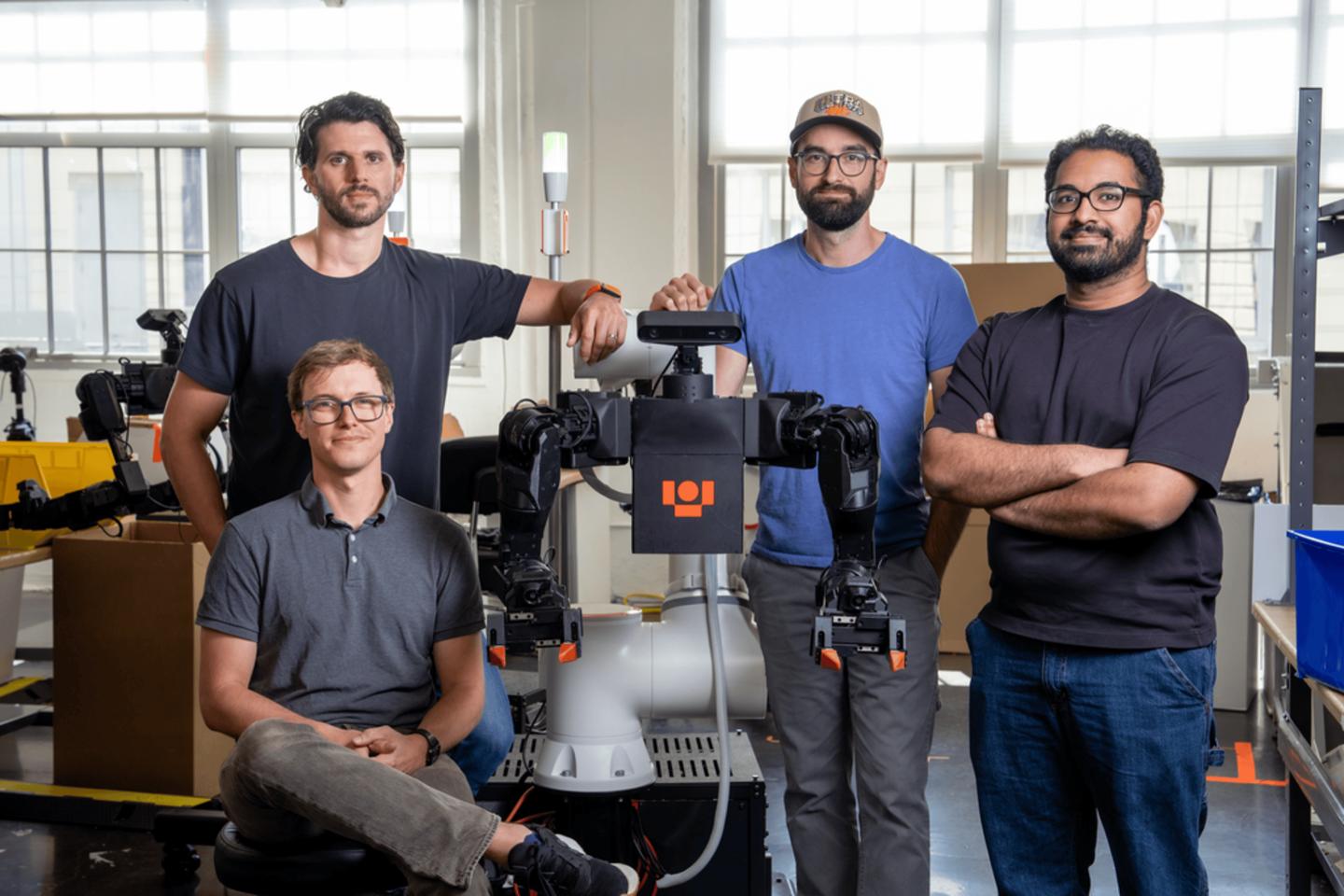
A robotics company just made automation feel a little more accessible to businesses that do not have millions of dollars sitting in a capital expenditure budget.
On October 9, 2026, Brooklyn-based robotics company Ultra announced $62 million in funding for its growing “robots as a service” business. The company also announced a deeper partnership with Physical Intelligence, an artificial intelligence research firm developing the software that gives robots the ability to understand tasks, adapt to changing conditions, and improve through experience.
The headline is big. The practical takeaway may be even bigger:
Small and mid-sized businesses may not need to buy the future. They may be able to rent it.
What Ultra’s $62 million round is really funding
Ultra has developed robots designed for repetitive industrial and warehouse tasks, including packing, sorting, and kitting. Its systems are built to work inside existing facilities rather than requiring companies to rebuild an entire operation around new machinery.
The company’s funding includes a $50 million Series A and an earlier $12 million seed round. While the funding itself reflects investor confidence, Ultra’s business model is the more important development for everyday operators.
Instead of asking customers to purchase expensive equipment outright, Ultra installs the robots for an integration fee and charges recurring monthly fees for hardware, software, and ongoing support.
That is the “robots as a service” model.
It is similar to the way businesses adopted cloud software. Companies moved away from purchasing servers, maintaining complex systems, and paying large upfront costs. They began subscribing to infrastructure and paying for the technology as an operating expense.
Robotics is now moving in the same direction.

Why the subscription model matters for smaller businesses
Traditional automation has often been difficult for smaller operators to justify.
A company might need a robotic system, custom integration, specialized engineering, facility changes, maintenance contracts, and employee training before seeing its first meaningful return. Even when the long-term savings look attractive, the upfront investment can be intimidating.
A service model changes that calculation.
Instead of asking, “Can we afford a $250,000 or $500,000 automation project?” a business can ask:
- What repetitive task is costing us the most each month?
- What would it be worth to improve that process by 20%?
- Can we test automation without committing to a full purchase?
- Does the monthly cost fit within the value the system creates?
This does not make robotics inexpensive. A recurring contract can still represent a major commitment. But it can make the technology easier to test, budget, and scale.
For a growing e-commerce brand, third-party logistics provider, manufacturer, or distributor, that flexibility can be the difference between waiting five years to automate and starting with one workstation this quarter.
Ultra’s “body and brains” strategy
Ultra’s partnership with Physical Intelligence also points to a major shift in how robotics companies may build their products.
Ultra focuses on the physical robot: the arms, cameras, grippers, motors, safety systems, and deployment process. Physical Intelligence focuses on the AI models that help the robot interpret its environment and decide how to complete a task.
It is a “body and brains” approach.
That division of labor matters because the physical environment inside a warehouse is rarely perfectly predictable. Packages come in different shapes. Materials bend, wrinkle, slide, and overlap. Products change. Labels are not always positioned exactly where a machine expects them to be.
Traditional automation typically requires highly structured environments and carefully programmed instructions. AI-powered robotics aims to be more flexible. Instead of programming every possible movement, operators can train a system using examples and real-world data.
Ultra says its robots have already packed more than half a million orders. One disclosed test reportedly showed 96.4% autonomous operation over an eight-hour shift. Those numbers should be viewed as company-reported performance, not a guarantee for every business. Still, they show why investors and operators are paying attention.
The more useful question is not whether a robot can do everything.
It is whether a robot can reliably handle one valuable task for long enough to make a measurable difference.

What small business owners should look for first
Most small businesses should not begin by asking, “How do we become fully automated?”
That question is too broad and too expensive.
A better starting point is to identify a bottleneck.
Look for work that is:
- Repetitive
- Physically tiring
- Difficult to staff consistently
- Easy to measure
- Important to customer satisfaction
- Valuable enough to justify a monthly technology payment
In a warehouse, that might be packing standard orders or sorting returns. In a small manufacturing operation, it could be repetitive assembly or visual inspection. In food production, it might involve moving containers or organizing ingredients. In retail, it could be backroom sorting and inventory movement.
The best first use case is usually not the most impressive one. It is the one where the numbers are clearest.
Before speaking with a robotics provider, measure:
- How many labor hours the task consumes each week
- How much overtime, turnover, or temporary labor it creates
- The current error rate
- Average throughput per hour
- The cost of delays during busy periods
- How much revenue is limited by the bottleneck
This gives you a baseline. Without it, it is easy to get excited about a demonstration without knowing whether the technology improves your business.
How to evaluate a robots-as-a-service contract
A monthly robotics agreement should be reviewed as carefully as any major technology or equipment contract.
Ask providers the following questions before signing:
What exactly is included?
Clarify whether the monthly fee covers hardware, software updates, maintenance, replacement parts, remote support, on-site service, training, and integration changes.
How is performance measured?
A provider may discuss productivity, but you need specific definitions. Is success based on units per hour, completed orders, uptime, accuracy, or labor hours saved?
What happens when the robot cannot complete a task?
Every system needs a human fallback. Understand when employees step in, how often that happens, and whether those interventions are included in the service model.
What are the minimum commitments?
Find out whether you are paying for a fixed term, a minimum number of operating hours, a minimum volume, or a minimum monthly payment regardless of demand.
Can the system adapt as your business changes?
Your product mix may change next season. Ask how much retraining or reconfiguration costs when new products, packaging materials, or workflows are introduced.
Who owns the data?
AI-powered systems learn from operational data. Understand what information is collected, how it is protected, whether it is used to train broader models, and what happens to the data if you end the contract.
What happens if the vendor fails?
Review service-level commitments, replacement timelines, contract termination rights, and business continuity plans. Renting equipment should reduce risk, not hide it.

A practical path to automation without a huge budget
For many small and mid-sized businesses, the smartest move will be a limited pilot.
Choose one workflow. Keep the scope narrow. Set a 60- or 90-day test period. Agree on success metrics before installation.
For example, a business might aim to:
- Increase packing throughput by 25%
- Reduce overtime by 15%
- Cut packaging errors in half
- Keep the system operational for at least 95% of scheduled hours
- Free employees to handle higher-value customer or production work
Do not measure success only by whether the robot works. Measure whether the business improves.
Also remember that automation does not eliminate the need for people. It changes where people spend their time. Employees may move from repetitive lifting and sorting into quality control, customer service, equipment oversight, inventory planning, or more complex production work.
That transition requires communication and training. If workers feel that automation is being imposed on them without explanation, adoption can suffer. If they understand that the goal is to reduce exhausting tasks and create a stronger operation, they are more likely to help improve the system.
The bigger business lesson
Ultra’s funding round signals that robotics is moving away from the “one giant machine for one giant corporation” model.
The next wave may be more flexible, more software-driven, and easier to access through monthly payments. Businesses will not necessarily own every robot they use. They may subscribe to automation the same way they subscribe to accounting software, delivery platforms, cybersecurity, and cloud storage.
That creates a new competitive opportunity.
A small business that rents the right automation may be able to serve more customers, operate longer hours, reduce errors, and compete with larger companies without copying their entire infrastructure.
The goal is not to chase every new machine.
The goal is to find the repetitive work holding your business back, understand its true cost, and determine whether a flexible automation service can help your team move faster.
Robots as a service is still an emerging market. Prices, performance, contracts, and reliability will continue to evolve. But Ultra’s $62 million round makes one thing clear: the future of business automation may not arrive as a purchase order.
It may arrive as a monthly bill, and a practical way for more businesses to grow.
For more current business stories shaping ambitious companies, explore Digital Buzz Now.