


Whatnot’s Black Friday headline is hard to miss: zero percent seller commission. But the bigger opportunity in the company’s newly announced Black Friday Weekend Live may not be the fee break. It may be the chance for a small seller to get in front of shoppers who arrived for someone else.
The four-day event runs from November 27 to 30, with celebrity and creator giveaway shows throughout the weekend. The lineup was announced on November 17, and the commission promotion is the part most sellers will feel first. But the useful question is not simply how much commission they can save. It is what they will do if a wave of unfamiliar viewers lands in their show.
The headline offer has a few important details
On Black Friday, November 27, all sellers pay zero percent commission. On Sunday and Monday, the commission discount is 50 percent. Standard payment processing fees still apply, and each offer runs from midnight to 11:59 p.m. in the seller’s local time.
That distinction matters. “Zero commission” does not mean every cost of making a sale disappears. And on Sunday and Monday, a 50 percent discount is a reduction to the commission, not a promise that all selling costs are cut in half. Sellers should work out the numbers against their own prices and margins before treating the promotion as extra profit.
Whatnot’s commission structure has already been changing. In September, the platform replaced its flat fee with tiered commission rates that can fall as low as 3 percent for high-volume sellers. The Base rate stayed at 8 percent, and sellers move below that rate after clearing 15,000 dollars in sales over four weeks. The Black Friday promotion sits on top of that structure, so a seller’s usual tier is part of the calculation.
There is also a shopper offer: coupons released across the weekend give 10 dollars off a 30 dollar purchase. That could help make a first purchase feel easier, but a coupon can bring someone to the checkout only if the product and the show have already given them a reason to stay.
Small Seller Saturday is the most time sensitive piece
Saturday, November 28, is Whatnot’s first Small Seller Saturday. The company is putting up to 1 million dollars in gift cards in the hands of nearly 10,000 small sellers in the United States and Canada, for those sellers to give away during their own shows. Eligible sellers also pay no commission that day.
But the eligibility window is the part to pay attention to now. Eligibility locks at midnight on November 24. The offer covers sellers on Whatnot’s Base commission tier who are not on a custom rate card. If you think you might qualify, check your tier and rate card before the cutoff, not when the event is already underway.


A gift card giveaway may give a small seller a way to make a show more compelling, but it is not the same thing as building a customer relationship. People may arrive because they want a chance at a prize. The seller still has to make the products interesting, explain what makes them worth considering, and give viewers a clear reason to keep watching after the giveaway is over.
That is where the larger event lineup becomes relevant. Kai Cenat opens the weekend on November 27, giving away 100 PlayStation 5 consoles and 100 copies of Grand Theft Auto VI. MrBeast, Jimmy Donaldson, goes live on November 29 with what the company calls 100 surprises. On November 30, Shay Mitchell joins luxury resale seller FashioNica to give away BÉIS luggage, luxury bags and travel experiences. Claudia Oshry and Ben Soffer of Girl With No Job give away their holiday wish lists the same day, and David Dobrik is also on the lineup.
These names can draw a crowd. They cannot guarantee that the crowd will care about every shop it encounters.
Traffic is not the same as conversion
A viewer who wanders into your stream from a major giveaway may know nothing about your products, your category or you. They may be watching casually, comparing several shows, or waiting for a prize. That is a different audience from a regular who already trusts your taste.
The goal, then, is not only to get the click. It is to earn the second minute.
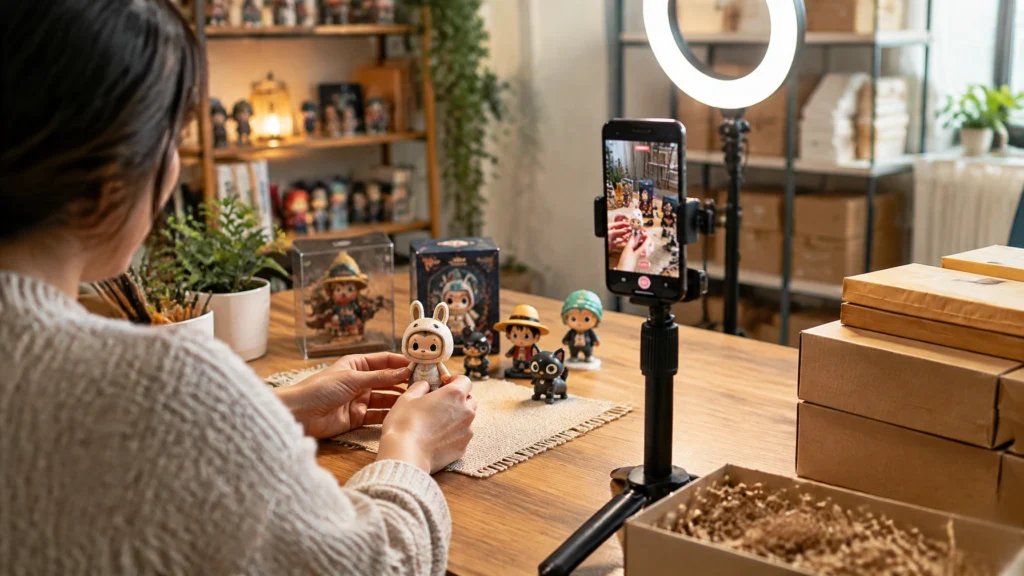
Make the first moments understandable to a stranger. Say what you sell and what is happening in the show. Put a product on camera quickly and describe it in plain language. Rather than assuming viewers know why an item is special, explain the detail that makes it worth a closer look. A repeatable format can help: welcome newcomers, show an item, answer the obvious question, then move naturally to the next one.
A giveaway can be a reason to enter the room. A clear, lively presentation is what gives someone a reason to stay. And if a viewer does not buy this time, a thoughtful, memorable show can still make your shop easier to recognize later.
Whatnot has seen how large these moments can become. On February 8, Donaldson hosted a one-hour giveaway show on the platform before the Super Bowl. It peaked at 583,000 concurrent viewers, and Whatnot called it the largest live shopping event in United States history. A single Lamborghini giveaway drew 554,631 entries. Those figures describe the scale of attention a marquee event can attract; they do not tell an individual seller how many of those viewers will become buyers.

The platform’s broader growth helps explain why it is investing in a high profile weekend. Sellers passed one billion cumulative orders in June, and the company closed a 545 million dollar Series G at a 20 billion dollar valuation in August. The competition for holiday shoppers is also real: over the four days from Black Friday to Cyber Monday in 2025, TikTok Shop reported more than 500 million dollars in United States sales. For independent sellers, those big platform numbers are context, not a sales forecast.
A practical checklist before the event
- Confirm your tier and eligibility before November 24. Small Seller Saturday eligibility locks at midnight that day and applies to Base tier sellers who are not on a custom rate card.
- Price for the actual commission offer. Remember that standard payment processing fees still apply. Calculate your margin using the offer for the specific day you plan to sell, rather than assuming every part of the transaction is free.
- Plan a repeatable format for cold viewers. Prepare a simple opening, a quick explanation of what you sell, and a product demonstration that makes sense even to someone who has just arrived.
- Set a realistic expectation for attention versus sales. A spike in viewers is not the same as a spike in buyers. Decide what a useful result would look like for your shop, and make room to learn from the audience you reach.

Black Friday Weekend Live could give small sellers a helpful break on commission and, for eligible sellers, a chance to put gift cards into their own shows. It could also put fresh eyes on shops that might otherwise be competing for attention in a crowded holiday feed. The most useful preparation is not trying to imitate a celebrity’s spectacle. It is making sure a new viewer can understand your show, trust what you are offering and decide whether it is for them.
Commission holidays and celebrity giveaways are weather, not climate. They can change the conditions for a moment, but they do not replace the steady work of building a shop people want to return to. The sellers who make the most of a spike are usually the ones who were already rehearsed.