


When a product takes off, the first thing people notice is usually what it enables: more customers, more creative output, faster growth. The less visible story is what starts to strain behind the scenes.
For software teams, that strain increasingly shows up after the code is written. Every proposed change still needs to be built and tested before it can be merged. And when developers and AI coding tools generate more code, that checking process can become a queue of its own.
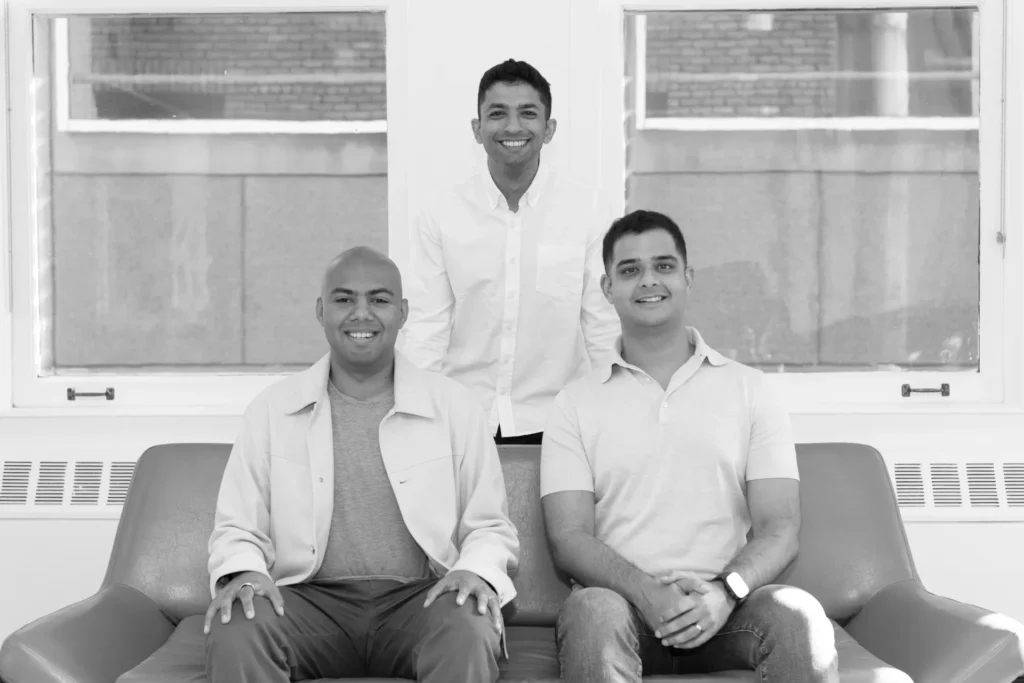
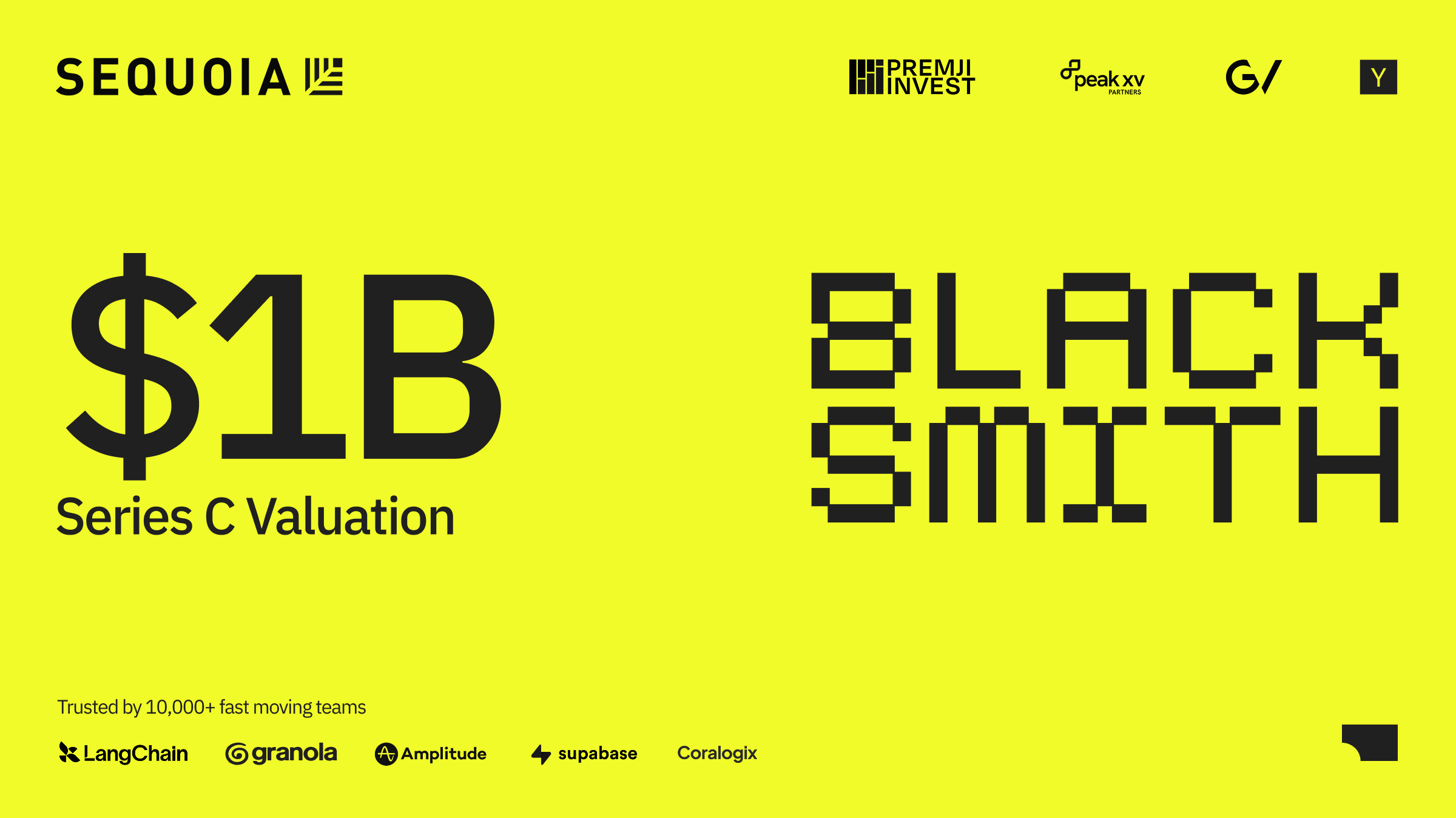
Blacksmith, a San Francisco startup founded in 2024 by three University of Waterloo computer science graduates, built its business around that overlooked pressure point. On October 22, 2026, it’s drawing attention for a very visible milestone: a $66 million Series C led by Sequoia Capital at a $1 billion valuation.
The round included Premji Invest and existing investors Peak XV Partners, GV and Y Combinator, bringing Blacksmith’s total funding to $125 million. But the bigger founder lesson may be hiding in the company’s less glamorous focus: the work that piles up while everyone else is watching the headline feature.

The bottleneck moved
Continuous integration, or CI, is the automated process that builds and tests software whenever a developer proposes a code change. It helps teams catch problems before new code becomes part of a product.
For a developer, that process can feel like a pause button: submit a change, wait for the checks, then keep moving once they pass. For a company, CI is infrastructure that needs to handle bursts of activity and deliver reliable feedback. If builds and tests slow down, the team’s pace can slow with them.
Blacksmith CEO Aditya Jayaprakash has framed the shift this way: developers who once submitted three or four pull requests a day are now producing far more, with AI tools contributing to the change. The more code teams generate, the more work their validation systems have to process.
That’s the opportunity Blacksmith saw. Rather than trying to make code-writing tools, the company focuses on running the builds and tests that follow each change. It runs customers’ CI jobs on infrastructure it buys and operates itself, instead of relying on general-purpose cloud machines.
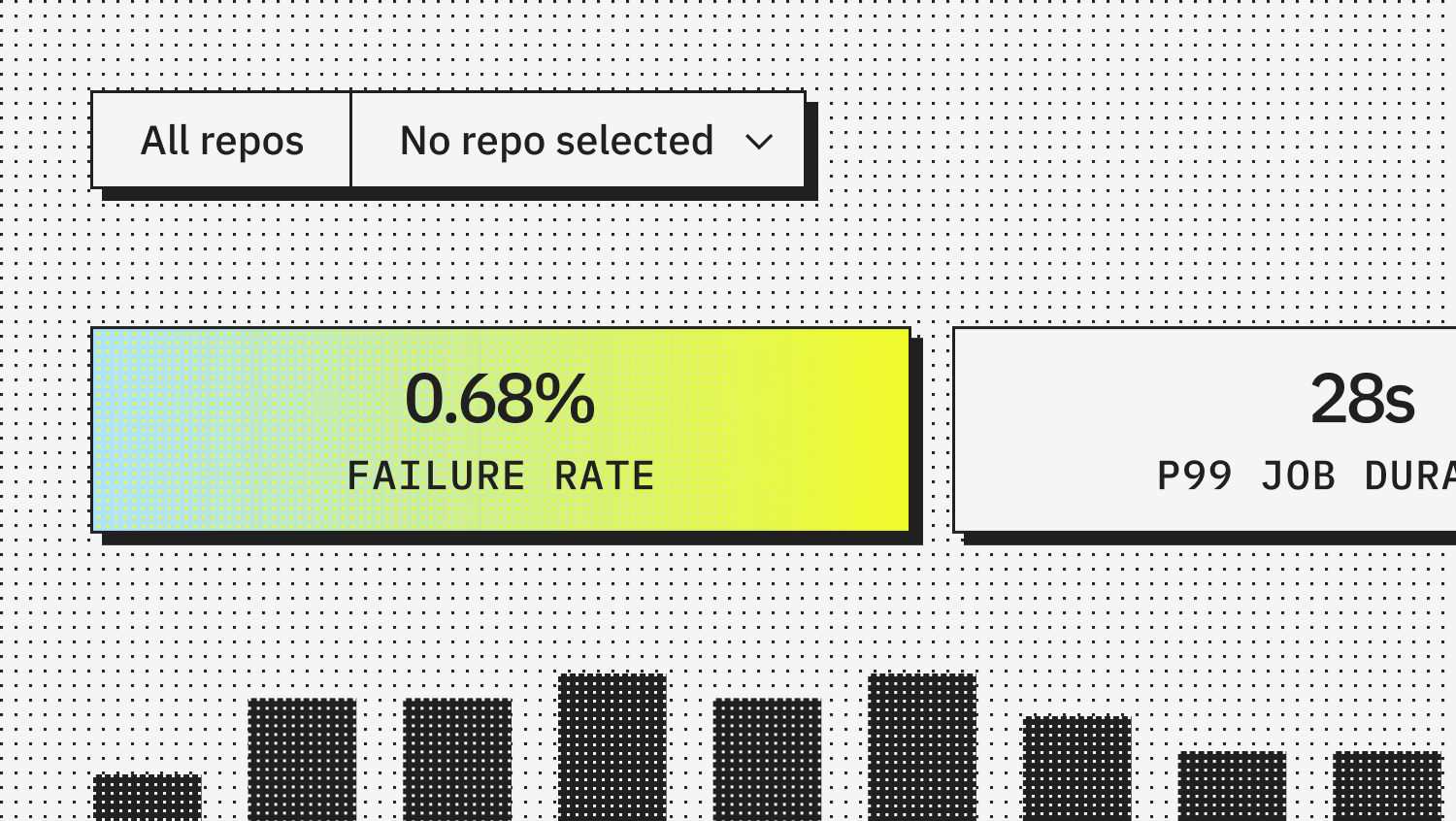
The company says developers finish CI jobs twice as fast and at 60% lower cost on average. Those are company-reported performance claims, but the underlying need is easy to understand: when output accelerates, the system responsible for checking it has to keep up.
From a small base to a $1 billion valuation
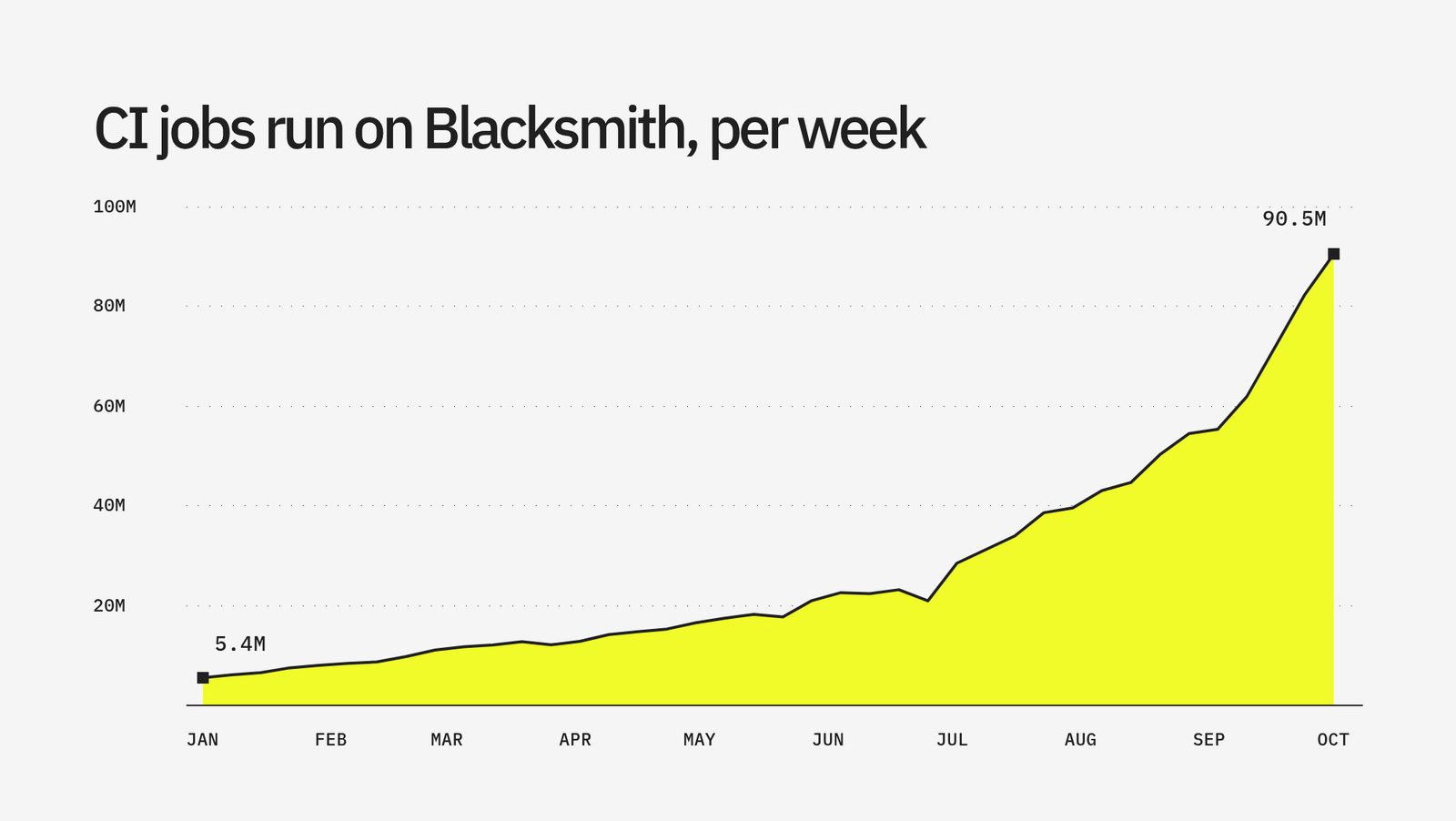
Blacksmith’s growth figures help explain why the story is resonating now. The number of weekly CI jobs running on its platform rose from 5 million in January 2026 to more than 90 million by October. The company also reports that annual recurring revenue grew 17-fold over that period; it has not disclosed the revenue figure itself.
Its customer count has climbed too. Blacksmith had about 800 customers around its Series A, more than 6,000 by the time of its Series B and over 10,000 today. Customers named by the company include Mercury, Granola, Handshake and LangChain.
The funding journey has moved quickly alongside that demand. Blacksmith’s $1 billion valuation is nearly 17 times the $60 million valuation associated with its September 2025 Series A, and almost double the $550 million valuation announced with its Series B in August 2026. Valuations tell us what investors agreed to in a particular financing round; they aren’t the same as revenue or a guarantee of future performance.
Still, the sequence is striking: a company founded in 2024, a Series A in 2025, and a billion-dollar valuation by October 2026. The operational footprint behind that growth is substantial, too. Blacksmith manages just under 10 megawatts of data-center capacity across the United States and Europe, and plans to grow that capacity fivefold in 2027.

Four lessons for founders watching the queues
Blacksmith’s rise is not a promise that every infrastructure startup will become a unicorn. It does, however, offer useful questions for founders in any industry, especially when a new technology changes how quickly customers work.
1. Look for the work that’s waiting
A queue is often a signal that a process can no longer match demand. In software, that might be tests waiting to run. In a creative business, it could be edits awaiting approval, customer requests waiting for a response, or orders waiting to ship.
Don’t just ask customers what they want. Notice where their progress gets stuck. Ask what happens while they wait, how often it happens and what the delay costs: in money, time, missed opportunities or team energy.
2. Measure the pain before building the fix
“Slow” is a feeling. A useful business case needs sharper detail. How many hours does the delay consume? How much does the existing setup cost? How often does the queue grow? What does a delay prevent a customer from doing?
Blacksmith’s reported growth in job volume and customer count makes the scale of the need tangible. For your own idea, even a modest but recurring bottleneck can be meaningful if customers care enough to change their behavior and pay to solve it.
3. Own the layer that shapes the economics
Blacksmith’s approach involves buying and operating its own servers rather than simply passing CI workloads through general-purpose cloud machines. That requires more operational responsibility and infrastructure investment, but control over the underlying layer can also give a company more room to tune performance and costs.
The lesson isn’t that every startup should own hardware. It’s to understand which part of your product determines the customer experience and the business economics. If a layer is central to both, relying on someone else’s default setup may limit what you can improve. Choose deliberately, based on your capabilities and the costs customers actually feel.
4. Make switching feel manageable
A strong product can still lose to inertia. Teams have existing tools, established routines and little appetite for a risky migration. Blacksmith’s product is designed as a drop-in replacement for GitHub Actions, and the company says teams can switch with a one-line change to a workflow file.
That makes the initial step feel smaller. A practical founder exercise: map the first hour a new customer would spend trying your product. What do they need to change, learn, move or ask permission to do? Removing unnecessary friction can make a valuable improvement much easier to test.

Start with one queue in your own workflow
You don’t need to build an AI company, or a data-center business, to use this way of thinking. Start with a recurring queue in your own company or creative practice. Write down where work waits, how often it happens and what the delay costs. Then sketch the shortest possible path for a customer to experience a better way.
That combination (an identifiable bottleneck, a measurable cost and a simple first step) is a practical foundation for testing a business idea. It won’t guarantee a billion-dollar outcome. But it can help you find a problem customers already feel, rather than one you have to persuade them to care about.
Blacksmith’s story is a reminder that when a new wave of technology speeds up the visible work, value can shift to the quieter systems struggling to keep pace. Sometimes the opportunity isn’t in making the headline task more exciting. It’s in helping everything around it move again.