


On November 9, Amsterdam-based Onodrim Industries announced a $300 million Series A led by Lux Capital, valuing the company at $1.3 billion. The round, which follows a $45 million seed raised earlier this year, gives the company substantial resources for a distinctive plan: acquire controlling stakes in established European aerospace, defence and industrial businesses, then help them grow.
That may sound like a familiar roll-up strategy. But Onodrim’s ambition is bigger than collecting companies under one roof. It wants to build an industrial platform around the suppliers that keep complex industries moving, and that often don’t get the attention or investment their capabilities deserve.
For entrepreneurs, there’s a lot to unpack here: what it means to build a business whose product is other businesses, why patient capital can change a company’s options, and how a small supplier might find a new kind of partner.
The quiet importance of the companies behind the big names
The public usually sees the finished aircraft, vehicle or technology. Behind it is a long chain of specialist firms making components, materials and services that must meet demanding standards.
Many of these businesses are not startups. They are established manufacturers with experienced teams, trusted customer relationships and years of hard-won expertise. But a strong reputation does not automatically mean a company has the capital, software or operational support to expand. A supplier may have more orders available than it can fulfil, or rely on equipment and processes that are difficult to scale quickly.
That creates a gap between demand and production capacity. Onodrim’s thesis is that some of the answer lies not in inventing a new supplier from scratch, but in strengthening the capable companies already in place.
The company says it will take controlling stakes in dual-use businesses across critical supply chains, services and products. It plans to bring capital together with technology, operational know-how and business development support. Its first acquisitions have not yet been announced; Onodrim says it expects to reveal them in the coming months.


When the business is the acquisition itself
A conventional startup builds and sells a product. A roll-up platform has a different core job: find strong companies, bring them together thoughtfully and make each one more capable.
That means the acquisition is not the finish line. It is the beginning of the work. A new owner might invest in machinery, improve production planning, introduce better tools for tracking work in progress, or help a supplier reach customers and programmes that were previously out of reach.
The tricky part is knowing what to change, and what to leave alone. A specialist manufacturer’s value may be rooted in its people, reputation, customer approvals and deep understanding of a process. If a consolidator moves too fast to standardize everything, it can damage the very strengths it paid to acquire.
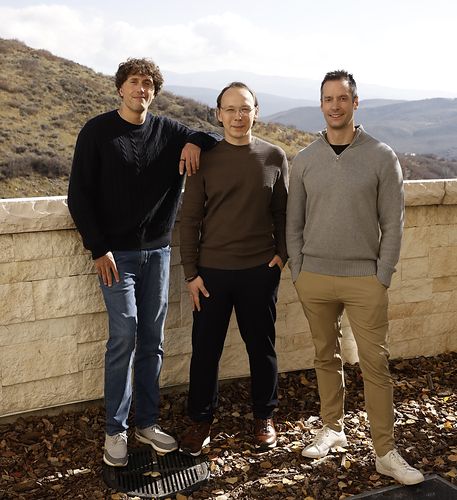
Onodrim’s founders bring experience across technology, government and investment. CEO Aistis Šimaitis previously worked in technology leadership at Palantir and advised the Lithuanian government. Co-founder and CTO Alexander Blessing is also a Palantir alumnus, and Christian Garrett is a co-founder and partner at 137 Ventures. The company says its approach will pair engineering and technology resources with respect for the businesses it joins.
That’s the promise, at least. The real test will be whether its first acquisitions show that centralized support can help individual companies grow without flattening the expertise that makes them valuable.
Why permanent capital changes the conversation
Industrial growth rarely happens on a tidy startup schedule. Buying equipment takes time. Hiring and training skilled people takes time. Winning customer approvals and qualifying products can take even longer. A company may need to invest well before the new capacity generates revenue.
Permanent capital, money not tied to a short fund life or a predetermined sale date, can give owners more room to make those investments. It may allow a platform to hold businesses through a long expansion cycle rather than pushing for a quick exit simply because a fund is nearing its deadline.
That doesn’t mean permanent capital guarantees patience or makes every acquisition a good one. Owners still need clear goals, financial discipline and accountability. But it can make a different kind of plan possible: invest in people and production today, then allow the benefits to build over time.
Onodrim says it is opening offices in Munich and Turin, joining existing locations in Amsterdam, London and Vilnius. That expanding footprint suggests it is thinking across European markets, although operating across borders also brings practical challenges: different rules, customer requirements and security considerations.

A possible exit path for smaller suppliers
For the owner of a small industrial supplier, a sale to a major corporation may feel like the obvious, and only, route to succession or growth. A well-resourced consolidator could offer another possibility: join a larger group while keeping the company’s capabilities, team and customer relationships central to the plan.
The right deal would depend on the details. An owner would want to understand what happens to the company’s identity, workforce, location, leadership and long-standing customer commitments. They would also want a clear account of how new capital will be used. Is the buyer funding extra capacity, modernizing equipment, adding technical staff or opening access to new customers? Or is the pitch mainly about combining financial statements?
For an established supplier, a useful first step is to document what makes the business hard to replace: specialized processes, certifications, quality performance, workforce expertise, delivery reliability and customer relationships. Then map the next constraint. If demand grew by 30 percent, what would prevent the company from meeting it? Equipment? Hiring? Materials? Working capital? An honest answer makes it easier to assess whether a new owner can solve a real problem.

The roll-up playbook, done with care
For entrepreneurs considering this model in any fragmented industry, Onodrim’s announcement offers a useful set of questions:
- Start with a bottleneck, not a shopping list. Identify a specific capability or production constraint customers urgently need.
- Find a strong foundation. A platform company should bring real expertise, trusted relationships and a clear understanding of the work, not just the ability to buy.
- Make the growth plan concrete. Specify which investments in equipment, people, technology or sales could increase capacity.
- Protect what already works. Preserve critical knowledge, local relationships and the trust that took years to earn.
- Give the strategy time. Industrial improvements may take longer to show results than a software launch or a new marketing campaign.
- Measure whether the group is stronger. Look for better delivery, greater output, stronger resilience and opportunities for employees, not simply a larger portfolio.
That discipline matters because consolidation has risks. A collection of companies does not automatically become a better company. Integration can distract teams, cross-border ownership can be complicated, and buying too aggressively can leave too little money for the investment that was supposed to unlock growth.
The bigger lesson for builders
Onodrim’s $300 million raise is a bet that Europe’s industrial capacity can be strengthened by backing the companies already doing essential work. The larger entrepreneurial idea is that sometimes the product is not a new machine or a new app. It is the system that helps several capable businesses invest, coordinate and take on more.
For founders of smaller suppliers, the news also points to a broader question than “Who might buy us?” It is “What could we build with a partner who understands the work and is prepared to invest for the long term?”
That answer will differ for every company. But in an industry where expertise is built over years and production capacity cannot appear overnight, a patient owner may offer something valuable: the chance to grow without pretending that a serious industrial business can be rebuilt in a quarter. The opportunity is real. So is the responsibility to make the combined companies better places to work, and more dependable partners for the customers who count on them.