


The AI chip boom has a way of drawing attention to the most visible names: chip designers, manufacturers and the technology companies building data centers. But a reported deal in Japan is a reminder that the industry depends on a much quieter cast of players, too.
Mitsui Chemicals is reportedly planning to buy JSR Corp from Japan Investment Corp. (JIC), the state-backed investment fund that took JSR private in 2023. The proposed price is said to exceed 1.3 trillion yen, or about $8.2 billion. Mitsui Chemicals has said no decision has been made, so this remains a reported plan, not a completed acquisition.
The distinction matters. Still, the possibility of a sale raises a compelling business question: who is best positioned to own and grow the specialized materials that advanced chips need?


The chemicals behind a circuit pattern
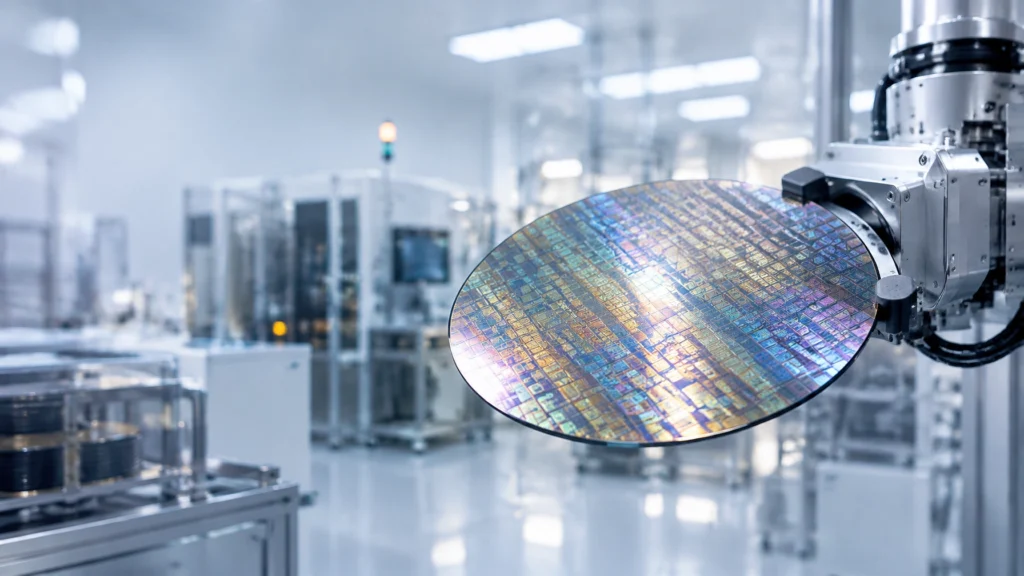
JSR is one of the world’s leading makers of photoresists: light-sensitive chemicals applied to silicon wafers during chip production. In simplified terms, light exposes selected parts of a coated wafer, helping manufacturers create the fine patterns that become circuit structures.
That may sound like a small step in a complex process. It isn’t. As chip features become more advanced, manufacturers need materials that can perform with remarkable consistency. A tiny variation in a critical production step can affect yield, cost and the number of usable chips coming off a line.
Photoresist is part of a larger materials ecosystem, including specialty chemicals used in cleaning, polishing, layering and packaging. These inputs rarely get the public attention that a new processor does. But without them, chipmakers can’t reliably turn designs into products.
That makes JSR strategically relevant at a moment when demand for advanced chips is growing. AI systems rely on powerful processors and memory, while the data centers behind them require vast amounts of computing capacity. The boom is not just a story about more chips. It is also a story about the production capabilities and materials needed to make them.
Why JIC took JSR private
JIC acquired JSR through a tender offer in 2023 valued at about $6.4 billion. The goal was bigger than changing the shareholder list. Japan wanted to strengthen its semiconductor-materials industry and give JSR room to invest and pursue restructuring with a long-term owner.
The thinking was that a private company could make difficult decisions without the same pressure to deliver immediate results every quarter. It could also become a platform for greater coordination across a sector where companies may have overlapping capabilities and investment needs.
But patient ownership does not make restructuring easy. JSR has faced financial pressure, and its efforts to drive broader consolidation did not deliver a simple, fast path forward. The company has also restructured and divested parts of its life sciences business. Those moves reflect the work involved in deciding where a company should focus, what it should fund and which operations fit its future.
Three years after JIC’s move, a sale to Mitsui Chemicals would represent a new chapter in that strategy. Rather than keep JSR under a state-backed investment fund, the reported plan would place it with a strategic owner already active in chemicals and materials.

What Mitsui may see in JSR
The reported rationale is straightforward: JSR’s semiconductor-materials business could strengthen Mitsui Chemicals’ competitive position and earnings potential in chip materials.
That does not mean the acquisition is guaranteed to create value. The reported price is substantial, and combining businesses takes more than signing a deal. Mitsui would need to assess how JSR fits its existing portfolio, decide where to invest, and manage the costs and complexity of integration. The buyer has acknowledged considering the possibility, but says it has not made a decision.
For JSR, the question is whether a strategic owner can provide a better home for its expertise, investment needs and future plans. For Mitsui, the test is whether it can turn that expertise into durable growth without weakening what makes the business valuable.
The $8.2 billion figure also invites a useful comparison. JIC’s 2023 offer valued JSR at about $6.4 billion. A higher reported price now could reflect the strategic importance of semiconductor materials, expectations for future demand, or the value of the business after years under a new ownership structure. It does not, by itself, prove that the investment has succeeded. The outcome will depend on what an owner can build from here.
The opportunity underneath a trend
The broader lesson reaches beyond Japan’s chemical industry. When a major trend takes off, it’s natural to focus on the brands and products people can see. Yet some of the most consequential opportunities sit in specialized capabilities that are difficult to replace and essential to making the visible products work.
That isn’t a guarantee of profit. A critical supplier can still face execution risks, cyclical demand, pricing pressure and the need for heavy investment. The value is not simply being close to a fast-growing market. It is having a capability customers need, the ability to deliver it consistently, and a plan for funding the next stage.
For independent businesses and founders, the story offers a few practical prompts:
- Look beyond the headline category. If a market is growing, map the suppliers, services and processes that help it function.
- Be specific about your advantage. “We serve a growing industry” is less convincing than explaining what you do that customers struggle to replace.
- Plan for the investment behind growth. New demand can bring new capacity, staffing, quality and cash-flow requirements.
- Make ownership part of the strategy. The right partner can bring patience, expertise and resources, but only if their goals align with the work ahead.

A reported deal, and a bigger test
For now, the Mitsui–JSR transaction remains a reported possibility. If it goes ahead, it would place one of Japan’s leading photoresist producers under the ownership of another major chemicals company, after JIC took JSR private to help reshape the industry.
That sequence is the part worth watching: public policy and patient capital helped change the company’s ownership; restructuring followed; now a strategic buyer may be ready to take the next step. The handoff could strengthen Japan’s position in semiconductor materials, but that result will depend on execution, not just the size of the deal or the momentum of AI.
The chip boom is built on more than the chips themselves. It also depends on the chemistry, process knowledge and production discipline that make those chips possible. And sometimes, the most revealing business story is not who sells the finished product. It’s who has spent years learning how to make the essential ingredients work.