


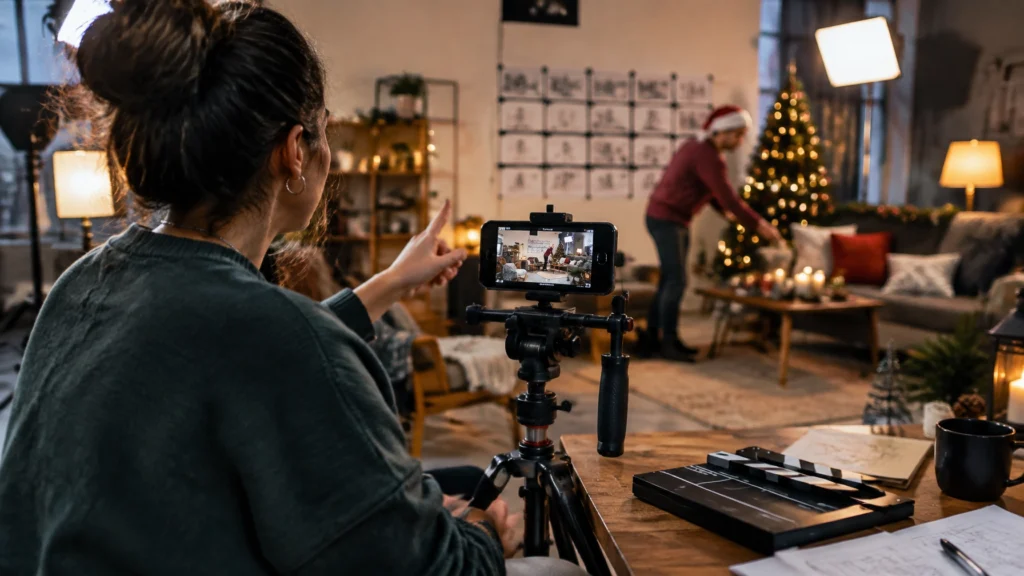
A sponsored post has a familiar shape: a creator shares something, an audience sees it, and the moment moves on. But a new kind of brand deal is giving creators a bigger role, and a longer runway. Instead of asking for one post, some brands are commissioning creator-led mini-series, complete with characters, episodes, and a reason to come back.
The shift is visible in two recent projects. Anthropologie hired comedian and creator Pooja Tripathi to write and lead its first micro-comedy series, The Holiday Party. And We Are MICE, a mockumentary built around a fictional events agency, brought Laura Geller Beauty into a story across six short episodes.
For creators, the opportunity is more than a different way to deliver an ad. It’s a chance to sell the format and storytelling they’ve built, not only the audience they’ve gathered.


From a one-off placement to a story people can follow
The Holiday Party is part of Anthropologie’s “On My Way” seasonal campaign, which launched in October. The episodes run 90 seconds each, appearing across the brand’s Instagram, TikTok, YouTube, Pinterest, and Reddit channels from November 11 to 19, alongside behind-the-scenes footage.
Tripathi developed the characters and creative direction, taking the project from script to shoot. Anthropologie’s team handled styling and the visual world of the party. The rollout is being treated like an entertainment launch, with trailers, teasers, and episode-ending hooks designed to draw viewers into what comes next.
The brand’s global CEO, Barbra Sainsurin, said Tripathi’s comic voice was a key reason for the collaboration. Humor and entertainment had not traditionally been part of the brand’s storytelling; the creator brought a distinct perspective the company wanted to explore.
Tripathi’s earlier comedy series, Brooklyn Coffee Shop, centers on a barista with an opinion about every customer. It won a Webby this year, and SharkNinja paid to feature its Auto Barista machine in an episode. That kind of integration is different from simply holding up a product in a post: the product has a place inside a world viewers already recognize.
A second example, We Are MICE, takes a similar story-first approach. The mockumentary follows a fictional live-events agency. Beauty creator Genevieve Turley plays Maggie in her first acting role, while Laura Geller Beauty commissioned six episodes, each 60 to 90 seconds, rolling out on Instagram and TikTok beginning October 26. The characters and setting were created first; the brand joined afterward. As of earlier this week, the episodes had reached 1.3 million Instagram views and 11,000 interactions collectively.
That sequence matters. When a story has its own premise and characters, a brand can become part of the action rather than the reason viewers feel interrupted.
What a show deal can cost, and why the quote has more parts
A series is not just several posts added together. It can involve concept development, writing, performance, production, distribution, and permissions for the brand to use the work. Those pieces should be discussed and priced clearly.
Victoria Bachan, CEO of talent management firm Hyphen, has described the ranges seen on the firm’s roster: a single sponsored post from a mid-tier lifestyle creator starts at around $8,000 to $10,000. A multi-episode series can land well into five figures, while paid usage plus category exclusivity can push the total into six figures. These are one management firm’s stated ranges, not a universal rate card.
A practical starting point is to separate the quote into five line items:
- Creator fee: Your work as the writer, performer, host, or creative lead.
- Production: The resources required to make the episodes, from crew and set to editing.
- Usage rights: Where and how the brand may use the finished content, and for how long.
- Exclusivity: Any limits on working with competing brands.
- Episode count: The scope of the series, including what each episode requires.
When everything is bundled into a single number, it can be hard to tell whether the fee covers only your creative work, or also a broad set of rights and restrictions. A clear breakdown gives both sides a better basis for negotiation.
Bachan’s advice to brands is to weigh the cost against what it would take to build an audience habit themselves. For creators, that framing is useful too: the value may be in a repeatable format that earns attention over time, not only a single appearance in front of followers.
Five ways creators can get ready for the opportunity


1. Treat your recurring format like an asset
If people return for a recurring character, scenario, or structure, you may already have the beginnings of a show. Write down what makes it recognizable: its premise, regular characters, tone, setting, and the kinds of stories that fit.
That document is a simple show bible. It doesn’t need to be elaborate. It should help someone understand what the series is, what makes it yours, and how another episode could work. A consistent format is easier to pitch than a general promise to “make fun videos.”
2. Pitch episodes, not just deliverables
Instead of offering a brand a vague batch of content, outline an episode arc. What happens in the opening? What changes from one installment to the next? Where does the brand belong without taking over the story?
A concise pitch might describe the premise, a few episode ideas, the creative roles you’ll handle, and what the audience can expect to follow. You don’t need to arrive with every line of dialogue written. You do need to show that there’s a real concept beyond repeating a product mention.
3. Make the format, not follower count, the center of the value
Followers can help a brand estimate potential reach, but a show also offers a recognizable voice, characters, and a reason for viewers to return. Those are creative assets. Explain what makes your format distinct and why it can hold attention across multiple episodes.
Anthropologie is watching earned reach, how many non-followers encounter the series, and how far the content travels. The brand will also consider saves, shares, comments, site visits, product-page views, and sales as the broader campaign unfolds. That makes it useful to show not just that your audience exists, but that your stories can reach beyond it.
4. Build evidence that your work travels
Before you pitch, collect examples that demonstrate how people engage with recurring content. Keep records of episode performance and audience responses, and note when viewers share, comment on, or refer back to a continuing format. Don’t invent a metric or promise a result you can’t support. A few honest examples of a concept resonating beyond your usual audience are more credible than a sweeping claim.
5. Put character and format ownership in writing
If you’re writing or acting in a brand series, ask who owns the characters, the format, and any materials you create. Clarify what the brand can reuse after the campaign, whether new seasons or spin-offs are included, and whether your permission is needed for future use.
The central creative asset may have a life beyond a single campaign. Clear terms help everyone understand what’s being commissioned now, and what would require a new conversation later.

A second lane, not the only lane
Creator-led shows don’t mean the end of sponsored posts. Brands still book creators at different audience sizes, and the two approaches can work side by side. Anthropologie’s campaign, for example, includes around 50 other creators alongside Tripathi’s series. The show adds a new storytelling layer; it doesn’t replace the rest of the creator work.
That’s encouraging if your work doesn’t fit a scripted series. A single post can still be the right format for a recommendation, a launch, or a timely moment. But if viewers come back for your characters or a familiar concept, you have something more to offer than a placement.
The practical change is simple: don’t wait for a brand to call your recurring content a show. Name what makes it repeatable, map out a few episodes, and separate the creative fee from production and rights. Your format is part of your value, and the next brand conversation can start there.