
At 19, Zach Yadegari has already built, sold, and moved on from one successful startup. Now he is taking on an even bigger challenge: creating an AI assistant people can wear.
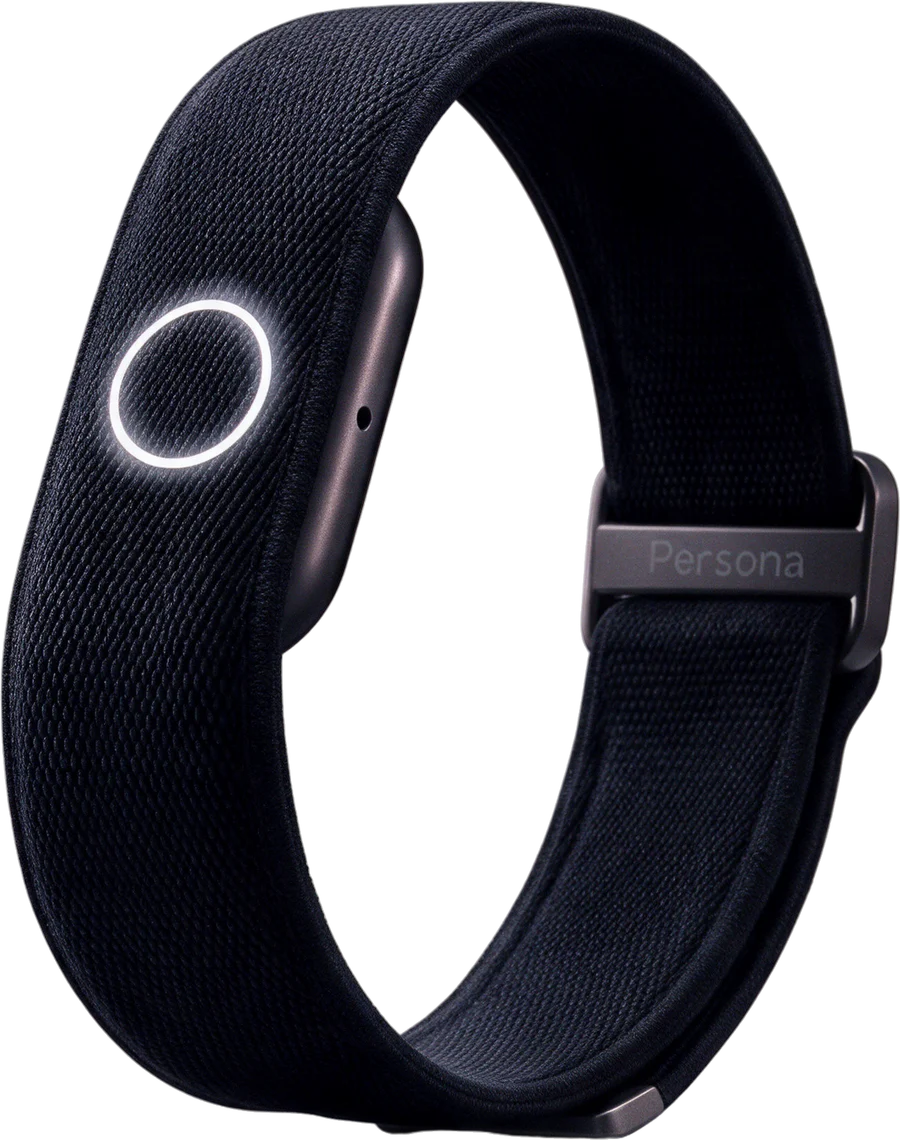
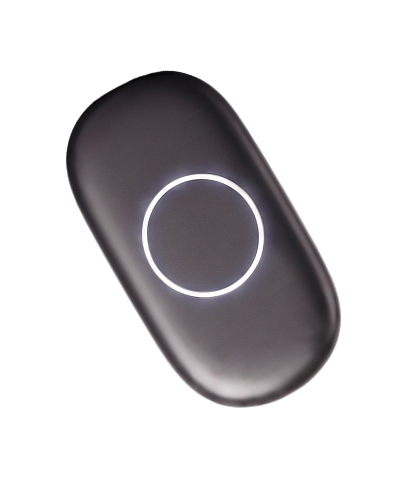
Yadegari’s new company, Persona, has reportedly raised $10 million in early-stage funding. The startup is developing a screenless AI wristband designed to help people send messages, make calls, book appointments, manage calendars, take notes, order food, and complete other everyday tasks through voice commands.
The Persona Band is expected to ship in December 2026, with preorders listed at $179. Until the hardware reaches customers, many of its real-world claims remain untested. But the company’s early momentum is already significant. Persona has launched a free beta through iMessage, attracted a few thousand users, and generated five figures in preorder revenue, according to reported comments from Yadegari.
The funding is newsworthy because of the size of the raise, and because of the founder’s age. But the more useful story is what Yadegari’s approach can teach entrepreneurs at every stage.
You do not need to be 19. You do not need $10 million. And you do not need to build a wearable device.
You do need a clear wedge, a bias toward action, and a reason for people to believe your vision.
1. Starting young can be an advantage, but speed matters more than age
Yadegari began building companies before most people begin thinking seriously about entrepreneurship. He reportedly created his first business in ninth grade and sold it at 16. His next company, calorie-tracking app Cal AI, grew rapidly before being acquired by MyFitnessPal in March 2026.
That history gives Persona an important advantage: the founder has already experienced the full cycle of building, gaining users, generating revenue, and exiting a company.
Still, the lesson is not simply “start young.”
The deeper lesson is to start before you feel completely ready.
Young founders often have fewer assumptions about how business is supposed to work. They may be more willing to test an unusual idea, learn in public, change direction, and ship a rough version quickly.
Older or more experienced founders can do the same thing, but they may need to fight harder against perfectionism, professional expectations, and the fear of looking inexperienced.
The practical takeaway is simple: shorten the distance between an idea and a real user.
Persona did not wait for the wearable to be finished before testing its core promise. The company introduced the assistant through iMessage first, giving users a way to experience the software while the hardware was still in development.
That is a smart sequence. It separates the question “Do people want this service?” from the question “Can we manufacture the perfect device?”
Try this with your own business
Before investing heavily in a finished product, create the smallest version that proves the central behavior.
- A consultant can test a new service with three paying clients.
- A music artist can release one song before planning a full album campaign.
- A software founder can deliver a core workflow manually before building automation.
- A creator can pre-sell a workshop before recording an entire course.
- A small business can test one new offer with its existing audience.
The goal is not to create something impressive. The goal is to learn whether people will use it, pay for it, or recommend it.

2. In a crowded AI market, Persona found a specific wedge
“AI assistant” is a broad and crowded category. There are chatbots, productivity tools, voice assistants, agent platforms, and AI features inside nearly every major app.
Persona is not trying to win by simply offering another place to ask questions. Its pitch is that the assistant can take action across the tools people already use.
The company describes a future in which users can ask for something naturally and receive a completed result: a meeting moved, a ride booked, an email drafted, a form submitted, or an appointment scheduled.
The wearable gives that idea a physical entry point. Instead of opening an app, finding a feature, writing a carefully structured prompt, and waiting for an answer, users can speak to the assistant from their wrist.
That does not guarantee success. Wearable AI remains difficult. Battery life, privacy, accuracy, connectivity, manufacturing, and user trust all matter. The Band has not yet shipped, so its performance still needs to be proven in everyday conditions.
But the positioning is clear. Persona is not primarily selling hardware. It is selling reduced friction.
That distinction matters for every founder. A crowded category becomes easier to navigate when you define the specific frustration you solve.
Ask these three questions
- What do people currently have to do that feels unnecessarily difficult?
- What moment causes them to abandon existing solutions?
- What is the simplest way to remove that friction?
Your wedge may be a new product format, a better onboarding process, a faster service, a more personal experience, or a clearer audience focus.
You do not have to be first. You have to be useful in a way people immediately understand.


3. Investors can back vision when early evidence supports the story
Raising $10 million at 19 may look like a triumph of age-defying confidence. In reality, investors were likely responding to more than Yadegari’s biography.
They had several reasons to take the vision seriously:
- He had already built a high-growth consumer app.
- Cal AI had generated substantial revenue before its acquisition.
- Persona had a working beta rather than only a slide deck.
- The company had early users.
- Customers had already placed hardware preorders.
- The product addressed a large, recognizable shift in how people interact with software.
That combination is powerful. Vision attracts attention, but evidence helps people act on it.
For founders without a previous exit, the evidence may look different. You can build credibility through customer interviews, paid pilots, retention, referrals, waitlists, usage data, case studies, or consistent public work.
Track record is helpful, but it is not the only form of proof.
A founder who has never raised venture capital can still show that customers return every week. An independent artist without a label can show that listeners save songs, attend shows, and buy merchandise. A small business owner can show that one service consistently produces repeat bookings.
Your job is to turn belief into something measurable.
4. The best fundraising story connects ambition to a near-term milestone
Persona’s funding will support AI computing costs, team expansion, and manufacturing. Those are expensive priorities, particularly when a company is combining software, artificial intelligence, and consumer hardware.
But a strong fundraising story cannot stop at “we are building the future.”
It needs a next test.
For Persona, an important milestone is whether the Band can ship in December and deliver a reliable experience. The company must prove that the device works, that the assistant completes tasks accurately, and that users trust it with sensitive information.
Every founder should define a similar milestone.
Not “become the leading brand.”
Instead:
- Reach the first 100 paying customers.
- Deliver the first production run.
- Retain 40% of users after 30 days.
- Generate $10,000 in monthly recurring revenue.
- Sell out a small event series.
- Reduce fulfillment time by half.
- Convert a repeatable percentage of free users into customers.
A milestone gives your vision a calendar and a scoreboard.

5. You can apply the same playbook with far less capital
The most encouraging part of the Persona story is that its lessons do not require a $10 million bank account.
You can borrow the method without copying the product.
Start with a narrow promise
Do not launch with “we help everyone do everything.” Choose one urgent problem for one clear audience.
A personal trainer might focus on helping busy parents complete three workouts a week. A marketing consultant might help local restaurants create short-form video campaigns. A producer might build a service around custom intro music for podcasts.
Narrow does not mean small forever. It means understandable now.
Ship the manual version
Before building a complicated platform, do the work yourself behind the scenes. Learn what customers ask for, where mistakes happen, and which steps are truly worth automating.
Manual work is not failure. It is research with revenue attached.
Build an audience while you build the product
Yadegari’s visibility is part of Persona’s momentum. Most founders will not have the same profile, but they can still document the journey.
Share useful lessons, customer wins, experiments, behind-the-scenes decisions, and honest setbacks. Consistent storytelling creates familiarity, and familiarity can become trust.
Spend money only where learning is expensive
If $500 can test demand, do not spend $5,000. If a landing page can validate interest, do not build a full app. If ten customer conversations can reveal the problem, do not commission a six-month market study.
Use capital to accelerate proven learning, not to avoid learning.
The real lesson: move before certainty arrives
Zach Yadegari’s new venture is ambitious, and Persona still has important tests ahead. A preorder is not the same as a shipped product. A beta user is not necessarily a retained customer. A large funding round is not the same as a sustainable company.
That nuance does not make the story less inspiring. It makes the lesson more useful.
Yadegari moved quickly from one company to the next. He tested Persona’s software before the hardware was ready. He chose a distinct entry point into a crowded AI market. He gave investors both a large vision and early signals that people wanted the product.
That is a playbook any founder can adapt:
Start with the problem. Find your wedge. Ship the smallest credible version. Measure real behavior. Then let the vision grow from evidence.
You may not be building a wearable AI assistant. But there is almost certainly a version of your idea that you can put in someone’s hands, or inbox, playlist, storefront, or calendar, this week.