


Some business ideas fail with a bang. Others keep going just well enough to make it hard to know when to stop.
Denys Gorbatiuk knows the second kind. After losing his job as a mergers and acquisitions lawyer during the 2008 financial crisis, he built a hot dog business around a recipe he loved. It made it into more than 400 Walmart stores by 2017, but the product needed more customer education than he could afford to provide. The company kept moving, mostly at a loss, until the pandemic shut its factory.
What came next wasn’t simply a better hot dog. It was a new product, a partnership with someone who had what Gorbatiuk lacked, and a different way of reaching customers. In 2025, the business recorded about $19 million in gross sales.
For founders, the story offers a useful distinction: sometimes the product is the problem. Sometimes customers just don’t understand why they should buy it. Figuring out which one you’re facing can help you decide whether to keep refining the idea, change direction, or let the first product go without giving up on the company.
When a product needs too much explaining
Gorbatiuk’s path to food entrepreneurship began after a major career reset. He had moved from Moldova to the United States, learned English, graduated from Columbia Law School, and built a career in corporate law. Then the financial crisis hit, and he was laid off in 2008.
Food was a longstanding passion. After experimenting with a favorite hot dog recipe, he worked to turn a 45-minute meal into a microwavable product that could be prepared in 45 seconds. He launched Den’s Hot Dogs in 2011. By 2017, the product was sold in more than 400 Walmart stores.
That kind of retail presence can look like proof that a product has found its market. But shelf space and customer understanding are not the same thing.
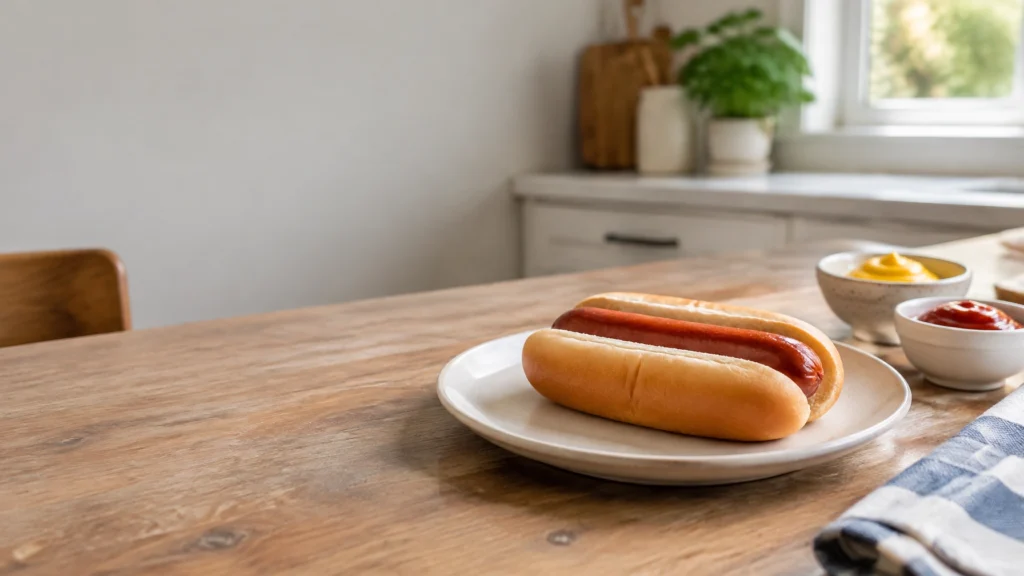
Den’s Hot Dogs were sold individually with a bun and condiments. Shoppers accustomed to buying multipacks had to understand a different format, and why it was worth choosing. The company needed to educate consumers, but Gorbatiuk couldn’t fund the advertising needed to do that at scale. The business mostly ran at a loss.
That’s a different challenge from a product customers try and dislike. When people don’t buy, founders can look at the evidence: Are they confused about what the product is? Do they understand the price and format? Do they show interest once someone explains it? Or do they understand it perfectly and still decide it doesn’t solve a problem for them?
Those clues point in different directions. A product that needs explanation may benefit from clearer positioning, demonstrations, or a more familiar way to sell it. A product that customers understand but don’t want may need a deeper rethink.
The tricky part is that a slow failure can keep offering just enough signs of life to postpone the decision. Gorbatiuk has said an overnight flop might have been easier. Instead, the hot dog business kept hobbling along.


The product stalled, but the customer relationship remained
When the pandemic hit, the factory shut down. Den’s Hot Dogs still had a loyal online following, but without production there was no product to sell. Gorbatiuk thought the business might be finished.
Yet a company is more than what it makes. The hot dogs had helped build something the factory shutdown didn’t erase: an audience of customers and a set of relationships. That became an important asset when the original product could no longer carry the business forward.
For a small company, that’s a useful way to take inventory during a pivot. Beyond stock and equipment, what do people trust you for? Do you have an engaged customer list, a reliable distribution relationship, knowledge about serving a particular buyer, or a reputation for solving a specific problem?
Those assets may outlast a product. They can also help a founder avoid starting entirely from zero when it’s time to change direction.
The answer doesn’t have to be “keep selling the same thing.” It can be “keep serving the people who already know us, but with something that fits their needs better.”
A partnership built around opposite problems
The turning point came through a food distributor whose restaurant customers had closed during the pandemic. The two businesses were in trouble for opposite reasons: Gorbatiuk had customers but no product; the distributor had product but no customers.
Together, they had a better starting point than either did alone.
In 2022, they launched The Grumpy Butcher brand within Den’s Hot Dogs, selling meats and prepared meals. The brand was immediately more successful. Unlike the individual hot dog product, meat didn’t require customers to learn a new shopping format before they could see what they were buying.

This is the kind of partnership founders can look for deliberately, not by searching for someone who does exactly what they do, but by identifying what is missing from the equation. One business may have customers but lack supply. Another may have a strong product but no route to market. One founder may know the customer; another may know the operations.
Before partnering, it still matters to work through the details: who owns which responsibilities, how decisions get made, and what happens if the arrangement stops working. But the starting question is practical: does each side bring something the other genuinely needs?
The best partnerships don’t erase the original challenges. They connect complementary strengths so the combined business can serve a customer more effectively.
A new channel, a different kind of buyer
In 2025, The Grumpy Butcher became the first frozen food vendor on Temu. The marketplace brought the business to a younger customer than its usual base, and Temu now accounts for about 20% of the business’s sales.
A new channel can do more than add another place to sell. It can introduce a product to buyers who might not have encountered it through the company’s usual route. The important question is whether that channel expands the audience or simply moves existing buyers from one place to another.
Founders can keep an eye on that distinction by looking at who is arriving through each channel, what they buy, and whether the channel attracts new customers. A marketplace may offer reach, while a direct customer base may provide a closer relationship. Those routes can complement each other, as long as the product and service experience hold up in both.
Frozen food also brings its own operational demands. Gorbatiuk described a learning curve around shipping perishable products safely. A channel that seems promising still needs to work in the real world: fulfillment, packaging, customer expectations, and repeat purchases all matter.

How to retire an idea without retiring the company
A founder doesn’t need to treat every pivot as an admission that the first idea was worthless. Den’s Hot Dogs opened a door to customers and relationships, even though its product struggled to become a sustainable business. The company’s next chapter drew on what had already been built while changing what it sold.
If you’re facing a similar decision, it may help to separate three questions:
- Is the product itself working? Look for whether customers understand it, try it, come back, and recommend it.
- Is the route to market working? A promising product may be hard to discover or costly to explain. Consider whether a different channel or format could make the value clearer.
- What can the company carry forward? List the customer relationships, operating knowledge, supplier connections, and trust you’ve built, even if the original offer changes.
The goal isn’t to keep an idea alive at any cost. It’s to make a clear-eyed decision about where the business still has a reason to exist. Sometimes that means refining the offer. Sometimes it means finding a partner. Sometimes it means moving on from the product while preserving the customer relationships and know-how around it.
In 2025, Gorbatiuk’s business did about $19 million in gross sales. That figure is the result of a very different offer from the one that launched in 2011, but the path between them wasn’t a straight line. It ran through a slow struggle, a factory shutdown, a useful relationship, and a willingness to change what the company sold.
Gorbatiuk’s own summary is simple: he has always been able to keep going when the first idea doesn’t work out. For founders, the practical lesson is less about pushing through indefinitely and more about knowing what to keep. The product may need to change. The company may still have something valuable to build on.
That distinction is worth keeping in view whenever you’re building a business: keep the customers, and stay willing to change the product.