

A promise to become “Ryan Air” is the sort of thing that makes people stop scrolling. It’s silly, specific and easy to repeat. But for James Blunt, the punchline came with a condition: his new album, Airplane Mode, had to reach No. 1 on the UK albums chart.
On November 13, it did. Blunt secured his third UK No. 1 album, and his first since All the Lost Souls topped the chart in 2007. His debut, Back to Bedlam, had been his first. The name change, however, had not happened at the time of writing. Blunt has said he now has to keep his promise.
That distinction is the real story. A funny stunt can invite people into a campaign, but it can’t do the whole job. The album still had to win, and the promise now has to be followed through.

A promise gives people a reason to join in
Most release campaigns ask an audience to do something familiar: listen, stream, share, pre-save. There’s nothing wrong with those requests, but they can feel like a one-way transaction. The artist wants attention; the audience is asked to provide it.
A public promise changes the shape of that exchange. It gives people a reason to watch what happens next, and a role in the outcome. Blunt’s challenge was easy to understand: if the album reached the top spot, he would legally change his name to “Ryan Air.” The audience could follow the race, decide whether to help, and look forward to the payoff.
The oddness helped. A grand, vague declaration might have sounded like ordinary promotion. “Ryan Air,” tied to an album called Airplane Mode, was playful enough to travel as a joke while still pointing people back to the music.
That is the useful marketing lesson: participation grows when people can see how their actions connect to a result. A listener isn’t just clicking play; they’re helping push an album toward a visible finish line.
Make the stakes measurable
A promise works best when the condition is clear. “If this project takes off, I’ll do something big” leaves too much room for interpretation. What counts as taking off? When does the moment arrive? Who decides whether the promise has been fulfilled?
A chart position answers those questions. No. 1 is a specific, verifiable target with a deadline built into the chart week. Listeners could tell whether Blunt had won, and so could he. That clarity gave the campaign tension.
The chart race had real competition, too. Royal Blood’s Dead Company finished at No. 2, marking the duo’s first album not to reach the top spot. Olivia Rodrigo, Skepta and Kings of Leon rounded out the top five. Those results help show why the promise had stakes: the outcome wasn’t a foregone conclusion.
For independent artists, the equivalent doesn’t need to be a national chart. It could be reaching a certain number of ticket sales by a stated date, funding a video, selling a limited run of merch or getting a new track into a set number of listener-made playlists. Choose a result your audience can understand and you can verify. A clear target makes it easier for people to follow the story, and easier for you to honour the outcome.
The promise is the hook. The work is what has to hold up.
It’s tempting to look at a stunt like this and conclude that the trick is simply to say something outrageous. But attention is only useful if it leads people toward something worth their time.
A promise can get someone curious about a record. It can’t make the record resonate with them. The music still has to earn a listen; the live show still has to deliver; the product behind the campaign still has to make sense. If the attention arrives and there’s nothing substantial to meet it, the buzz passes quickly.
That’s why a stunt should act as a doorway, not a substitute. Give people an easy reason to discover the work, then make sure the work can carry the relationship beyond the joke. Blunt’s name-change challenge gave the chart race a memorable storyline, but Airplane Mode still had to finish ahead of its rivals.
There’s a useful reminder for artists at every level here: don’t build the campaign bigger than the thing you’re asking people to care about. Make the invitation entertaining. Make the work worth accepting it for.

Follow-through is where credibility is won, or spent
A public promise can be a powerful marketing engine, but it runs on trust. When the condition is met, the audience expects the payoff. If the promise disappears, gets quietly redefined or turns into an excuse, the original goodwill can evaporate.
That doesn’t mean every campaign needs a dramatic stunt. It means that before making a promise, you should be comfortable with what winning requires. Blunt’s pledge was memorable partly because it was concrete. Now that the album has reached No. 1, the follow-through is part of the story.
For an independent artist, delivery doesn’t have to mean a legal name change or anything that makes you uncomfortable. The best promise is one you can genuinely keep: a small, amusing commitment that fits your personality and doesn’t undermine your ability to keep making music. If your promise would put your finances, health, privacy or future career in a bad position if it came true, choose another one.
And when the moment comes, make the follow-through visible. If you promised a live acoustic performance when a campaign hit its goal, schedule it and share the performance. If you promised to donate a portion of a release-week total, show that the donation was made. Close the loop clearly. The audience should not have to wonder whether the promise counted.
Give the payoff a story of its own
The best campaigns don’t treat the win as the ending. They make the fulfilment another moment people can enjoy.
That could mean filming the reveal, letting fans vote on harmless details, or turning the payoff into a short piece of content that feels like a thank-you rather than a victory lap. The goal isn’t to stretch a joke until it gets tired. It’s to honour the people who helped make the result possible, and to give them a satisfying ending.
Blunt has made a similar name-change promise before: in 2024, a Back to Bedlam reissue peaked at No. 7, short of the target. This time the album reached the top spot. That earlier near-miss made the new promise feel like a returning challenge. But every repeated bit has a limit. Repeating the same promise a third time would stop being a fresh story.
The broader principle applies beyond name-change stunts: a campaign can build on an earlier idea, but it needs a new reason to matter. Audiences enjoy a callback; they can also tell when the story has run out of road.

A practical promise checklist for your next release
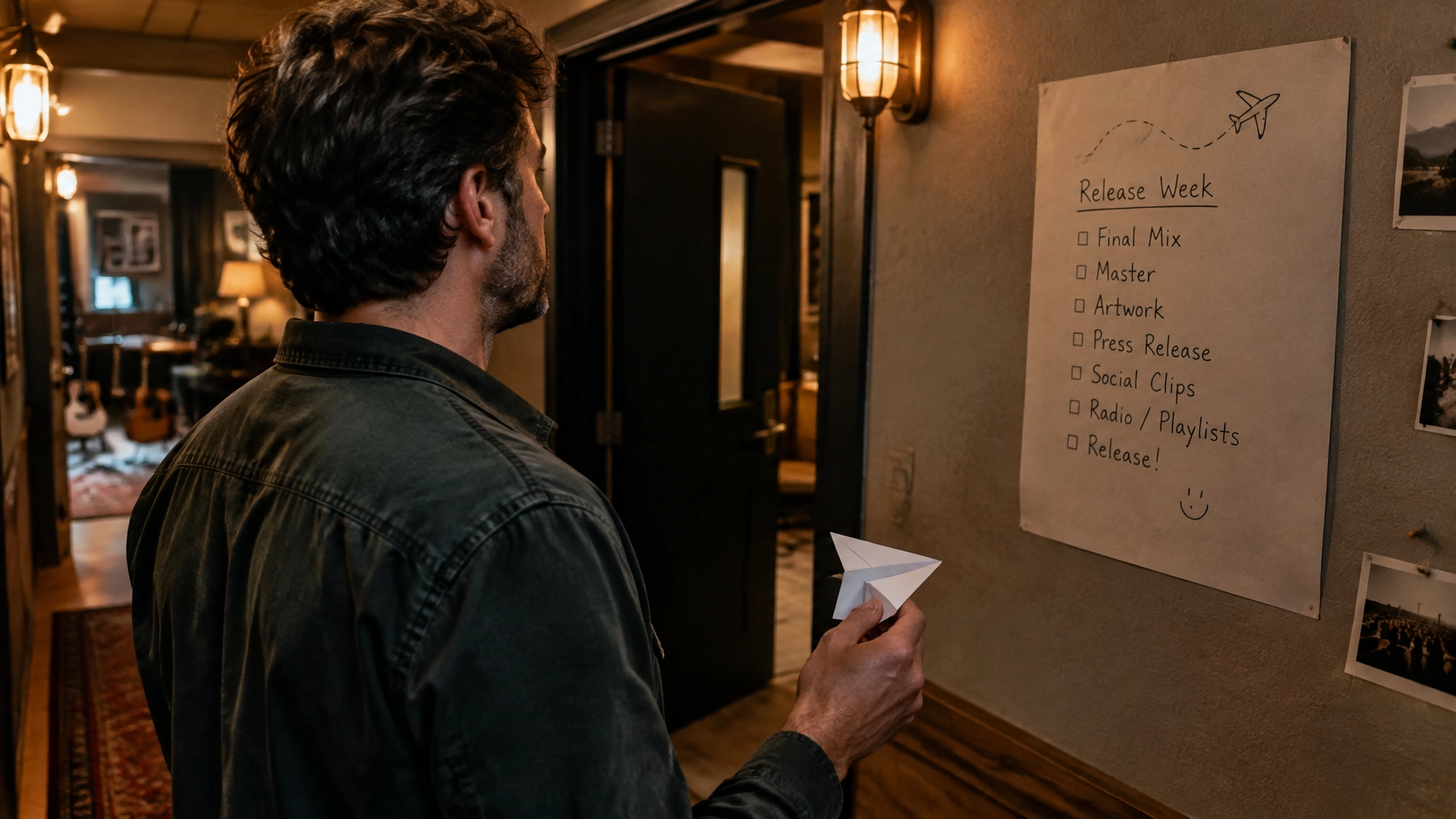
Before putting a public challenge into your campaign, take a moment to answer four questions:
- Can people understand it immediately? Keep the condition simple enough to explain in one sentence.
- Can everyone verify the result? Attach the promise to a number, a date or another clear milestone.
- Can you comfortably keep it if you win? Make the commitment fun, not damaging.
- Do you know how you’ll deliver the payoff? Plan the follow-through before you make the promise, not after the result arrives.
Then make it yours. A good campaign shouldn’t feel borrowed from someone else’s personality. The commitment could be funny, generous, creative or a little unexpected. What matters is that it’s true to you and clear to the people you’re inviting along.
Blunt’s campaign worked because the promise had stakes, the audience could measure the outcome, and the album had to earn the finish. That’s the balance to aim for. A clever line may start the conversation. A strong release gives people a reason to stay. And keeping your word turns a promotional moment into credibility.
The stunt can carry a campaign, but it cannot carry a record. The work still has to fly.