

TypeSafe AI’s first public product, Jev, had only been out for a few weeks when the company announced an $870 million Series A at a $7.5 billion valuation. Led by Andreessen Horowitz, the round is striking not just for its size, but for the idea behind it: the next big AI opportunity may be software that makes decisions other software can use, not another tool that simply writes a convincing answer.
A little precision matters here. TypeSafe was founded in 2024, so it isn’t literally a weeks-old company. It was Jev, its first publicly released model, that had only just launched in September. That timing makes the funding announcement all the more eye-catching: investors are placing a huge bet on a new approach before most people have had much time to see it in action.
For founders and business owners, the interesting question isn’t whether every company should build an AI model. It’s what TypeSafe’s pitch says about the problems investors believe are worth solving, and what smaller teams can learn from the way the company is framing its ambition.
From “AI that talks” to “AI that can act”
Most of us first met modern AI through chat: ask a question, get a response. That flexibility is impressive, but it can be awkward when the goal isn’t to have a conversation. Software often needs a specific answer in a specific form: classify this transaction, choose the right support queue, flag a risk, or decide which step should happen next.
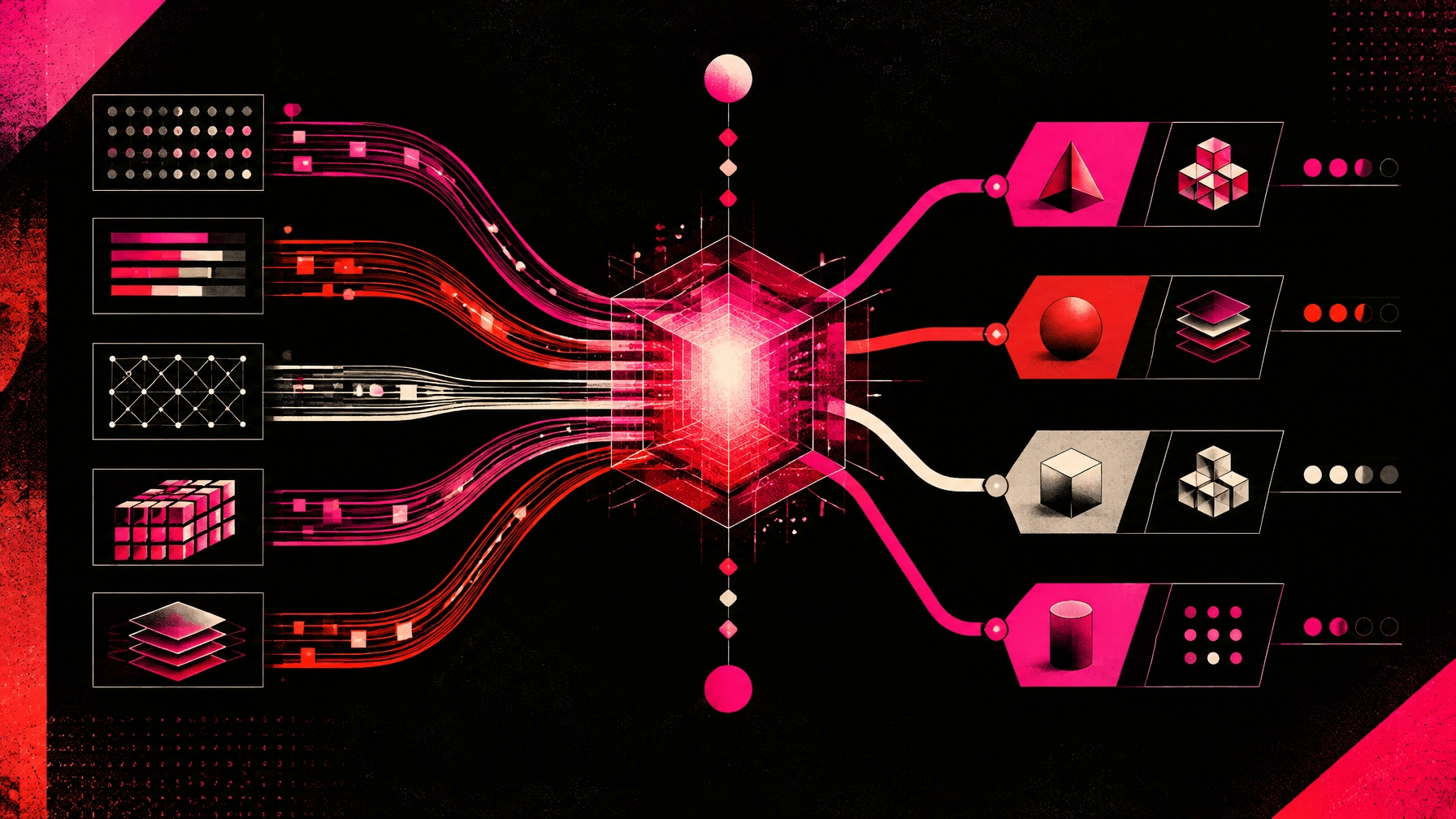
TypeSafe’s Jev is designed for that kind of work. Rather than returning a conversational paragraph, the model produces structured, typed decisions with probabilities. Put simply, it aims to deliver an answer that software can act on directly, without first trying to interpret and validate a block of generated text.
That distinction could matter in busy workflows. If a model routes a customer request, for example, the surrounding application needs to know which route was selected and how certain the system is, not receive a fluent explanation that must then be parsed and checked.

In its September product announcement, TypeSafe described Jev as a “System One” model: a system built for fast, structured decisions. The company says the model is designed to work with software and code, and claims it can be significantly faster and more efficient than comparable large language models on certain decision-focused tasks. Those are company-reported claims, and real-world performance will depend on the job, the implementation, and the alternatives being compared.
The concept is still worth watching. Many businesses don’t need AI to sound more human. They need it to make a useful call inside a process, and to make clear when it’s uncertain.
Why investors may be looking beyond chat
Chat interfaces are easy to see and demo. Reliable automation is harder to show in a short clip, but it may have a bigger operational payoff. If a company can safely automate one decision made thousands of times, the accumulated savings in time, cost, or delays can be substantial.
That’s the opportunity TypeSafe is pointing toward. Its model is built to return outputs software can use, with probabilities attached. In principle, that can help a system distinguish between a confident decision and a case that needs a person’s attention. Instead of pretending every answer is equally certain, an automated workflow can be designed to route the uncertain cases to a human.
The funding also gives TypeSafe resources to pursue a larger infrastructure play. The company says it plans to develop more machine-native models and build out tools for developers and businesses. Sequoia Capital, existing investor DCVC, and angel investors also participated in the Series A, according to TypeSafe’s announcement. Andreessen Horowitz general partner Martin Casado is joining the board.
TypeSafe has also said that a third of Fortune 500 companies are using Jev and that customers have already saved millions of dollars in production. Those are notable early signals, but they’re company-reported figures, not a guarantee that the product will perform the same way across every business or workflow. The next test is whether early use turns into repeatable results customers are willing to pay for over time.

The founder lesson: choose a precise problem
A headline-grabbing funding round can make it seem as if a startup’s first job is to sound enormous. But TypeSafe’s clearest pitch begins with a specific friction point: software needs decisions in a dependable format, and conversational models aren’t always the best fit for that job.
That’s a useful reminder for founders at any stage. “We use AI” is not a customer problem. “Our team spends two hours a day sorting requests that arrive in inconsistent formats” is much closer. The second statement gives you something to investigate, measure, and potentially improve.
If you’re building a company, try translating your idea into a sentence that names:
- The repeated task: What do people or systems have to do again and again?
- The current pain: Is it slow, expensive, inconsistent, or difficult to scale?
- The desired outcome: What would a noticeably better result look like?
- The proof: What number or customer behavior would show that the solution works?
This doesn’t guarantee funding, and most companies won’t need to invent a new kind of model. It does help focus product decisions. A precise problem is easier to explain, easier to test, and easier for a customer to recognize as worth solving.
Compete with giants by changing the frame
The AI field is crowded with enormous companies and well-funded labs. Competing head-to-head on general-purpose chat would be a daunting path for a new startup. TypeSafe is trying to frame its product around a different use case: not a general conversation engine, but infrastructure for software workflows that need structured decisions.
That’s a strategic choice, not proof that one category will replace another. General-purpose language models remain useful when people need flexible writing, brainstorming, explanations, or coding help. Decision-focused models may be a better fit for narrower tasks where speed, structured output, and confidence estimates matter. In many products, those approaches could coexist.
For founders, the lesson is to look for a useful distinction that customers can understand. Don’t just claim that your product is “better.” Explain what it’s better at, who benefits, and why the difference matters in practice. The clearest positioning gives a buyer a reason to choose you without requiring them to believe that every other tool is obsolete.
TypeSafe’s name, product language, and technical approach all reinforce its central promise: outputs software can depend on. That kind of consistency can help a new category feel real. But the framing has to be backed by the everyday experience of using the product. A memorable label can open the door; customer results keep it open.
What a decision-making AI still has to prove
A structured output can make it easier to connect AI to software, but it doesn’t automatically make the whole workflow reliable. The quality of the input still matters. The decision still needs to be appropriate for the situation. And businesses need clear ways to monitor errors, handle edge cases, and involve people when the stakes are high.
That is especially important in areas involving money, health, hiring, customer access, or sensitive data. A confidence score can be useful, but teams still need to decide what level of uncertainty is acceptable and what happens when a decision falls below their threshold. “The model returned a number” isn’t a substitute for accountability.

A practical first step for any business curious about this shift is to choose one low-risk, repetitive workflow and map it before automating it. Note what information comes in, what decision needs to be made, what the possible outcomes are, and where a human should step in. Then measure the current process: time spent, error rate, cost, or delays. That gives you a fair way to assess whether an AI tool is helping.
The best early use case may not be the most glamorous one. It may be the quiet task that happens every day, consumes attention, and has clear boundaries.
The bigger signal behind TypeSafe’s raise
TypeSafe’s $870 million Series A is an unusually large bet on a company whose public product is still new. The deeper signal is that investors are interested in AI’s ability to do useful work inside systems, not only its ability to produce text for people to read.
That shift could create room for new products, new infrastructure, and new definitions of what “AI-powered” means. For entrepreneurs, the takeaway is not to chase the biggest possible funding story. It’s to identify where work gets stuck, make the problem concrete, and build a solution that delivers a result customers can recognize.
The conversation may have introduced a new generation to AI. The next chapter may be written by tools that quietly make the right call, pass it along, and let people focus on the work that needs their judgment.
For more company news and founder stories, explore Digital Buzz Now’s Business and Entrepreneurs sections.