


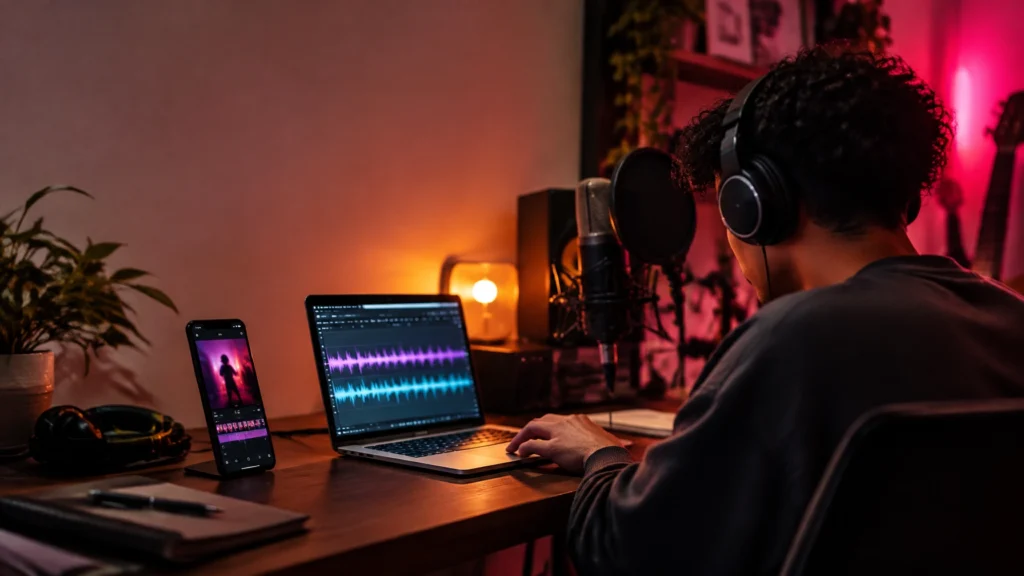
A song used to be finished, released, and then promoted. But a new 2026 Music Impact Report suggests that for many tracks, the path now runs in the other direction: a moment catches on first, and the song follows it onto the charts.
The report, commissioned by TikTok and independently prepared by music data company Luminate, found that 94 percent of songs entering the Billboard Global 200 in 2025 went viral on TikTok before charting. That was up from 84 percent in 2024.
For independent artists, the headline isn’t that every release needs a viral video. It’s that the short clip can no longer be treated as an afterthought. The moment people share may be part of the release itself, and it’s worth thinking about that moment while the song is still taking shape.
The clip is no longer just promotion
A strong clip can introduce a song to listeners who haven’t heard of the artist. But it can also give them a clear piece of the song to remember, repeat, and carry into other formats.
That changes a practical decision in the studio: before the master is finished, identify the 15 or 30 seconds that communicate the song’s feeling most clearly. It might be a hook, a lyric, a surprising shift, or a vocal delivery that makes someone stop scrolling. The key is not to write a song as if it were only a clip. It’s to recognize which moment can open a door into the whole song.
Then make that moment travel cleanly. Does it work as audio on its own? Can it be used naturally in a video? Is the lyric easy to catch or quote? If the same idea connects across sound, image, and words, fans have more ways to make it their own.


This kind of planning doesn’t require a big production budget. It does require intention. When you’re arranging, recording, and editing, notice which section has a life beyond the speakers in your studio. Test it with a few different video concepts. Keep the audio, image, and lyric aligned rather than asking each format to do a completely different job.
The longer chart stay is the more useful clue
A viral spike can look dramatic in a dashboard. The more valuable question is what happens afterward.
According to the report, songs with a TikTok viral moment spent four times longer on the Billboard Global 200 than songs without one. They also reached a higher median peak: No. 79 compared with No. 120 for tracks without a viral moment.
That longer stay is the part independent artists should study. A burst of attention matters, but its value grows when there’s somewhere for that attention to go. If listeners discover the clip and tap through to the artist, are the profile and catalog ready? Is the track easy to save through Add to Music App? Are pre-saves in place where relevant? Are release dates, merch, and the next piece of content organized before the moment arrives?
And what happens after the first wave? A release plan needs room for a second and third wave: a new angle on the same song, a lyric or performance variation, a fan response, or a fresh invitation into the track. The goal isn’t to force every song into endless promotion. It’s to give interested listeners a reason to stay after the first discovery.

Discovery can become listening, and sometimes buying
The report’s other findings suggest that short-form discovery can connect with more than chart activity. Among the fastest-growing artists on streaming services, 74 percent showed a strong or moderate positive correlation between TikTok engagement and on-demand audio streams.
In a separate analysis of 516 artists, representing about two-thirds of US streaming volume, 43 percent showed a strong or moderate correlation between TikTok views and on-demand streams in 2025, compared with 33 percent in 2023. That figure rose to 71 percent among artists whose streams came mostly from recent releases.
The report also found that 45 percent of US TikTok users discover music on the platform, ahead of YouTube at 39 percent, Instagram at 36 percent, and Facebook at 28 percent. Among US music listeners on TikTok, 78 percent were more likely than the general population to pay for a streaming subscription. Sixty-one percent had bought physical or digital music in the past year, and they spent 22 percent more on physical music than the average listener.
These numbers don’t mean a viral video automatically turns a viewer into a fan or customer. They do underline the importance of making the next step easy. If a person likes the clip enough to look for the song, they should be able to find the full track, understand who made it, and see what else is available.
Artists show how different the path can look
The report points to examples with distinct outcomes. sombr’s “Back to Friends” spent 82 weeks on the Billboard Global 200 after going viral. Sienna Spiro’s “Die on This Hill” became the most-saved track globally through TikTok’s Add to Music App in the year to April 2026.
For Pierce the Veil, US streams of “So Far So Fake” rose 75 percent year on year after the song went viral. In the 12 weeks after its viral period, the track earned an additional 113 million streams compared with the same 12 weeks a year earlier.
Those stories aren’t a template every artist can reproduce. They’re reminders that a viral moment can lead somewhere different depending on the song, the audience, and what the artist had ready next. What they share is that somebody was paying attention to a moment and had something for the audience to arrive at.
The caveat matters
The report was commissioned by TikTok, with analysis independently prepared by Luminate. Its findings describe patterns across the data; they don’t prove that TikTok engagement caused a song to chart or stream more. Correlation is not a guarantee of cause and effect.
And 94 percent is not 100 percent. Six percent of songs entering the Global 200 did not go viral on TikTok first. A viral moment is one route through today’s distribution landscape, not a requirement or a promise of success. A compelling song can find its audience through many paths, and no platform report can predict which track will break through next.
For independent artists, the useful takeaway is not “make everything for TikTok.” It’s “understand the moment in your song that can travel, and be ready if it does.”
Keep your own evidence
A platform’s report can show a broad pattern. Only your own numbers can help you understand what worked for your song.
Keep a simple record for each release:
- Which clip or section of the song did you use?
- When did it go up?
- What happened to streams and saves in the seven days afterward?
Repeat that tracking for each post. Over time, you’ll build evidence about which moments, formats, and timing connect with your listeners. One clip may bring views without much follow-through; another may lead to saves or more listening. That distinction can help shape your next move without asking you to guess.

The next release still begins with the song. But the way listeners meet it may begin before the final master is done. Find the moment worth carrying, make it work across formats, and give the attention somewhere meaningful to land. That’s not a formula for going viral. It’s a more thoughtful way to be ready for discovery.