


On November 11, 2hollis released Pirouette, his fifth studio album, through Interscope Records. The 16-track project turns toward love and intimacy, giving the artist room to explore a more romantic, expressive side of his work. It is primarily self-written and self-produced, with additional production from Skai, Ginseng, Andrew Aged and Mk.gee.
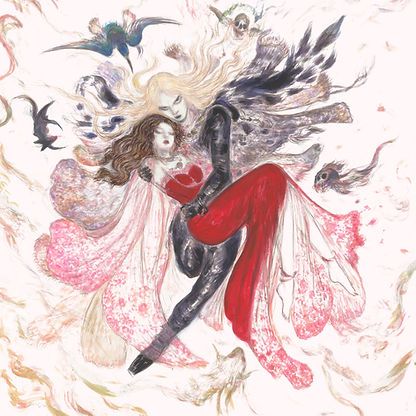
The album’s authorship is only part of what makes this release worth a closer look. Pirouette arrives as a deliberately joined-up creative statement: the music, the collaborators and the cover art all belong to one larger world. The artwork, hand-drawn by Yoshitaka Amano, brings a striking visual identity to that world before listeners have heard a note.
For independent artists and emerging creators, there is a useful idea here. You do not need to control every detail alone, and you do not need a famous name attached to every decision. But you can shape the overall experience, make intentional choices and build a release around a clear point of view.


Make the release feel like one idea
A song can make a listener pause. A complete album can invite them to step into a world. That distinction matters when people encounter your music through a stream, a post, a video or a recommendation from a friend. The artwork, sound and story around a project are often the first hints of what the listener is about to feel.
With Pirouette, the romantic and expressive direction is reflected not only in the album’s subject matter, but also in its striking cover. Amano’s illustration gives the project a sense of fantasy and emotional drama. It does not read like a generic image chosen to fill a square. It offers an early signal that this is an album with a particular mood and imagination behind it.
That kind of coherence is within reach at any scale. You may not have a large creative budget, a label team or an established audience. You can still ask: What feeling should someone get before the first song begins? What colors, textures or images belong to this chapter? What should the visuals communicate that the music alone cannot?
Answering those questions gives your release a clearer center. It can also make practical decisions easier. If you know your project should feel intimate and unpolished, for example, you can choose photography, typography and short-form video that support that atmosphere instead of pulling in a dozen unrelated directions.
Let the cover do more than decorate
Album artwork has a brief but powerful job. It meets the listener at a glance, often at a small size and among countless competing images. A memorable cover does not need to explain the entire project. It does need to create curiosity and feel connected to the music inside.
Amano’s work on Pirouette is a distinctive choice, in part because it places the album within a recognizable artistic language rather than relying on a standard artist portrait. It sets up an imaginative first impression and makes the cover itself part of the project’s identity.
For an emerging artist, that does not mean you need to hire an internationally known illustrator. It means treating the visual decision as creative work, not an afterthought. Find an image-maker whose instincts complement yours. Share the music, the themes and the feelings behind the songs, then leave room for their interpretation. The best collaboration should feel like a meeting of perspectives, not simply a request to make a picture that matches a mood board.
And remember the basic practicalities. Confirm how the artwork will be used, agree on credit and permissions, and plan versions that remain legible across streaming thumbnails, social posts and physical formats. Strong creative intent and clear communication can work together.


Build a small circle you can trust
The word “self-produced” can sound like a declaration of total independence. In practice, most artists benefit from other ears and ideas. Pirouette is primarily self-written and self-produced, while also making space for additional production from Skai, Ginseng, Andrew Aged and Mk.gee. That balance suggests an approach many independent artists can recognize: lead the vision, then bring in trusted collaborators where their contribution can move the work forward.
A close creative circle can be more valuable than a long list of names. The right producer, engineer, visual artist or musician can help you hear what is missing, strengthen what is already working or introduce a texture you would not have found on your own. The point is not to collect credits. It is to make each person’s role meaningful.
When choosing collaborators, start with the work and the relationship. Do they understand the emotional core of the project? Do they offer a perspective you respect? Can you communicate honestly, take feedback and make decisions together? A collaborator does not have to be widely known to be the right person for a particular release.
Try bringing in creative partners early enough to contribute ideas, not just polish a finished product. At the same time, keep the project’s center clear. Knowing what you want the album to be makes it easier to welcome fresh input without losing your own voice.
Treat the album as an art object
In an era when singles can travel quickly and attention shifts by the hour, a full album asks for a different kind of listening. It gives an artist room to build, contrast and reveal. The order of the songs, the sonic transitions, the artwork and the physical presentation can all help the listener experience the project as one complete piece.
Pirouette’s 16 tracks offer that larger canvas. The album’s romantic and expressive focus gives the project a frame, while the cover art adds another layer to the listening experience. That does not mean every album needs a tightly plotted story or a complicated concept. It means asking whether the project feels considered as a whole, rather than like a folder of songs gathered at the last minute.
For your next release, look at the project from beginning to end. Does the sequence create a satisfying arc? Are there moments of quiet as well as impact? Does the visual language reflect the music? Is there a detail that makes the physical or digital presentation feel personal? Even small choices, made with intention, can make listeners feel that care.


Make the choices that fit your own scale
It is easy to look at a major release and focus on what seems out of reach: the label, the high-profile illustrator, the studio resources. But the most useful lesson from Pirouette is not that every artist should reproduce its scale. It is that a release can be shaped by a consistent point of view, with the lead artist’s voice at its center and a small group of collaborators helping bring it to life.
Start with what you can control. Write down three words that describe the emotional world of your project. Use them to guide decisions about production, artwork and how you introduce the album to listeners. Choose a few collaborators whose instincts you trust. Give them enough context to contribute thoughtfully, and make sure their work serves the project rather than distracting from it.
Then make space for the album to be more than its lead single. A cover, a sequence, a visual detail or a carefully chosen production texture can help listeners understand the world you are building. Those choices do not guarantee attention, and they do not need to. Their value is that they make the work more fully yours.
With Pirouette, 2hollis has put forward a release that connects the songs to a distinct visual identity and keeps the artist’s own writing and production at its core. For any emerging creator, that is a motivating reminder: you do not have to do everything alone to make something unmistakably your own. You need a clear vision, the right people around you and the patience to bring the whole package together.